Rides That Never Left The Drawing Board- Part 1 (Disney Parks)

It takes years for a new ride or attraction to be constructed, from the initial planning permissions being submitted and approved, to the announcements and teasers, to construction then finally a grand opening. But some rides never get off the ground, with plans being kept in storage or scrapped altogether. Join me in exploring what could have been at the world’s theme parks in this two-part-post on forgotten rides, starting with Disney parks!

Rhine River Cruise, Germany Pavilion, Epcot

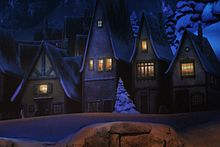
We start off this list at Epcot, in one of the original World Showcase pavilions: Germany. Based on traditional German architecture, the pavilion is home to various attractions and restaurants including a model railway and village, a Snow White Meet and Greet and the Biergarten Restaurant, but did you know that in the original plans a darkride was included? This attraction, known as Rhine River Cruise, would likely have been similar to Rio Del Tiempo in Mexico (now Gran Fiesta Tour) or Maelstrom over at Norway, taking guests on an adventure through German legends on the country’s largest and most famous rivers.
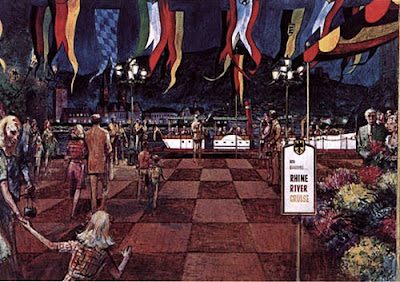
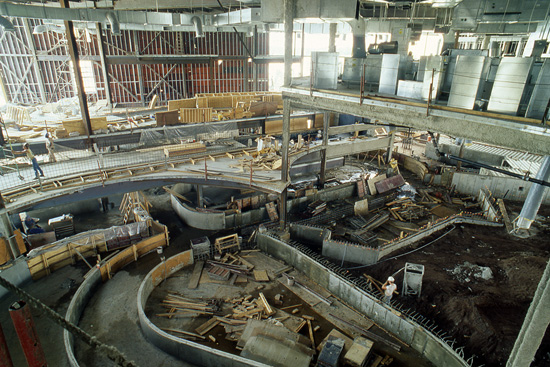
The project got so far off the ground, in fact, that an entrance for the ride was constructed before construction suddenly stopped! There’s a common misconception that the ride was fully built and has lay abandoned since Epcot’s opening, but this isn’t exactly plausible- it’s highly unlikely Disney would just build a ride and forget about it, and aerial shots of the Germany pavilion show that, while an unload station was partially constructed, the show building wasn’t and there’s no sign of an abandoned ride system.

We don’t have much information on why exactly the plans were abandoned, but budgeting issues is the most likely theory- by the time of Epcot’s opening every World Showcase pavilion had a sponsor, and perhaps Disney were unable to find a sponsor that was willing to support a whole ride as well as Germany’s other attractions. It’s interesting to think of what we would have seen and heard experiencing Rhine River Cruise, what the soundtrack would have been like, to the main show scenes right down to the way the boats would have been designed. Although you can’t actually ride it, a little part of the attraction still sits in the Germany Pavilion, in the form of an archway at the back of the area! Make sure to have a look next time you find yourself in Epcot’s World Showcase!

Beastly Kingdom: the Good and Bad Realms, Animal Kingdom

When Animal Kingdom was in its planning stages, the park’s focus was on three different types of creatures: existing, extinct and mythical. Animals of the third category would have a home in a themed land of their own, Beastly Kingdom, divided into two real for “good” and “bad” creatures. Both were meant to feature their own characters and attractions, with the Good Realm being home to a Quest of the Unicorn, a bright, magical maze leading to the unicorn’s grotto, and Fantasia Gardens, a musical boat ride starring the animals of some of our favourite Disney movies.
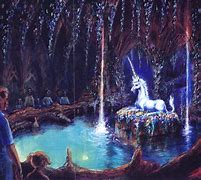
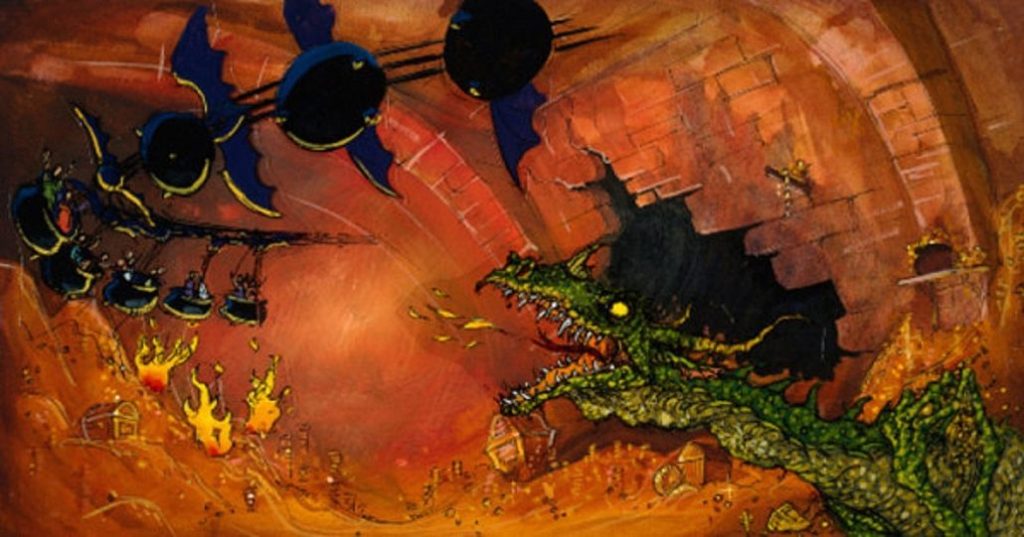
The Evil Realm was a lot darker. Towering over Beastly Kingdom, the remains of a ruined castle would have housed a high-speed rollercoaster that would take riders on a fiery adventure through the realm, ending with guests being almost burned alive by what would have been an intimidating audio-animatronic dragon.
At some point during Animal Kingdom’s construction the concept was scrapped, but references to the idea remain in and around the park today. On entering the park guests are greeted with a dragon head above the ticket booths, alluding to the dragon of Beastly Kingdom, and you can still park in the “Unicorn” section of the car park. The dragon can also be spotted in the park’s logo! Not so subtle is the giant animatronic (Disco!) Yeti that resides in Expedition Everest, doing… well, nothing, but that’s a topic for another post.
In 2017, Animal Kingdom did actually get a land dedicated to mythical creatures: Pandora The World of Avatar, along with it the iconic Floating Mountains we all know and love, and while the four WDW have been undergoing a lot of changes over the last few years, it’s likely that this is the closest we’ll ever get to experiencing Beasty Kingdom.

The Little Mermaid, Fantasyland, Disneyland Paris

While we are currently able to experience two Little Mermaid darkrides at Magic Kingdom and Disney California Adventure, the first incarnation of this beautiful ride would have been an incredible experience to say the least. Throughout the 1980s and early 1990s Disney were working on their sixth theme park, and their first European park, Euro Disneyland in Chessy, France. The park would move partially away from the traditional Disneyland model, the most significant example of this being the reworking of Tomorrowland as Discoveryland. Never before seen ride concepts were being created too, and a mind-blowing Little Mermaid darkride, was one of these, years before Ariel’s Undersea Adventure or Journey of the Little Mermaid debuted at the US parks.
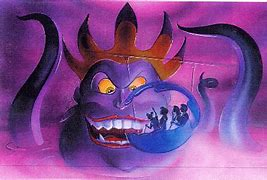
Designed by legendary Disney Imagineer Tony Baxter, this attraction retelling of The Little Mermaid focused more on the film’s most iconic scenes rather than musical element, beginning with Ariel singing Part of Your World and Prince Eric watching from the boat, before taking riders underwater to hear Sebastian and the ‘Crustacean Band’ singing Under The Sea. The experience ended with a burgeoning Ursula towering over guests, which definitely would have terrified a fair few people!
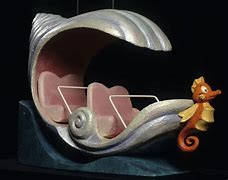
Disney’s well-known Omnimover system didn’t make an appearance on Euro Disney’s version of the ride, instead, riders would sit in clam shell chariots inspired by the ride vehicles on Peter Pan’s Flight, allowing for a better view of the scenes from all sides.

Obviously Ariel never did get her own ride at Euro Disneyland, now Disneyland Paris, but not all the scenes were scrapped. It’s pretty easy to compare some of the scenes we did actually get to the original designs for the ride, such as the Under The Sea portion of the ride, and when Floatsam and Jetsam introduce us to Ursula, among other scenes. It’s fair to say Imagineering took a lot of inspiration from Tony Baxter’s designs when creating the Little Mermaid rides we have today!

The plans for Disneyland Paris’ Little Mermaid attraction weren’t just locked away in the archives never to be seen again. In fact, you can find a full POV of the ride that could have been on the Little Mermaid Platinum DVD!

Mount Fuji Rollercoaster, Japan Pavilion, Epcot

We’re returning to World Showcase, this time at the Japan Pavilion, for another ride that never made it off the ground. Japan was always going to be an impressive pavilion, with traditional Japanese architecture surrounding the courtyard, and several restaurants serving national cuisine. But while today the back sightline of the pavilion is mostly dominated by trees, in original plans for the Japan Pavilion we would have looked upon a giant Mount Fuji! The mountain would contain a mine-train type coaster that would wind through the rockwork, like a combination of Space Mountain and Expedition Everest!
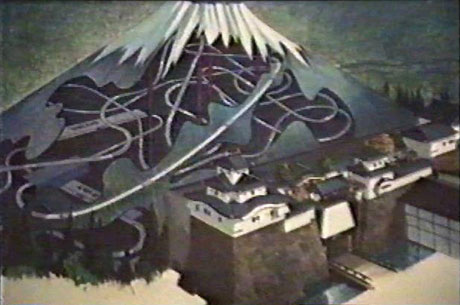
The story of why the project was ultimately abandoned is a pretty interesting one. When a sponsor was found for Japan, video camera company Kodak had already agreed to sponsor Imagination! over in Future World. Japan’s sponsor was a direct competitor of Kodak, which created problems. The sponsor pulled out of the deal and the pavilion’s budget was cut drastically, with Mount Fuji and the rollercoaster removed from the plans altogether. Bijutsu-kan, an exhibition gallery, remains as the only long-standing attraction in the Japan Pavilion even today. Coincidentally, the building that houses Bijitsu-kan was originally meant to be the site of another unbuilt attraction, Meet The World!
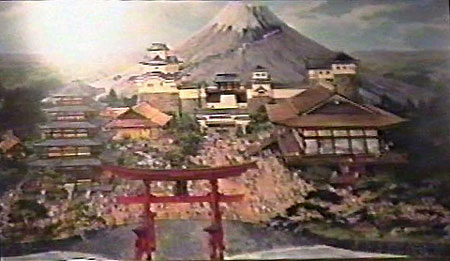
Although it would be great to see this unfinished concept make a comeback, it seems unlikely, as the space that would have been home to Mount Fuji is now used for Bijitsu-kan and what looks to be a Cast Member car park. The idea could be applied to any of the other pavilions with a bit of empty space however- I would love to see a rollercoaster ride through the Alps in Italy or Germany!

Dick Tracy Dark Ride, Disneyland

Released in 1990, Dick Tracy was a high-speed film full of excitement and adventure, inspired by a classic comic book series, and set to smash the Box Office. Disney were expecting the movie to be so successful, in fact, that the budget was increased from £23 million to nearly £50 million during production, and plans were made for a major presence of the film at Disneyland, including a darkride! Unfortunately, Dick Tracy did not make as much of a splash at the Box Office as was expected, and in its new poor financial state Disney could no longer afford to build a ride, so the plans were abandoned.

Dick Tracy did eventually end up with a presence at Disneyland however. A new musical stage show based on the movie, was so far along in production by the film’s release that it would be pointless to simply scrap it, so Dick Tracy Diamond Double Cross debuted in November of 1990, to mostly positive reviews. The show starred the title character as well as the main villains, but what was arguably the most memorable aspect of Diamond Double Cross was the kind of terrifying costumes!

Did I miss any off this list? Which of these attractions do you wish you could have experienced? Let me know below!

  1. lily712005's avatar
  2. Jv's avatar
  3. lily712005's avatar
  4. Al's avatar
  5. Simon vater's avatar

If you enjoyed this article, check out some of my other posts from theme parks and attractions around the world, and consider subscribing to have all the latest Coaster Dreamers content delivered straight to your inbox!

Tall and Speedy: the story of the Intamin Accelerators

There was a time when lifthills were not just commonplace on coasters; they were compulsory for a working ride. A train travelling up a lifthill was the only way to gain enough momentum to complete the circuit- that was, until 1978 when Montezooma’s Revenge opened at Knotts Berry Farm in California, the first coaster to…

Disneyland’s Black Sunday: What was it and how did it happen?

“As long as there is imagination left in the world, Disneyland will never be complete” Walt Disney When you think of Disneyland, what comes to mind? Castles, family, and Mickey Mouse? What about fires, dehydration and stampeding crowds? Okay, those last three maybe aren’t so likely. But all these actually happened on Disneyland’s opening day,…

Thanks for reading!

-Lily

Tall and Speedy: the story of the Intamin Accelerators

There was a time when lifthills were not just commonplace on coasters; they were compulsory for a working ride. A train travelling up a lifthill was the only way to gain enough momentum to complete the circuit- that was, until 1978 when Montezooma’s Revenge opened at Knotts Berry Farm in California, the first coaster to utilise a classic flywheel launch.

Built by German manufacturer Schwarzkopf, this new Shuttle Loop was groundbreaking in the theme park industry, and set the course for a new type of coaster thrill. Since then many manufacturers have been experimenting with new ways to start a ride off with a bang, and one of the most successful was Intamin, with the famous LSM and LIM launches. Today Intamin have an impressive collection of launched rollercoasters throughout the world, known as accelerator coasters. Some of these are successes, while some aren’t so popular. These rides certainly have an interesting history, so lets explore the story of Intamin’s innovative accelerators!

First and Fast

By the early 2000s, Knotts Berry Farm was looking for something new to fill the small empty space left over by the defunct Windjammer Surf Racers, and a new coaster was the aim. Most manufacturers could not build a coaster compact enough to fit the tiny space the park was working with, but Intamin came forward with a never before seen model that would eventually become one of the most famous coaster models: the accelerator. The prototype model, Xcelerator, opened at Knotts in June 2002, with a new hydraulic launch on a relatively short launch track of 157ft, and a top speed of 82mph. Riders travel over a 205ft top hat and through a few turns before arriving back at the station. It was a simple yet brilliant idea, and was a success with visitors.

It seems Knotts is a great park for groundbreaking launch coasters, let’s not forget that the first ever Schwarzkopf Shuttle Loop opened here too just twenty-four years earlier, as well as the first ever Zamperla Moto Coaster, Pony Express, in 2008!

A common problem faced by many launched rides is that they can’t always operate in some conditions, and this is certainly a problem Xcelerator faces frequently. While some coasters go down for snow or excessive heat, the original accelerator cannot operate in the rain, in order to prevent a build up of water underneath the wheels. If this occurs rollbacks become increasingly more frequent, and, while they may be fun for us enthusiasts, they can be pretty terrifying if you don’t realise it’s safe!

If you want to learn more about rollercoaster safety and other theme park facts and misconceptions, check out my post on this exact topic!

Coasters Really Do That?- The biggest theme park myths busted!

There are so many myths and legends surrounding the theme park industry, but have you ever wondered which of these are true? In this post we separate myth from fact, explain aspects of rollercoaster safety and even explore where some of these myths stem from!

The Original Strata Coaster

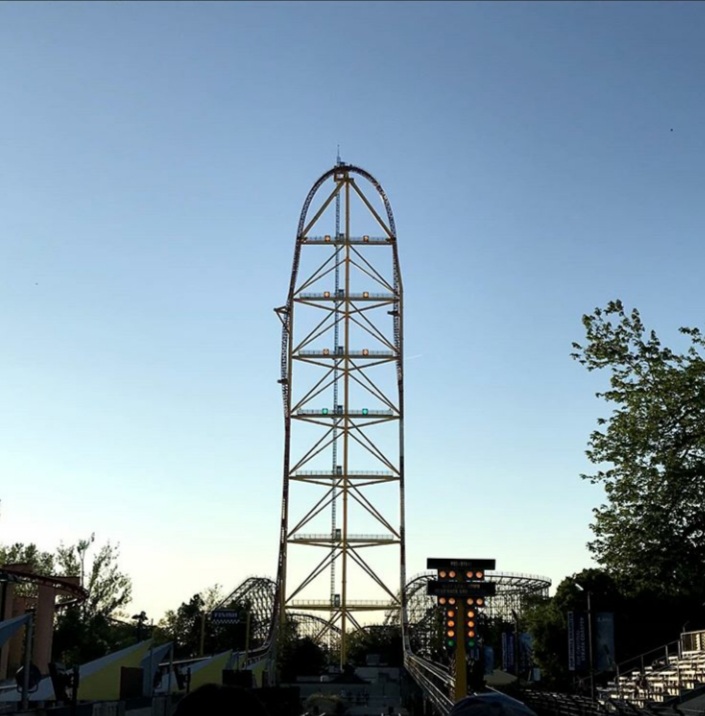
Less than eleven months after Xcelerator’s debut, the second accelerator would be constructed at Cedar Point, opening May 4th 2003. When designing this new coaster, which would open as Top Thrill Dragster, Intamin had significantly more space to work with, resulting in a longer launch track allowing for a taller height. This, combined with Cedar Point’s seemingly age-old desire to smash records (there’s a reason it’s known as a place like no other!), led to the creation of the world’s first Strata coaster, that is, the first coaster to reach a peak of over 400ft! Dragster’s highest point is 420ft, and features aspects that are unique even today, including the visitor seating beside the launch track, similar to how spectators would watch a real dragster race!

Sadly, Xcelerator would not be the only Intamin accelerator to suffer maintenance issues. In Summer 2019 Dragster experienced extensive downtime after problems with a launch motor, remaining out of operation for several weeks, and employees of Intamin were called in to perform maintenance on the ride. Fans of Top Thrill Dragster were devastated to see the ride closed for so long, and, strangely, Stealth at Thorpe Park went down for a few days around the same time- I guess summer last year just wasn’t a great time for Intamin coasters!

The Tallest- But Not Quite The Fastest

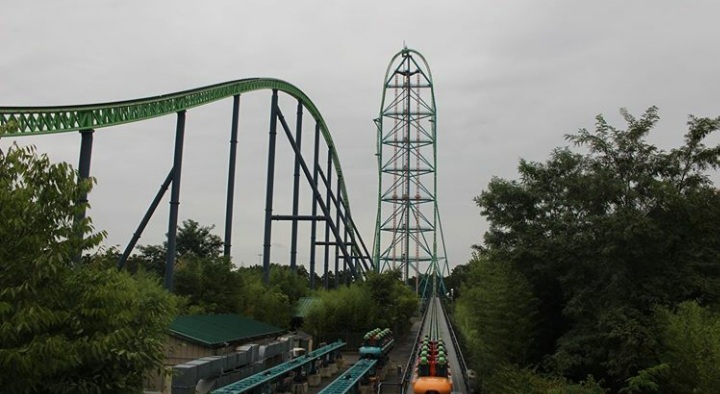
It wouldn’t take Six Flags to notice the success brought by Cedar Fair’s accelerators, and by 2005 Great Adventure would announce what was by far their biggest addition since Nitro in April of 2001. In May of 2005 the park debuted the world’s tallest and fastest coaster: Kingda Ka, named after a tiger that once lived in the park’s zoo. A new land opened accompanying the coaster, known as Golden Kingdom, featuring a tiger enclosure and several family-friendly flat rides. Ka also brought a new element to accelerators- an impressive 129ft tall airtime hill just opposite the load and unload station. A similar hill would be used on many other accelerators in the future, including Stealth at Thorpe Park in UK, and RedForce at PortAventura’s Ferrari Land in Spain. Some riders say that RedForce has the best airtime hill out of all the accelerators, despite being the smallest.

Although Kingda Ka has kept it’s height record after all this years, the speed record wasn’t there to stay, and in 2010 Abu Dhabi’s Ferrari World smashed it the opening of Formula Rossa (another Intamin accelerator, I’m sensing a pattern here!), which takes riders from 0 to 149.1mph in just 4.9 seconds. Six Flags may be working on another ride that breaks Ka’s record for tallest too. In August 2019 it was announced that the world’s largest theme park chain would be making another attempt to branch out into the Asian market, after the rather unsuccessful Six Flags Dubai, with Six Flags Qiddiya in Saudi Arabia, a record-breaking park less than an hour away from the country’s capital, Riyadh.

This new park is said to bring many amazing and thrilling experiences, but the signature attraction will be “the world’s most extreme coaster” Falcon’s Flight, built by an unannounced manufacturer, apparently reaching a height of over 500ft. I however, like many others, am a little sceptical- the recreation looks more like something someone might make in Planet Coaster than an actual, feasible ride!

Check out the official website for Six Flags Qiddiya to form your own opinions on this upcoming park!

RedForce- Europe’s Tallest Coaster

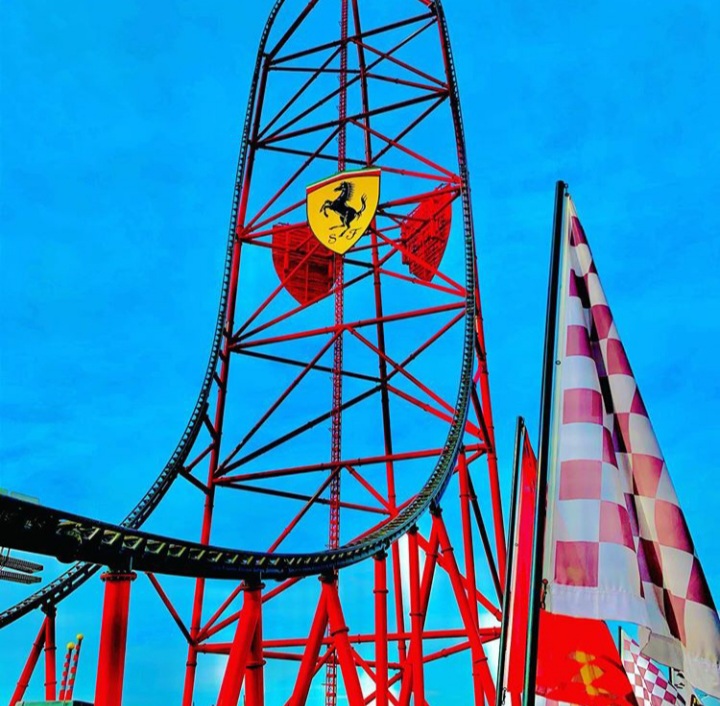
Spain is famous for many things, one of these being the country’s thrilling and well-themed theme parks. PortAventura World in Salou is Spain’s largest, featuring the main park as well as a water park and a smaller theme park, Ferrari Land. This New-For-2017 park opened in April of that year with several rides and a unique car racing experience, but this wasn’t all the park had to offer. RedForce towered proudly over Ferrari Land, and still does today! At an impressive 367ft, this thrilling accelerator is Europe’s tallest coaster, and one of the only coasters in the park, joined only by Junior RedForce in 2018, a Kiddie SBF Spinner with trains sort of resembling those on RedForce.

RedForce holds many legacies besides being Europe’s tallest, some of them not so great. The ride became almost infamous on day one of operation, after a pigeon flew into the open mouth of an unsuspecting rider. After throwing the bird off him, the rider was left with a smear of pigeon blood on his face, which likely made for an uncomfortable experience at the least! This coaster is also caught up in a debate that has been circulating through the enthusiast community for the last few years- is it, or is it not, a giga? It’s over 300ft, sure, but does a ride have to have a lifthill in order to count as a giga?

By the way, RedForce IS a giga and no amount of persuasion will make me change my mind. Sorry not sorry guys 🙂

Accelerators of the UK

As a UK theme park enthusiast, I’m in a way obligated to back up the coasters over here. But the Intamin accelerators in UK parks are kind of… average, at least compared to those in other countries such as the US. These two coasters have their homes at Thorpe Park and Alton Towers, and while they are visitor favourites, they don’t hold as much legacy as many other Intamin accelerators. Rita Queen Of Speed opened in Ug Land, Alton Towers in 2005, the first major thrill coaster not to use the iconic Secret Weapon nickname since the scheme it began in the 90s.

Check out this post if you want to learn more about the Towers’ Secret Weapons!

Alton Towers’ Secret Weapon Programme: what is it and how does it work?

Alton Towers is considered to be one of the most amazing theme parks in the UK and even in Europe, with many coaster enthusiasts making the park a bucket list location to get some awesome creds. Nestled among some beautiful scenery and historic locations in Staffordshire, England, Alton Towers is home to some incredible rides,…

This coaster is known for its forceful hydraulic launch, but it doesn’t really do anything with the momentum it gains, just navigates a series of turns. The Towers’ Queen Of Speed kept its name until 2009, when the opening of Th13teen brought a whole new overhaul to Ug Land, and the area became the Dark Forest. In keeping with the retheme, the name Rita Queen of Speed was shortened to just Rita, now themed to an abandoned drag racer. The ride gained some extra theming in order to fit in with Th13teen, but the experience itself didn’t change too much.

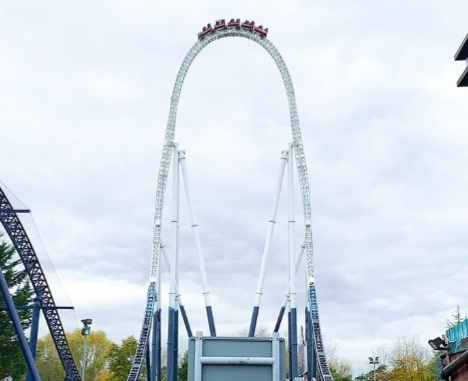
Just a year later, the Tussards Group, who owned Alton Towers at the time, would open a second accelerator at another of their parks, Thorpe Park. Standing at a height of 205ft above the park and looking over Thorpe Park’s Amity, Stealth can be seen from a nearby motorway, and is the second tallest coaster in the UK, just eight feet behind The Big One at Blackpool Pleasure Beach.

This famous coaster holds the record for the UK’s fastest rollercoaster, taking riders from 0-80mph in just 2 seconds and featuring a top hat traditional to many older Intamin accelerators. I feel like Thorpe may have taken a bit of inspiration from Cedar Point when writing Stealth’s description on their website- Stealth is listed as “Thorpe Park’s Top Thrill Dragster!”

Despite its impressive statistics, Stealth isn’t too popular with enthusiasts, with rides such as the Swarm offering a more intense experience. Still, Stealth is an icon of Thorpe Park, and driving up to the park entrance just wouldn’t be the same without it!

Launching Into The Future

It has now been ten years since Intamin debuted their most recent accelerator, this being Formula Rossa at Ferrari World in Abu Dhabi. These thrilling launch coasters experienced a peak in the mid 2000s after the success of Top Thrill Dragster and Xcelerator, and it seemed that every park that could afford to build one was wanting to. Over the next few years less and less would be built around the world- but new accelerators aren’t dying out altogether. According to RCDB there are currently two Intamin accelerators under construction: one at Lost Island Theme Park in Iowa, and another at Golden City in Russia.

Does this mean Intamin Accelerators may be making a comeback? Which accelerator is your favourite? Share your thoughts below!

  1. lily712005's avatar
  2. Jv's avatar
  3. lily712005's avatar
  4. Al's avatar
  5. Simon vater's avatar

If you enjoyed this article, check out some of my other posts from theme parks around the world, and consider subscribing to have all the latest CoasterDreamers content delivered straight to your inbox!

Walt Disney World’s Most Underrated Rides- a collab with Coaster Sam Blog

Disney theme parks have been bringing the magic to guests since 1955, opening a multitude of new, immersive attractions at locations around the world. It’s always exciting when a new ride opens for the first time, but this has a downside too- existing rides, so matter how iconic, loved or nostalgic they are, can begin…

The Vekoma SLC- cloneable success or painful failure?

They’re some of the most well-known rides in the theme park industry, loved by much of the general public but hated by enthusiasts. The first Vekoma SLC, or Suspended Looping Coaster opened at Walibi Holland in 1994, and since then the Dutch ride manufacturer has continued to build SLCs, up until 2017 when the last…

Photo credits:

-@thrillation on Instagram https://www.instagram.com/thrillation/

-@alecscheerer_rollercoastin on Instagram https://www.instagram.com/alecscheerer_rollercoastin/

-NewEnglandCoasterFan on YouTube https://www.youtube.com/channel/UCTBhr__dbYNDJgyVOPODR3w and Instagram https://www.instagram.com/newengland_coasterfan/

-@twist3dsteel on Instagram https://www.instagram.com/twist3dsteel/

-@themepark__photography on Instagram https://www.instagram.com/themepark__photography/

Thanks for your help guys!

You are all clear- and outta here! Thanks for reading!

-Lily

Walt Disney World’s Most Underrated Rides- a collab with Coaster Sam Blog

Disney theme parks have been bringing the magic to guests since 1955, opening a multitude of new, immersive attractions at locations around the world. It’s always exciting when a new ride opens for the first time, but this has a downside too- existing rides, so matter how iconic, loved or nostalgic they are, can begin to fade into obscurity. Coaster Sam Blog and I have compiled our own lists of the most underrated and forgotten rides across the four Florida parks, from Animal Kingdom to Epcot, so lets take a look at our picks for the most underrated WDW attractions of all time! Is your favourite ride on this list? Keep reading to find out!

Carousel of Progress, Magic Kingdom

If you’re unfamiliar with this iconic attraction, you may be wondering- why is a carousel on this list? But Walt Disney’s Carousel of Progress is no ordinary carousel. First making its debut at the 1964 New York World’s Fair, the attraction follows an animatronic family: husband and wife John and Sarah, with their two children Patricia and Jimmy, as family life evolves and changes through the 20th and 21st century. The show begins in the 1900s, on Valentines Day when the family are discussing a Valentines dance, and the final scene takes place during Christmas in a past view of the 2010s, in which the characters interact with VR and voice recognition technology, both devices we use today!

By far the most well-known aspect of this attraction however, is that extremely catchy song: It’s a Great Big Beautiful Tomorrow! When Carousel of Progress was moved from the World’s Fair to Magic Kingdom’s Tomorrowland in 1975, General Electric sponsored the show, but a key part of the sponsorship deal was that the song is removed, as it may encourage potential customers to buy from them tomorrow, as opposed to today. The Sherman Brothers composed a new song, entitled The Best Time of Your Life, to tell riders that, well, they’re having the best time of their life. This remained the official soundtrack for the attraction until 1985, when General Electric failed to renew the sponsorship, and along with some minor changes, It’s a Great Big Beautiful Tomorrow returned, to great joy from fans of the attraction.

Even today, fifty-six years after its debut, I feel Carousel of Progress holds a special message we can all take away- there really is a great big beautiful tomorrow, and tomorrow is just a dream away!

Journey Into Imagination with Figment, Epcot

1982 to 1994 truly were the golden days of Epcot. Between Epcot’s opening year of 1982 and 1989, nine pavilions opened in Future World, and Imagination! was one of the most popular. The main attraction of the pavilion was a darkride, Journey Into Imagination, which followed the eccentric inventor Dreamfinder and his pet dragon Figment on their whimsical adventures through the realms of imagination. There was virtually nothing to complain about with Journey Into Imagination- the sets were bright and colourful, the jokes were understandable to all ages but not too cheesy. The only thing that could have been considered annoying was the song, One Little Spark, which was more fun and catchy than anything else. Admit it, it’s now stuck in your head, isn’t it?

Like all of Future World’s pavilions, Imagination! relied on a sponsorship for much of its maintenance, and in this case the sponsor was Kodak, who insisted that Journey Into Imagination and the attraction above, the Imageworks, are updated every ten to fifteen years to prevent them from falling into disrepair. When the time came to refurbish the pavilion, Disney were struggling financially, with the failed opening of Euro Disney in France, and Kodak were also having issues. This resulted in a cheap, quickly thrown-together retheme, with a dramatically reduced ride time of less than five minutes. The new ride, Journey Into Your Imagination, was themed to the Imagination Institute to fit in with Honey, I Shrunk The Audience next door, and took riders through a series of Imagination tests in the Institute’s labs, first being told “there’s not much going on upstairs, imagination-wise” then being declared creative geniuses by the end of the ride. Honestly, I think Honey, I Shrunk The Ride Experience would have been a better name for it.

Figment only made a few small appearances in the ride on screens, and Dreamfinder was nowhere to be seen, along with the well-loved One Little Spark song. Fans of Journey Into Imagination were shocked to see what had happened to what used to be such an amazing ride, and Facebook groups such as Friends of Figment began springing up protesting against the removal and near-removal of the two iconic characters. Journey Into Your Imagination lasted only a few years, and soon went down for its second refurb, reopening as Journey Into Imagination With Figment. A LOT of Figment, but still no Dreamfinder. In this current version, the Imagination Institute are hosting an open house day, lead by institute leader Dr Nigel Channing, and Figment is causing as much havoc as humanly, or dragon-ly, possible.

In Journey Into Imagination with Figment, the title dragon is portrayed as a lot more mischievous and annoying than in the original, but maybe it’s understandable- if you had your own pavilion and an institute tried to take over, kick out your best friend and hold an open house, you’d want to cause mischief too!

The current version is a joyful nod to the first Journey Into Imagination, and for those of us who never rode the original, it’s the closest we can get to experiencing this iconic attraction. Journey Into Imagination with Figment has been gradually declining in popularity over the last few years, getting queues of less than ten minutes most of the time, so the ride may not have much longer left at the park, so when you’re next at Epcot, make sure you get a ride on this bright and nostalgic darkride!

Check out this post if you want to learn about another much-loved pavilion at Epcot!

It’s Tough To Be a Bug, Animal Kingdom

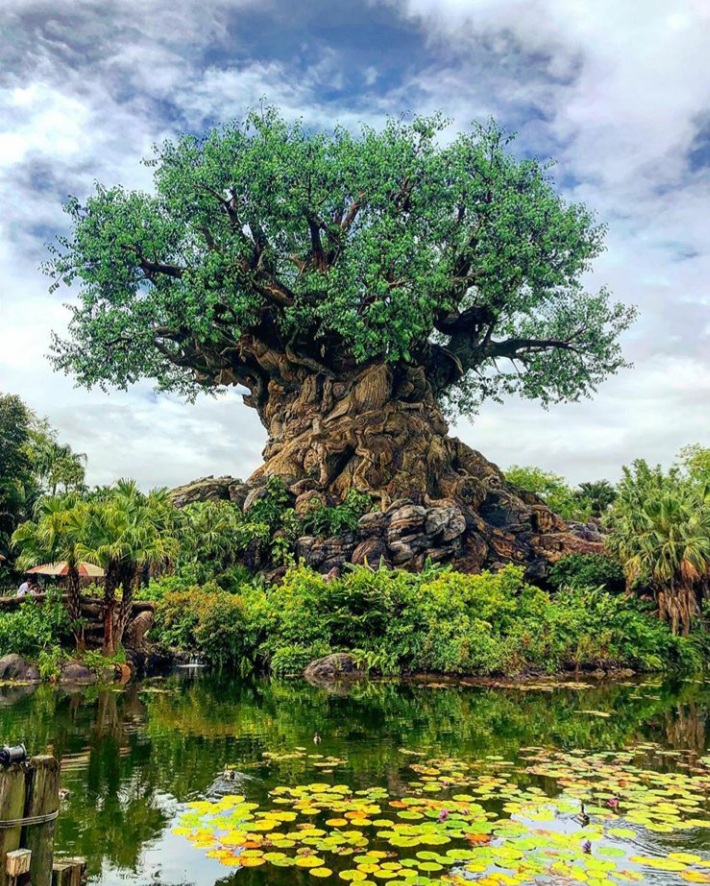
Nestled in the roots of Animal Kingdom’s Tree of Life, there is an impressive 4D cinema attraction, one of the last remaining in Walt Disney World! But in the same way Carousel of Progress is no ordinary carousel, It’s Tough To Be a Bug is no ordinary 4D experience. Guests become “honorary bugs” and are shown the world of bugs by Flik from the Pixar film A Bug’s Life, before encountering a terrifying animatronic known as Hopper the Grasshopper, livid at the way humans have always treated bugs and that they were allowed to enter the theatre. He tries to flatten the audience with fly swatters, orders hornets to sting them, and attempts to kill them with bug spray. For an attraction that seems so light-hearted at first glance, this scene is extremely dark!

The experience ends with a collection of insects singing about how tough the life of a bug can really be, and hidden bugs leaving the theatre, an effect that utilises some rather unexpected leg ticklers!

When It’s Tough To Be a Bug opened in 1998, Hopper was Disney’s most advanced (and largest!) audio-animatronic today, and twenty-two years later is still going strong. For many this attraction is a one-and-done, either due to the uncomfortable leg ticklers (I found them annoying too) or the out of nowhere fear aspect, but these elements of the experience made me love it, and I will definitely want to experience it again next time I find myself at Animal Kingdom!

Tomorrowland Transit Authority Peoplemover, Magic Kingdom

When Walt Disney envisioned Epcot as a city of the future, one of the features that was in the designs from the beginning was a monorail-type transport system known as the WEDway Peoplemover. The Experimental Prototype Community of Tomorrow would eventually open as a theme park in 1982, but fifteen earlier Walt’s design of a Peoplemover would be honoured at Disneyland in 1967. This version sadly would not last and closed in 1995 to make way for the infamous Rocket Rods, but the version in Magic Kingdom, Florida was able to stand the test of time and is still operational today.

A key element of the Peoplemover is taking riders through many of Tomorrowland’s ride show buildings, including Space Mountain and Buzz Lightyear’s Space Ranger Spin, which offers a great look at these attractions from a whole new angle, especially when one of them breaks down. This isn’t even the most impressive part though, as several minutes into the attraction you pass by a scale model of Walt Disney’s original designs for Epcot! It’s incredible that such a fundamental part of Disney parks history was included in both Disneyland and Magic Kingdom’s incarnations of the classic ride, and that we can still experience it today in Florida.

Despite all this, the Tomorrowland Transit Authority Peoplemover is beginning to show its age. In January of this year, riders were evacuated after smoke was spotted billowing out of the attraction, and Astro Orbiters was also temporarily closed as a safety precaution. It was later concluded that it was a technical fault that caused the smoke, not an actual fire, and a few hours later both the Peoplemover and Astro Orbiters were back open, but events like this show that Disney really do need to give one of their classic attractions a bit more love!

Living With The Land, Epcot

For many, Living With The Land is one of those attractions that you just skip past, only riding if your feet need a rest, or you’re in desperate need of some air con. I’ll be honest, that was me on my first visit to Epcot too! But this water-based darkride is actually a significant part of WDW operations and history. Originally known as Listen To The Land, Living With The Land opened with the park on October 1st 1982, as one of two attractions in EPCOT’s Land Pavilion, the other being Kitchen Kaberet, which may a contender for one of the most obscure attractions Disney have ever built.

Living With The Land begins with a darkride section that takes riders through a forest in a thunderstorm, showing that, while we may dislike storms, they are extremely beneficial to the natural environment. After passing through a few more biomes, from a desert to a rainforest, and even some animatronics that were created for a never-built Magic Kingdom attraction, Western River Expedition! (I told you it’s historically significant!).

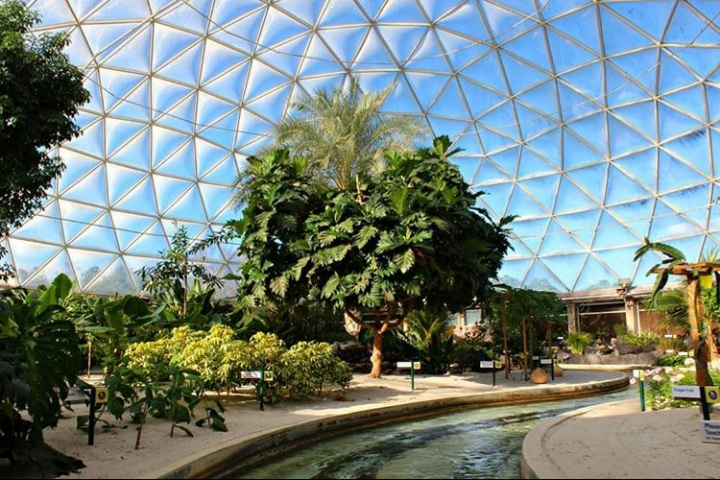
When you end your biome journey, you embark into what is by far the most important part of the ride, and maybe even of Epcot, a greenhouse dome known as the Living Laboratory! Here, new methods of agriculture are tried and tested, and a lot of the food that is served up across the parks is grown in these greenhouse labs! So whenever you’re dining at Cinderella’s Royal Table, the Rainforest Café, or Woody’s Lunchbox, it’s likely that you’re eating something grown just a few miles away in Epcot!

This archetypal Epcot darkride is one of just two opening day attractions in Future World, and one of the few remaining experiences in the park which really captures what Epcot what always meant to be about: sustainability, creativity and innovation.

While many classic Epcot attractions are closing to make way for the new overhaul, I don’t really see Living With The Land going anywhere, it may be losing popularity but still plays a significant part in the operations of all of Disney’s parks and restaurants in Florida!

Check out this post to learn more about the changes made to Epcot since its opening in the 1980s!

The Disney Park of the Future: has Epcot lost sight of it’s vision?

Let’s face it: what with all the Disney parks closed, we’re all facing a bit of Disney withdrawal, myself included in that. Today I’ll try to cure a bit of your (and my) theme park withdrawal by diving into the history of one of the world’s most famous theme parks, a park that started with…

Dumbo The Flying Elephant, Magic Kingdom

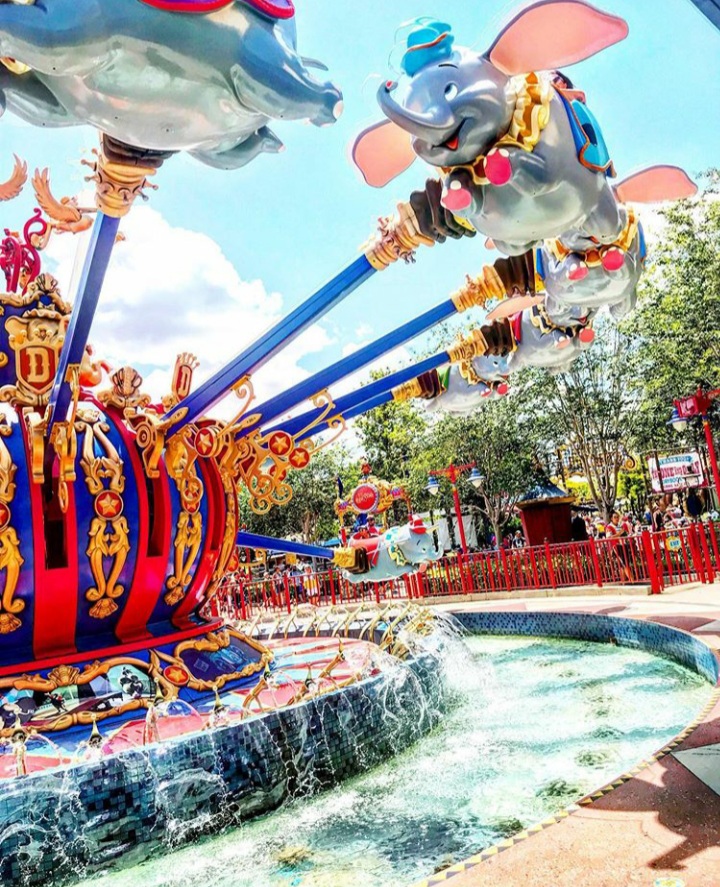
There’s nothing quite like the feeling of flying through the air in a circle, the Central Florida wind blowing in your face, and Dumbo, located in Magic Kingdom’s Storybook Circus, is a ride that offers this exhilarating sensation. The first version of this much-loved family ride opened at Disneyland in October 1955, just a few months after Disneyland’s official opening in July, and despite being enjoyed by riders, it was riddled with problems. WED enterprises (now Walt Disney Imagineering) built one aspect of the ride, while Arrow Development built another, resulting in two ride systems that didn’t really work well together. The aim was to get the ride open as soon as possible, it had already missed opening day, so there was no time to get these issues fixed before October. So, when Dumbo was operating, the elephants would leak hydraulic fluid, meaning the ride had to go down every few hours for the elephants to be “milked”, or have the fluid cleaned away.

That was until a NASA engineer visited Disneyland, and on seeing the issues plaguing the ride, suggested a new system that meant the elephants would actually keep their hydraulic fluid, and the ride would no longer have to close as much as it did. After a few months of downtime and upgrades, the new and improved Dumbo opened to excited riders, and ever since it has been a guest favourite at Disneyland.

It wouldn’t be long before Dumbo would take flight at other Disney parks, beginning with Magic Kingdom for the 1971 opening. However, it was only a soft-opening, with some of the theming not ready yet, and several months later the missing theming elements would be added, without the water feature that’s so prominent on many other versions of the ride.

In 2011, a major change was coming- Magic Kingdom’s New Fantasyland. Mickey’s Toontown Fair was closing in February of that year; some elements of the land were demolished, while others remained to be rethemed in the new land that was being built. When the area reopened as Storybook Circus in 2012, there were not one but two of the ride carousels, complete with a new interactive queueline, and what is arguably one of the greatest play areas Disney have ever built! This was not the only new addition to the ride though, Disney had also implemented an innovative new queueing system in which you are given a pager when entering the queueline, which will flash and vibrate when it is time to board your flying elephant.

There’s so much I love about Dumbo The Flying Elephant, from the elaborate history behind the ride system, to the beautiful theming, right down to the easy and fun queue system, its one of many amazing but often overlooked ride experiences in the Magic Kingdom!

Do you agree with my picks? Which attractions would you add to the list? Let me know below, and check out Coaster Sam Blog’s post to find out if he agrees with me!

  1. lily712005's avatar
  2. Jv's avatar
  3. lily712005's avatar
  4. Al's avatar
  5. Simon vater's avatar

If you’re a theme park enthusiast like me, or just enjoy travelling, you’ll love Coaster Sam’s content! From Disneyland Paris to Dollywood, there’s something for every theme park fanatic! Check it out here! https://coastersam.blogspot.com/

If you enjoyed this article, check out some of my other posts from theme parks and attractions around the world, and consider subscribing to have all the latest content delivered straight to your inbox!

The Vekoma SLC- cloneable success or painful failure?

They’re some of the most well-known rides in the theme park industry, loved by much of the general public but hated by enthusiasts. The first Vekoma SLC, or Suspended Looping Coaster opened at Walibi Holland in 1994, and since then the Dutch ride manufacturer has continued to build SLCs, up until 2017 when the last…

A Country of Innovation- The record-breaking and pioneering coasters of the UK

The UK: land of tea, history… and amazing coasters. Compared to many other countries across Europe, here in the UK we aren’t exactly known for our thrilling rides and rollercoasters, with many UK parks, particularly in the South and East, going for a more immersive, themed approach. However, British theme parks are home to many…

Indiana Beach: A little park with a lot of history

From it’s origins as Ideal Beach in 1926, Indiana Beach has entertained and thrilled visitors for almost 100 years. This small boardwalk park is located on Indiana’s beautiful Lake Shafer, and has previously been home to over twenty rides and attractions, aimed at families and thrillseekers alike. On February 20th 2020, Apex Parks announced the…

Camelot Theme Park: A Medieval Knightmare

It’s 1983. Twenty-one years after the Martin Mere lake of Lancashire was drained, a brand new theme park was opening on the land. At first Camelot Theme Park, named after the story of Camelot and The Knights of the Round Table, was a huge success among the families who visited, however, as larger and more…

Photo credits:

-Podcast, You Are All Clear https://podcasts.apple.com/us/podcast/podcast-you-are-all-clear/id1481014341

-@adventuresbylinds on Instagram https://www.instagram.com/adventuresbylinds/

-@figmentinwonderland on Instagram https://www.instagram.com/figmentinwonderland/

-@orlando_extravaganza on Instagram https://www.instagram.com/orlando_extravaganza/

Thanks for your help, and of course a massive thank you to Coaster Sam Blog!

Thanks for reading!

-Lily

The Vekoma SLC- cloneable success or painful failure?

They’re some of the most well-known rides in the theme park industry, loved by much of the general public but hated by enthusiasts. The first Vekoma SLC, or Suspended Looping Coaster opened at Walibi Holland in 1994, and since then the Dutch ride manufacturer has continued to build SLCs, up until 2017 when the last SLC was built for a park in Vietnam. Many of the SLCs built during the 1990s and 2000s still operate at parks around the world today, and aren’t exactly an enthusiast’s favourite coaster model. But are they really that bad, and how have they benefitted the theme park industry?

The Beginning of an Era

May 1994 was the beginning of something big for Vekoma- the first SLC was opening at what is one of the Netherlands’ most famous theme parks, Walibi Holland. Standing at just over 100ft, El Condor was one of just two 662m prototypes built by Vekoma, the 662 indicating a total track length of 662 metres. Just a year later, T3 opened at Kentucky Kingdom in the USA. It was almost identical to its predecessor El Condor, the same height and track length, just an extremely red colour scheme compared to El Condor’s green-ish supports and white track. Condor underwent a repaint in 2014, and today the track is a reddish orange.

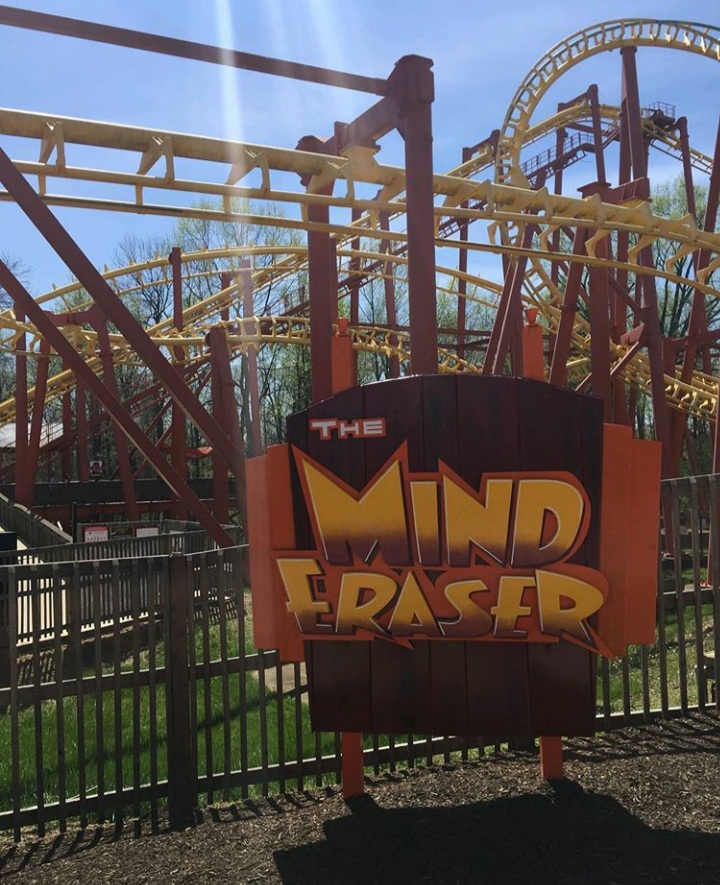
It wouldn’t take Vekoma too long to innovate further. In 1995, the same year as T3’s debut, five new 689m standard model SLCs opened in parks from Japan to Brazil, most famously Flight Deck at Canada’s Wonderland and Mind Eraser at Six Flags America, both coasters that are notorious for headbanging. I guess Mind Eraser really does live up to its name.

Seven Models, One Coaster

If you think about it, the term Suspended Looping Coaster is actually pretty vague. It’s a suspended coaster that “loops”; technically any inverted coaster could be counted as an SLC. Vekoma’s SLC’s are in a way unique, they may be all very similar to each other, but the model itself is rather different to many other suspended coaster types. A standard SLC features five inversions: a double roll-over, a double spin and a sidewinder, while others have more distinctive layouts e.g the Sidewinder and Cobra Roll are extremely common on Vekoma coasters, including some SLCs.

Helix inversions are also commonplace on SLCs, so much that Vekoma offers various SLC models with helixes as an actual product separate from the usual standard and extended models. Track lengths on SLCs can reach up to 787m and most frequently have five inversions, however some have more!

Suspended Spin-Offs

Despite being slightly (or in some cases, extremely) painful, the SLC was extremely popular with parks wanting a new coaster, but not particularly wishing to spend too long designing it. The standard and extended models were just a little too thrilling for many family parks however, and more innovation was needed- enter the Suspended Family Coaster. Flying Ace Aerial Chase at Kings Island and Silver Streak at Canada’s Wonderland both opened in the same year of 2001, smaller versions of the classic SLC but still keeping much of the thrill element. This (kinda) new coaster model was a success with families and thrillseekers alike, and in the nineteen years that followed, twenty-three more installations opened around the world!

At 2019’s IAAPA Europe and January 2020’s IAAPA Florida, Vekoma took the opportunity to introduce a new type of suspended coaster, the Suspended Thrill Coaster. Partly inspired by the enjoyable aspects of an SLC and other Vekoma models, the prototype will feature a range of elements, including four inversions, and will be located at Germany’s Erlebnispark Tripsdrill as Hals-über-Kopf! The official opening year is set to be 2020, but with many construction projects across Europe, there’s a chance we may need to wait another year to experience this groundbreaking coaster model. I just hope the opening date isn’t altered too much though!

No other upcoming installations of the Vekoma STC have been announced as of yet, but it is likely Tayto Park in Ireland will be home to the next one. As Ireland’s only major theme park the park of potato chips draws in huge crowds every year, but currently only features one major coaster, Cu Chulainn, a Gravity Group Woodie standing at 157ft. It would be amazing for both the park and Ireland’s tourism industry if Tayto Park were to get one in the next few years, but I suppose we’ll just have to wait for planning permission to finally be approved. Which park do you think will be home to the next Vekoma STC? Share your thoughts in the comments below!

The Rise of Golden Horse

It is not uncommon for ride manufacturers to take inspiration from existing rides when developing their new models… but it is for a manufacturer to blatantly copy another. Golden Horse is essentially the Vekoma of China, there are many coasters in China that were actually built by Vekoma, but for most parks, it is cheaper and easier to have an installation from a more local company, and that company is Golden Horse.

From the familiar-looking track designs to the remarkably similar models and names (Mine Coaster, Moto-Coaster, you get the idea) it’s obvious that this company has been somehow avoiding lawsuits from Vekoma for years, but the most significant example of this is the Suspended Roller Coaster (SRC?) looking almost identical to the well-known Vekoma SLC. While some types of Golden Horse SLC- sorry, SRC, are actually quite unique, there are just too many SRCs that look like they easily could have been built by Vekoma, it’s just impossible to not make this comparison.

Super Important Coasters (SICs?)

Yes, Vekoma SLCs don’t offer the most comfortable ride experience, and yes, they all seem extremely generic, but this hated coaster model was actually quite instrumental in making the theme park industry what it is today. Really, hear me out. Due to their generic nature and lack of need for theming, SLCs are generally cheaper than their more unique coaster counterparts, making it more affordable for smaller parks to open one and therefore opening more parks up to the thrill market.

Since 1994, the year Condor debuted at Walibi Holland, the theme park industry has grown greatly because of a range of factors, one of these being more and more parks opening thrill rides and expanding their target audience to more than just families. An SLC will bring in thousands of visitors, general public to ride the new coaster and enthusiasts for the credit. If cheap, or cheap-ish to build thrill rides like SLCs weren’t available, there would be significantly less thrill parks in the world and our favourite major theme parks may not be able to expand as much as they have been able to!

So next time you’re riding a particularly bad SLC, approaching the top of the lift hill and questioning your life choices, just remember- you’re possibly riding something that has helped to make theme parks what they are today! It might make the experience slightly more bearable, hopefully.

Have you ridden an SLC? Are they really as bad as people say? Share your thoughts below, and join the conversation!

  1. lily712005's avatar
  2. Jv's avatar
  3. lily712005's avatar
  4. Al's avatar
  5. Simon vater's avatar

If you enjoyed this article, check out some of my other posts from theme parks around the world, and consider subscribing to have all the latest theme park content delivered straight to your inbox!

Camelot Theme Park: A Medieval Knightmare

It’s 1983. Twenty-one years after the Martin Mere lake of Lancashire was drained, a brand new theme park was opening on the land. At first Camelot Theme Park, named after the story of Camelot and The Knights of the Round Table, was a huge success among the families who visited, however, as larger and more…

A Country of Innovation- The record-breaking and pioneering coasters of the UK

The UK: land of tea, history… and amazing coasters. Compared to many other countries across Europe, here in the UK we aren’t exactly known for our thrilling rides and rollercoasters, with many UK parks, particularly in the South and East, going for a more immersive, themed approach. However, British theme parks are home to many…

The Thorpe Fire of 2000- the event that changed the park forever

The aims, target audience and actions of all theme parks and park companies are largely influenced by past events, some more than others. Sometimes these events will only affect small aspects of the park, such as a ride closing or being rethemed, but occasionally they can change the future of the park and it’s owners…

Photo credits:

@isto_coasters on Instagram https://www.instagram.com/isto_coasters/

@rollercoaster125 on Instagram https://www.instagram.com/125rollercoaster/

@anotherdamncoasterpage on Instagram https://www.instagram.com/anotherdamncoasterpage/

Thanks for your help!

Thanks for reading!

-Lily

Camelot Theme Park: A Medieval Knightmare

It’s 1983. Twenty-one years after the Martin Mere lake of Lancashire was drained, a brand new theme park was opening on the land. At first Camelot Theme Park, named after the story of Camelot and The Knights of the Round Table, was a huge success among the families who visited, however, as larger and more innovative parks began to open over the years, a mix of declining attendance and lack of new attractions led to financial issues which meant the park was eventually forced to close in 2012.

For nearly eight years Camelot sat abandoned, with seemingly no future, and has become a must-visit destination for urban explorers. The up and down story of how this formerly well- loved park became a forgotten site and left in plain sight is truly fascinating and shows how volatile the theme park industry is, so let’s dive into the amazing tale of Camelot Theme Park!

Local Legends

To many, Martin Mere may just seem like a regular lake, albeit a dry one, but there are actually a lot of legends attached to this area surrounded by villages and farmland. The parents of famous knight Sir Lancelot, King Ban and Queen Elaine of Benwick, left France for Lancashire to escape their enemies. One day, the king fell into the lake, and Queen Elaine left her baby on the shore to help her husband, where the baby was kidnapped by a nymph.

The nymph raised the child, who would eventually go to King Arthur’s court, where he was named Sir Lancelot of the Lake. The lake in question, Martin Mere, has been given the nickname The Lost Lake of Sir Lancelot, and an area with all this local significance seemed like the perfect place to build a theme park based on, well, a local legend.

The Early Years

Camelot’s opening decade, the 1980s, was a largely successful time for the park. The area is reasonably well-connected to major cities like Liverpool, Manchester and Leeds, and Blackpool Pleasure Beach was the closest thing to Camelot in the region, however it was still relatively small at the time, so a theme park would naturally be in demand. Every year attendance was at a solid rate, and the park was thriving. It truly was a land of great (k)nights, and amazing days.

In 1986, Camelot Theme Park was sold to the Granada Group, a UK company that also owned The American Adventure theme park, and the Granada Studios Tour (many people believed Granada Studios was haunted, having being built on a Victorian graveyard, and some even claimed to have seen ghosts in the building!)This marked the beginning of a new era for Camelot. The year after the buyout, the theme park received several attractions, including Kingdom In the Clouds- a Ferris Wheel, and Dragon Flyer, an extremely rare diesel-powered coaster model manufactured by S.C. Italy. Many of Camelot’s 1987 rides continued to operate until the park’s closure in 2012, with the exception of Dragon Heights, which was removed after a few years of operation due to maintenance issues.

The (slightly) Negative Nineties

The 1990s could be considered a good time for Camelot Theme Park, with many new rides and attractions opening during this time. Sadly though, a large number of the attractions opening throughout the nineties were highly unreliable, particularly The Rack, a Vekoma Canyon Trip, constantly needing maintenance, and some were even closed shortly after opening. The park was struggling to innovate in order to keep up with the likes of Alton Towers and Chessington, and, as a result attendance was rapidly declining, with just 500,000 visitors for the 1995 season. In 1998, Camelot was bought by Manchester-based company Prime Resorts Ltd; it’s debatable whether this change in ownership helped or hindered the park.

Riding this really would be a thrilling (k)nightmare! ©thade_the_extraterrorestrial on Instagram https://www.instagram.com/thade_the_extraterrorestrial/

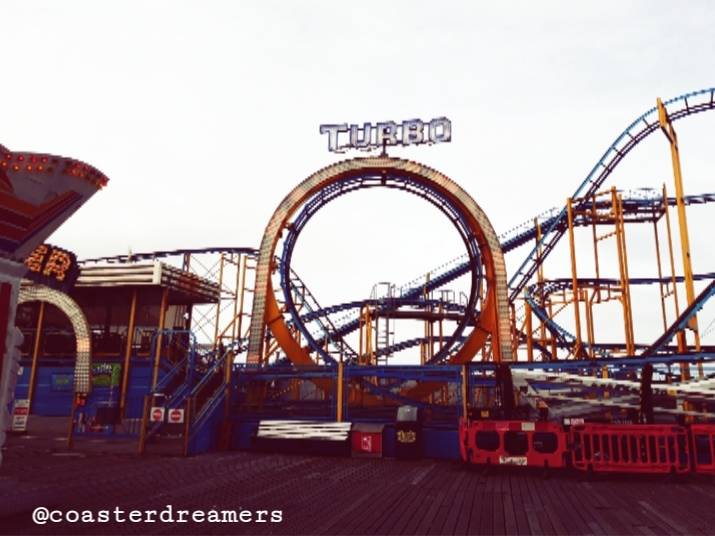
The 2000s brought three new rollercoasters to Camelot, allowing the park to finally compete in the UK thrill market. Gauntlet, a Pinfari ZL42 similar to Brighton Pier’s Turbo, debuted in 2001, and a Maurer Spinning Coaster with the name Whirlwind opened just two years later. 2007 marked the opening of what was arguably the park’s largest and most successful investment: Knightmare, a thrilling coaster built by German manufacturer Schwarzkopf, that could be seen from a nearby motorway.

The Decline of a Great Park

Sadly, the 2000s weren’t all good for Camelot Theme Park, yearly attendance was dropping at a significant rate and in 2005 just 336,204 visitors set foot inside the park. A year later the park ranked second bottom in a healthy food survey for major tourist attractions in the UK, and as you can imagine, this vastly damaged Camelot’s image. Camelot Theme Park did not open at all in 2009, for the first time in the park’s history, likely due to the financial and attendance issues faced at the time, exasperated by the 2008 financial crisis.

With heavy hearts the park’s owners announced it would be forced to close in September of 2012, due to financial issues and a drop in attendance, and the UK lost a classic theme park. Camelot Theme Park holds so many memories for so many people, yet today lays forgotten and abandoned, open to anyone who wishes to have a look at their own risk, and subject to occasional vandalism.

It’s heartbreaking to see such a beloved attraction simply neglected the way it has been for the last eight years, and while the future of Camelot’s site is uncertain, many people believe it will be the home of a new housing development, especially after it was purchased by construction company Story Group. In February 2020 the park’s most popular rollercoaster Knightmare was demolished, to both fascination and dismay from fans and enthusiasts. In recent years other rides have been relocated to parks across Europe; by this point it seems Camelot Theme Park is sadly not here to stay.

What are your memories of Camelot Theme Park? How do you predict the site will be redeveloped in the future? Let me know below, and join the conversation!

  1. lily712005's avatar
  2. Jv's avatar
  3. lily712005's avatar
  4. Al's avatar
  5. Simon vater's avatar

If you enjoyed this article, check out some of my other posts from theme park around the world, and consider subscribing to have the latest theme park content delivered straight to your inbox!

Arrow Masterpieces from Around The World

November 1945 was the beginning of something incredible for the amusement park industry, which then was practically non-existent, other than a few regional parks temporarily closed (that sounds all too familiar!) due to the Second World War. In a small workshop in Northern California, engineers Karl Bacon and Ed Morgan began a machine shop, and…

A Country of Innovation- The record-breaking and pioneering coasters of the UK

The UK: land of tea, history… and amazing coasters. Compared to many other countries across Europe, here in the UK we aren’t exactly known for our thrilling rides and rollercoasters, with many UK parks, particularly in the South and East, going for a more immersive, themed approach. However, British theme parks are home to many…

Photo credits:

-themeparkthrillseekers on YouTube and Instagram https://www.instagram.com/themeparkthrillseekers/ https://www.youtube.com/channel/UCvfQBWnla9Wvs7LDjPT-J6w

-@thade_the_extraterrorestrial on Instagram https://www.instagram.com/thade_the_extraterrorestrial/

Thanks for your help!!

Thanks for reading!

-Lily

Arrow Masterpieces from Around The World

November 1945 was the beginning of something incredible for the amusement park industry, which then was practically non-existent, other than a few regional parks temporarily closed (that sounds all too familiar!) due to the Second World War. In a small workshop in Northern California, engineers Karl Bacon and Ed Morgan began a machine shop, and soon Arrow Development was a thriving business. The early 1950s led to a shift in the company’s focus; machine parts were less in demand as leisure industries rose, and Arrow developed the first ever carousels, or merry-go-rounds, for the nearby Alum Rock Park in San Jose, California.

It wasn’t until Walt Disney contracted the company in 1953 however, to play a part in creating the world’s first theme park, Disneyland, when Arrow’s founders really realised what they were capable of. After building many innovative new ride systems, from Snow White’s Adventures to Mad Tea Party, Ed Morgan and Karl Bacon would work with Walt Disney to build their first rollercoaster, and the world would experience the first tubular steel tracked ride, Matterhorn Bobsleds. Since then the company went through all the ups and downs and twists and turns of a rollercoaster, with many enjoyable and intense rollercoasters popping up along the way, so lets explore some Arrow Dynamics history and celebrate some of the masterpieces this now defunct manufacturer has left behind!

Magnum XL-200, Cedar Point

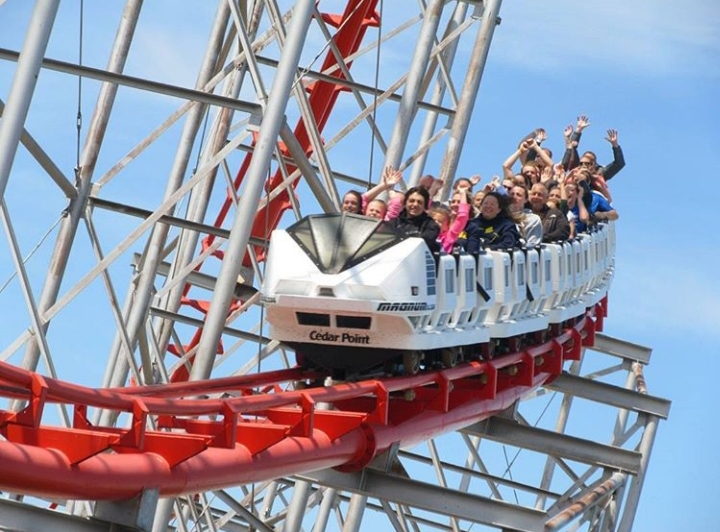
The Rollercoaster Capital of the World is known for it’s innovative and record-breaking rides, and Magnum XL-200 is an early but still great example of this. Opened in 1989, this coaster was the first ever Arrow Hyper, over 200ft, standing at an impressive 215ft! Thirty one years later Magnum still packs a punch, with several airtime hills and a drop of 195ft, or 194.7 if you’re being super precise.

Fun fact- when Magnum XL-200 opened in 1989, Cedar Point actually played down the height, advertising it as 201ft as opposed to the more truthful 205ft statistic the park uses today! No one really knows why they did this, but it’s likely just to make it seem slightly less intimidating- Magnum opened in the late 1980s, when the idea of any coaster over 200ft was terrifying (and still can be!), and this advertising method was probably used to bring more riders to the coaster, rather than scare them away!

Vampire, Chessington World of Adventures

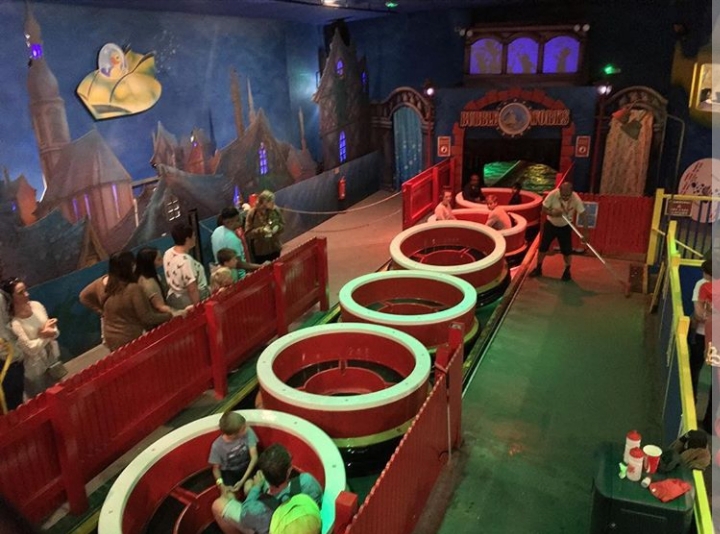
Throughout the 80s and 90s the Tussards Group were working hard to transform the historic Chessington Zoo into a family theme park, one of the first in the UK. The second phase of this involved the opening of Transylvania, a new themed land which was home to two attractions, Professor Burp’s Bubbleworks, a water-based darkride, and Vampire, a suspended swinging coaster manufactured by Arrow Dynamics.

If you want to learn more about Transylvania and its well-loved rides, check out this article exploring the history and closure of Prof. Burp’s Bubbleworks!

Designed by attraction designer John Wardley, Vampire opened with the rest of the land in April 1990, and was an instant success with visitors, able to be enjoyed by families and thrillseekers alike. The coaster opened with traditional Arrow Suspended trains, and operated with these until 2001, when Vampire underwent renovation and reopened a year later with updated floorless trains by Vekoma. The new trains not only fixed some roughness issues with the Arrow trains, but also added an extra thrill element to the ride, letting riders’ feet dangle over the trees, making them feel as if they’re really flying!

X2, Six Flags Magic Mountain

California is home to many incredible parks, with some great rides, and Six Flags Magic Mountain in Valencia, Santa Clarita is one of the largest. This park holds the world record for the highest number of rollercoasters in a single amusement park, but this isn’t the only legacy Magic Mountain holds- it is also the location of the last ride Arrow Dynamics ever built! When Six Flags received planning permission for a new coaster in the year 2000 Arrow’s legacy influenced their decision to contract the company to build the ride, and despite being close to bankruptcy, they had something game-changing in mind.

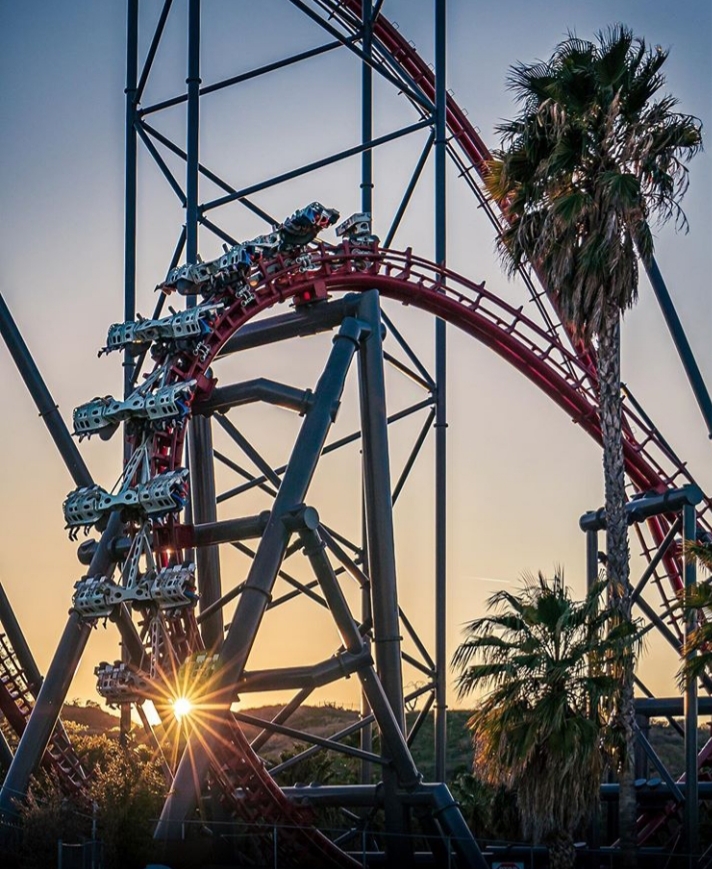
The result was the world’s first 4th Dimension, or 4D coaster, a new and experimental take on rollercoasters which involved riders being on either side of the track, rather than above or below. The trains would spin freely as they navigate the layout, creating an all new experience for riders. X soft-opened in December 2001, but didn’t have its official opening until a month later in January 2002. Unfortunately this ride couldn’t secure Arrow’s future, and the company went filed for bankruptcy shortly after X’s public opening.

When X received new trains in 2008, it was renamed to X2. First new trains are added to Vampire, then X2, it seems many Arrow coasters end up getting upgraded trains at some point or another!

Matterhorn Bobsleds, Disneyland

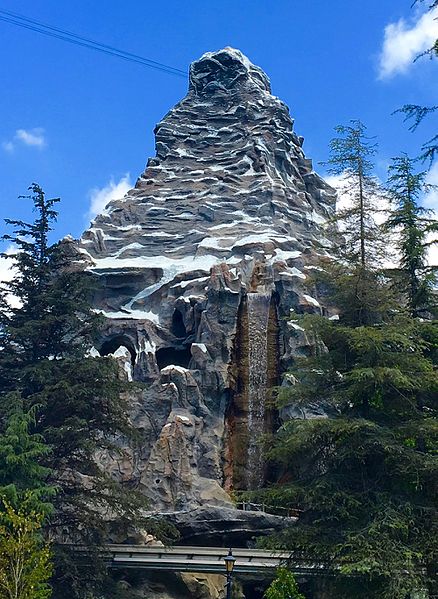
Opened in 1959, Matterhorn Bobsleds is possibly one of the most iconic coasters of all time, holding countless legacies, including the first rollercoaster in a Disney park, the first ever ride to utilise a tubular steel track, and of course the Disney mountain that led to every other Disney mountain! This classic ride is also well-known among the theme park community for another reason- it is the first rollercoaster Arrow Dynamics, then Arrow Development, ever built. It really was the one that started it all.

Disneyland had been open for a few years when there was a demand for a new thrill ride, at the time Snow White’s Adventures was the most thrilling ride at the park and as more and more darkrides sprung up across the US, it began to lose its novelty. Even back then, nothing could beat that unique Disney magic (or fear!) but the demand was there even so. Walt Disney wanted to build the Disneyland’s first thrilling rollercoaster, but not lose the immersivity of his other attractions, but unfortunately he was unable to find a company would dare to take such a risk. That was, until Walt approached Arrow Development, who had already built Disneyland rides such as Mad Tea Party, King Arthur Carrousel and Autopia, and asked them to design a coaster that would take riders on a bobsled adventure around a snow covered mountain, plunging into water at the end.

It was certainly a challenge, but the growing company took it on, and after a few years of construction Matterhorn Bobsleds opened in June 1959, housed mostly in a forced perspective rockwork mountain inspired by the Matterhorn mountain in Switzerland. The whole ride was revolutionary, from the impressive theming that likely led to the creation of so many other heavily themed coasters, to the new tubular steel track that creates the feeling that you really are riding a bobsled, right down to the plunge into water at the end of the adventure. That bit never made much sense though, surely if it’s in the mountains, everything would be frozen and icy- so how is there an un-frozen pool of water for riders to plunge into?

Fun Fact: when Matterhorn Bobsleds was being designed, Walt Disney actually wanted there to be real snow on the mountain, but due to the technical limits at the time, and the hot California summers, this was practically impossible, so fake snow was used instead!

The Big One, Blackpool Pleasure Beach

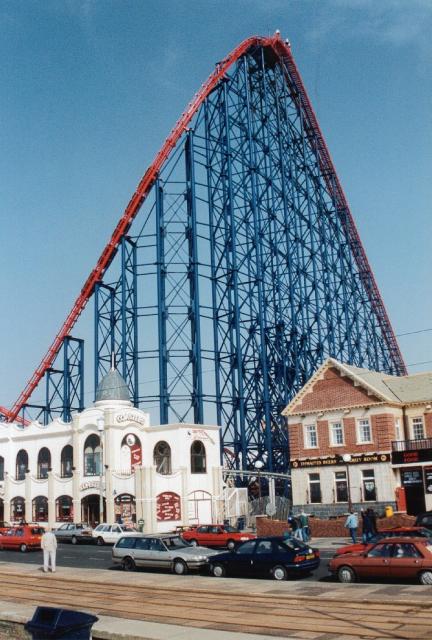
This ride is exactly what the name suggests: big. When The Big One opened to thrill-seeking riders in May 1994, it broke the record for world’s tallest coaster, previously held by Magnum-XL 200 at Cedar Point, and even today holds the title of the UK’s tallest coaster at over 200ftft. (We really need a giga over here in the UK, or just a hyper that’s taller than Steel Curtain!) The second Arrow hyper is extremely similar to its predecessor Magnum XL-200, with an almost identical track colour and layout, and both coasters offer a beautiful coastal view as the trains climb the lift hill.

The Big One’s height is actually a bit of a grey area, with different sources giving different statistics, it is widely accepted that the drop is 205ft, but the most common height figures are 213ft, or slightly taller at 235ft. Which height stat do you believe? Let me know below!

For seventeen years, The Big One was sponsored by well-known drinks company Pepsi Max, and was known as the Pepsi Max Big One, and it wasn’t until 2011 when the ride’s sponsorship was removed, and the name was shortened to the same name it holds today. While it may not be a world-record breaker anymore, The Big One is still an impressive rollercoaster that is a favourite among thrillseekers and enthusiasts visiting Blackpool Pleasure Beach today!

Corkscrew, Cedar Point

Out of all the coaster models built by Arrow Dynamics, the classic Corkscrew was one of the most popular, with 24 installations worldwide, second only to the Custom Looping Coaster. Many Arrow corkscrews have been named simply Corkscrew, and you’d be forgiven for thinking this Corkscrew holds the same name as what it actually is, an Arrow corkscrew. (I said Corkscrew a lot in that sentence, oops!)

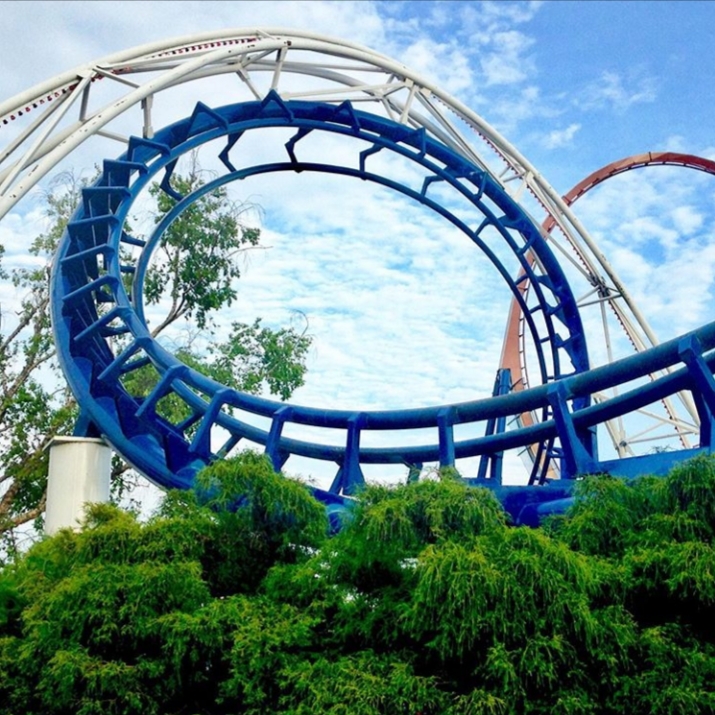
This is not the case however- the Cedar Point Corkscrew is in fact a Custom Looping Coaster! Even back in 1976, when this classic rollercoaster opened to thrill-seeking riders, Cedar Point were breaking records with almost every coaster they opened, and Corkscrew broke the world record for the most inversions with three! Nowadays, with rides like Smiler at fourteen and Colossus at ten, three inversions seems like hardly any, but at the time this coaster was cutting-edge.

The three record-breaking inversions are a vertical loop, and two corkscrews that interlock, hence the name Corkscrew. Today, many riders find this classic Not-A-Corkscrew (yes, I did just make that up!) rough and uncomfortable, and like many Arrow coasters it has began to lose some of its smoothness, but no matter whether you love it or hate it, coasters today may not be the same if Corkscrew was never built! It really is a ride of historical significance!

What is your favourite ride or rollercoaster by Arrow Dynamics? Let me know below and join the conversation!

  1. lily712005's avatar
  2. Jv's avatar
  3. lily712005's avatar
  4. Al's avatar
  5. Simon vater's avatar

If you enjoyed this article, check out some of my other posts from theme parks around the world, and consider subscribing to have all the latest theme park content delivered straight to your inbox!

Coasters Really Do That?- The biggest theme park myths busted!

There are so many myths and legends surrounding the theme park industry, but have you ever wondered which of these are true? In this post we separate myth from fact, explain aspects of rollercoaster safety and even explore where some of these myths stem from!

A Country of Innovation- The record-breaking and pioneering coasters of the UK

The UK: land of tea, history… and amazing coasters. Compared to many other countries across Europe, here in the UK we aren’t exactly known for our thrilling rides and rollercoasters, with many UK parks, particularly in the South and East, going for a more immersive, themed approach. However, British theme parks are home to many…

Frozen vs. Maelstrom: the battle of the Norway Pavilion

Norway is a country of beauty, wonder and of course adventure, and this was represented incredibly well by the Norway Pavilion in Epcot’s World Showcase. The pavilion opened in June 1988, and for over 25 years remained largely the same, with a single darkride that brought the spirit of Norway to Florida, among other services…

Photo credits:

-@usa_coaster_thrills on Instagram https://www.instagram.com/usa_coaster_thrills/

-@OzThrills on Instagram https://www.instagram.com/ozthrills/

-@theme_park_photos_uk on Instagram https://www.instagram.com/theme_park_photos_uk/

-@rollercoasterrebel on Instagram https://www.instagram.com/rollercoasterrebel/

-@thrillsawait on Instagram https://www.instagram.com/thrillsawait/

Thanks for reading!

-Lily

Frozen vs. Maelstrom: the battle of the Norway Pavilion

Norway is a country of beauty, wonder and of course adventure, and this was represented incredibly well by the Norway Pavilion in Epcot’s World Showcase. The pavilion opened in June 1988, and for over 25 years remained largely the same, with a single darkride that brought the spirit of Norway to Florida, among other services and attractions, a similar layout and idea to many other World Showcase pavilions. However, in the mid-2010s, Norway became the first pavilion to be represented by a fictional story, that captured the heart of so many when it was released in 2013.

“The spirit of Norway has always been, and will always be, adventure”

Quote from the end of the ride experience on Maelstrom, Epcot

The Creation of Epcot’s Norway

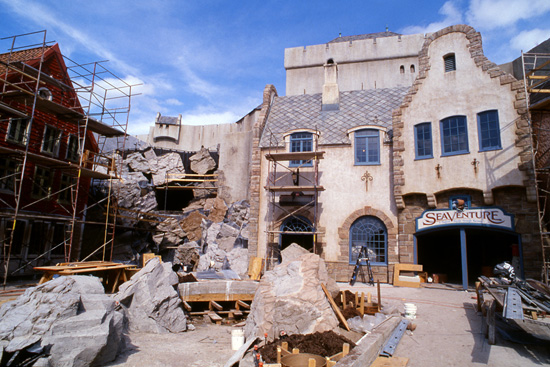
When World Showcase was designed, Imagineers made sure to leave plenty of expansion space around the pavilions, so that there will always be the potential for new countries to join. This expansion space was used for the first time in 1984, just two years after EPCOT Center opened, to make way for a new Morocco Pavilion, and most recently in the late 1980s, when ground broke for the eleventh and newest country in World Showcase: Norway. As construction progressed it became clear the pavilion would be home to a major, immersive darkride, and entrance signage showed that it would be named SeaVenture: A High Seas Norwegian Adventure.

The ride had a last minute name change just two months before it’s opening, and became Maelstrom, which is the Nordic word for a dangerous and powerful sea storm, while the slogan remained the same. On 3rd June 1988 the Norway Pavilion opened to guests, and Maelstrom in July of the same year. This amazing new darkride became an icon of World Showcase, and a powerful reflection of what EPCOT Center is all about: adventure, education and innovation.

A Perilous Norwegian Voyage

Maelstrom wasn’t actually a dangerous voyage through rough Northern seas, but, to many people who rode Maelstrom, it sure felt like it. The ride experience began when guests boarded a boat styled after traditional Norwegian Viking ships, and went on a gradual climb up a 28ft lift hill, while a voice told them “you are not the first to venture down this path”, before an intimidating lit image of the Nordic god Odin was revealed at the top of the hill. Immersive scenes of Norwegian villagers and seafarers depicted what life would have been like in Viking Norway, and it just seemed like a gentle boat ride through Norwegian history and legends-

That was, until you encountered the troll.

A three headed monster of a troll animatronic would be angered at the sight of the riders, for seemingly no apparent reason, other that they’re disturbing him, I guess, and cast a spell on the boat, causing it to sail quickly backwards on hidden conveyer belts under the water. The boats would come to a stop on a waterfall, and the back of the vehicle would peek out through the ride’s façade, which really built up anticipation for guests around the pavilion, either queuing for Maelstrom or simply exploring the pavilion.

Riders would be held on the waterfall for several seconds before plunging 28ft into the turbulent North Sea, adding an extra thrill element to this already thrilling darkride. The boat would then pass an oil rig and sail into a peaceful Norwegian harbour, where riders would exit their Viking ship and have the option to either exit out into the pavilion, or watch a film about the most beautiful tourist attractions in Norway.

Maelstrom was loved by guests young and old, and the only complaint the ride got was that it wasn’t long enough, and when it underwent a refurbishment in 2014, Imagineers took care of this problem, as well as putting a whole new spin on the ride and the entire Norway pavilion!

The Frozen Era

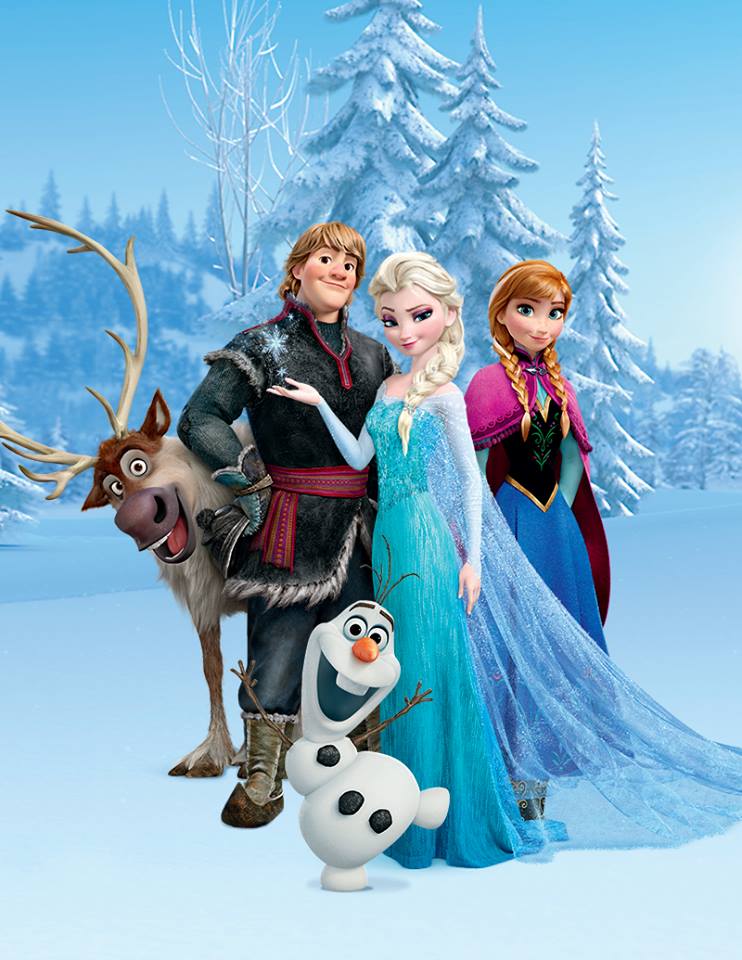
If you haven’t heard of Disney’s 2013 hit film Frozen, you’ve likely been living under a rock for almost seven years, or in an Ice Palace on the North Mountain, either one. This new Disney princess movie introduced us to Elsa and Anna, the Scandinavian queen and princess of Arendelle, a kingdom based mostly off Norway, and we also met their friends, ice seller Kristoff and his reindeer Sven, and magical snowman Olaf. Frozen showed the world the importance of friendship and sisterly love, and touched the hearts of many kids and kids at heart for years, and, as you can imagine, there was a huge need for a Frozen attraction at the Disney parks.

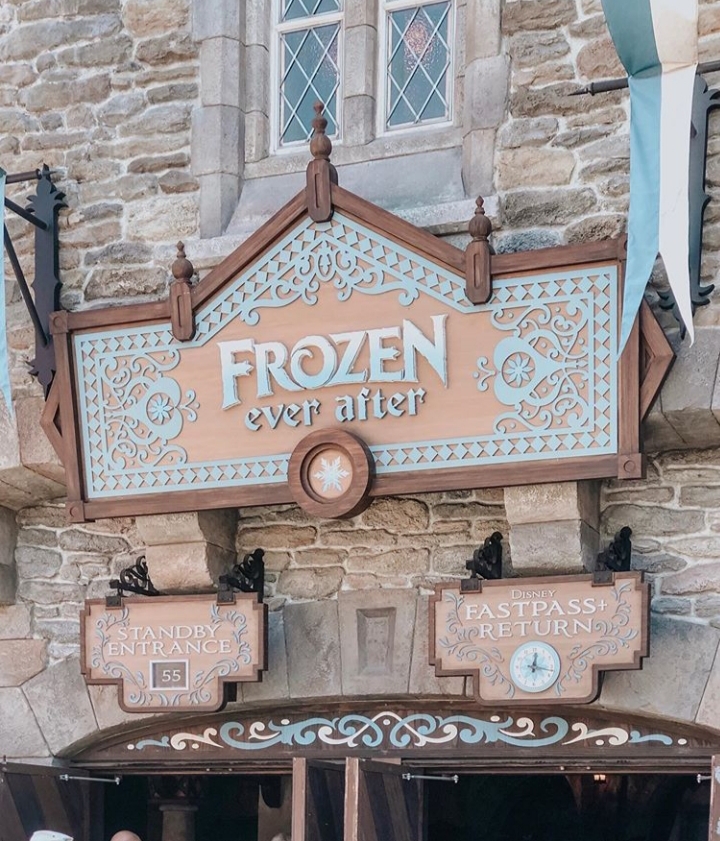
Magic Kingdom’s Festival of Fantasy parade debuted in 2014, with Anna, Elsa and Olaf waving to guests from the Princess Float, and, from the same year, guests could meet the much-loved sisters at the Norway Pavilion’s Royal Summerhaus. But this wasn’t the only change that would come to Norway in 2014 however, a major change was coming in September 2014, when it was announced that Maelstrom would be closing permanently, and a new Frozen attraction would replace it. Soon after the announcement construction began on the rethemed version, and in 2016, Frozen Ever After operated for the first time, attracting queues up to six hours on it’s opening day (and that was just the FastPass line!)

A Frozen Fairytale

Warning: if you haven’t yet ridden Frozen Ever After, and you want to keep the experience a surprise, now may be a good time to click off of this article, as there are going to be a LOT of spoilers from here on in. You have been warned…

Walt Disney Imagineering did a magnificent job on the new ride. The ride system and the boats remained the same, but the feel of the ride completely changed. Two new scenes were added before the lifthill to lengthen the ride, and the dark tunnel that riders travelled through at the beginning of Maelstrom was replaced with hanging icicles that sparkle in the light, before an impressive Olaf animatronic is revealed, singing one of a few variations of Do You Want To Build A Snowman.

Travel through the ride further and you would see Kristoff’s ‘family’ the rock trolls, telling the story of the first Frozen movie, and letting you know that you were travelling up to the ice palace to see Elsa, if you didn’t know that already. Projections of whirling ice and snow are shown on the walls, which were just black on the previous attraction. When you reach the top you meet Olaf once again, this time ice skating, and singing For The First Time in Forever, with Anna and Kristoff, before the great ice doors open, and Elsa is revealed, an incredibly lifelike audio animatronic singing that iconic song that I’m about to get stuck in your head: Let It Go!

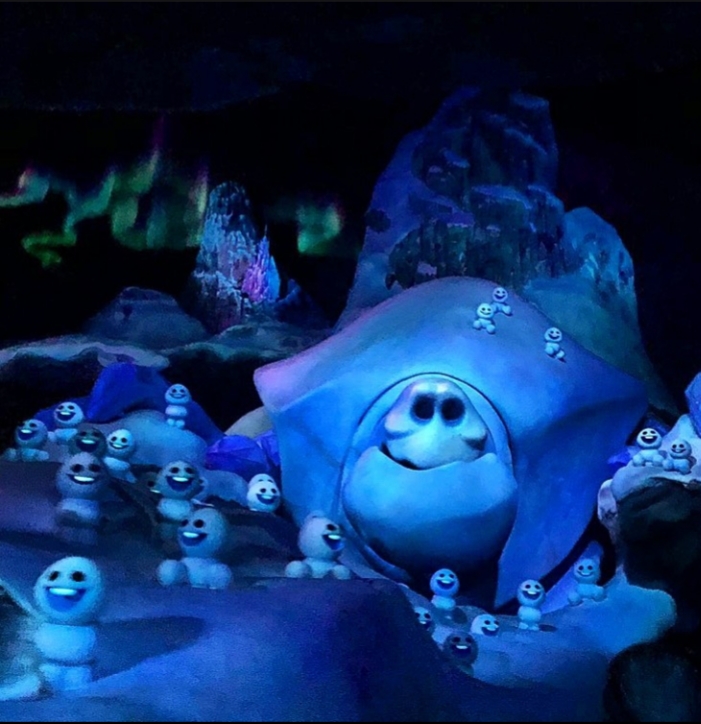
Elsa sends your boat sailing quickly backwards past screens and physical sets, and riders sail past Marshmallow and the Snowgies, who blow out fog and send you speeding down the drop, into scenes of Elsa, Anna and Olaf singing the not so well known but still loved song In Summer, before you enter the unload station, which is now in the same place as the load station, while on Maelstrom they were in separate areas, and this change can affect the throughput on Epcot’s busiest days.

Like a Snowflake, No Ride Was the Same!

Why was this? Because in Frozen Ever After’s opening year of 2016, ride operations were plagued with issues, from animatronics malfunctioning, to special effects not working, it was almost rare to get a fully functional experience. Another common issue was the ride breaking down altogether, particularly at two specific points: the lifthill, and the beginning of the backwards portion of the attraction. When this occurred, the ride was powered down, the worklights switched on, and guests would get the ride evacuation experience that many of us Disnerds dream of.

It turned out many of these technical problems were actually just teething issues and by 2017 were mostly ironed out, but the queues still didn’t lighten by much- Frozen Ever After remained as one of the most popular attractions at Epcot, and still is today! Well, not exactly today, but you get what I mean.

Is Frozen Ever After a Worthy Successor To Maelstrom?

It’s impossible to have a definitive answer to this, as, like many things, different people have different opinions. Some people hate Frozen Ever After simply because it replaced Maelstrom, or just because they hate the movie, while others have a preference for one, but still have a soft spot for the other. Every rider has different ideas on what makes a darkride good or bad.

A complaint Frozen Ever After often receives is that there’s no storyline or meaning, its just a senseless product placement that has no business being in the educational park of Epcot. I may be a little biased, as I never rode Maelstrom and am a huge fan of the Frozen movies, but I LOVE Frozen Ever After! Many of the elements used on the ride were revolutionary at the time it opened and still are four years later- from the fluent animatronics to the immersive special effects, and its amazing that the Imagineers were able to turn a perilous adventure through Norway into a winter fairytale, all while keeping the ride system mostly the same. I say anyone who hates Frozen Ever After needs to just let it go!

The storyline may not be especially detailed, but it is there: it is Arendelle’s annual Summer Snow Day, and Elsa is inviting you, the guests, to come and visit her in her Ice Palace. I’ve never really understood the end scene in which Anna, Elsa, and Olaf are singing about summer though, it just seems a bit sudden after all the wintery scenes that came before it.

As much as I love Frozen Ever After, I don’t really think it belongs in Epcot. Sure, Arendelle is loosely based on Nordic regions like Norway, but it doesn’t actually teach guests anything about the culture or history of Norway, not the way Maelstrom did. Epcot was always meant to be about education, and widening our view of the world, right from the beginning when Walt Disney designed Epcot as a city of the future in the 50s and 60s. Frozen Ever After just doesn’t fit with the theme of learning and discovery, and I believe it would’ve worked much better in Magic Kingdom’s Fantasyland, or even in Hollywood Studios.

At the time of opening, Frozen Ever After made no sense with it’s placement in World Showcase, but now it is becoming more understandable. In the last few years many new attractions have been announced for Epcot, such as Remy’s Ratatouille Adventure, set to open at some time this year (hopefully!) and Guardians of the Galaxy Cosmic Rewind, Epcot’s first rollercoaster, opening in 2021, and it’s clear Epcot is beginning to move more towards the IP market with it’s attractions.

If you want to learn more about Epcot’s history and hear more of my thoughts on the park’s current move towards more IP based attractions, check out this other post about Epcot, where I discuss just that!

The Disney Park of the Future: has Epcot lost sight of it’s vision?

Let’s face it: what with all the Disney parks closed, we’re all facing a bit of Disney withdrawal, myself included in that. Today I’ll try to cure a bit of your (and my) theme park withdrawal by diving into the history of one of the world’s most famous theme parks, a park that started with…

What are your thoughts? Did you ever ride Maelstrom, and which Norway Pavilion darkride do you prefer? Let me know below, and join the conversation!

  1. lily712005's avatar
  2. Jv's avatar
  3. lily712005's avatar
  4. Al's avatar
  5. Simon vater's avatar

If you enjoyed this article, check out some of my other posts from theme parks around the world, and consider subscribing to have the latest theme park and coaster content delivered straight to your inbox!

Coasters Really Do That?- The biggest theme park myths busted!

There are so many myths and legends surrounding the theme park industry, but have you ever wondered which of these are true? In this post we separate myth from fact, explain aspects of rollercoaster safety and even explore where some of these myths stem from!

Europe’s Greatest Darkrides- one continent, many amazing worlds

Europe is home to many incredible darkrides, from the thrills of indoor rollercoasters, to the beauty of many of the scenes in some trackless and water-based darkrides. Not all rides are created equal however, and some parks go all out with creating the most immersively impressive darkride experiences for their guests, combining technology, story and…

Photo credits:

-@decoratedindisney on Instagram https://www.instagram.com/decoratedindisney/

-@ez_atdisney on Instagram https://www.instagram.com/ez_atdisney/

-@disneyslostqueen on Instagram https://www.instagram.com/disneyslostqueen/

-Disney Parks Blog https://disneyparks.disney.go.com/blog/2012/07/vintage-walt-disney-world-looking-back-at-epcots-maelstrom/

-Theme Park Tourist / CC BY (https://creativecommons.org/licenses/by/2.0)

Thanks for reading!

-Lily

Coasters Really Do That?- The biggest theme park myths busted!

We’ve all been there. You’re queuing for your favourite coaster or ride and then you overhear someone in the group in front of you “Is this ride safe? What if it gets stuck?” and you sigh, wanting desperately to reassure them but not wanting to seem like too much of a nerd. Well, it’s time to bust some of the biggest myths and lies surrounding the theme park industry, and hopefully put some of that worried riders’ nerves to rest!

Boardwalk Rides are Dodgy and Unsafe

This one goes for travelling rides, too. Those expensive rides at your local boardwalk, pier or funfair may look like they’re about to fall to bits, but they’re actually as closely regulated as the rides at a regular theme park, going through meticulous tests every morning before opening and using an elaborate safety system that will stop the ride if anything that could result in an unsafe experience is found.

UK Law states that “a test or series of tests to check that the device operates safely in accordance with the reviewed design specification and the instructions in the operations manual” must be carried out on rides as frequently as possible, and many other countries have extremely similar restrictions. For larger, more thrilling attractions such as rollercoasters and drop-towers, there are even tighter safety restrictions so, when you’re getting your adrenaline fix at a theme park, funfair or local boardwalk, rest assured you’re being protected by the law! Just try not to get too dizzy on that Waltzer…

Coasters are Powered By Electricity- and They Can Break Down on an Inversion

Once your train has climbed to the top of the lift hill or completed the launch and you enter the first drop, your entire experience is left to the laws of physics, but that doesn’t mean it’s unsafe! Ride designers and engineers must have an extensive knowledge of physics and maths to ensure that you not only are able to navigate the track safely, but enjoy it too- incorporating inversions and airtime into the ride that really enhance the experience, as well as adding an extra thrill element! There has been one case of riders being stuck upside down on a loop, however this was in the early 1990s, almost twenty years ago, and safety restrictions have improved significantly since then.

Several rollercoaster manufacturers, including Zamperla and Mack Rides, have actually created a coaster model that is powered by electricity, known as a Powered Coaster, but these rides are typically kiddie or family coasters, and a powered coaster with inversions is extremely rare.

There are two places on a coaster you can actually get stuck: the breakruns and the lifthill, and every theme park has procedures that are taken if a train should stop in any of these places, which leads us onto our next point.

Ride Evacuations

The term “Ride Evacuation” sounds terrifying, but if you are involved in one of these park safety procedures, it’s really nothing to worry about. Next time you ride a rollercoaster, have a look at the metal staircases on either side of the lifthills and breakruns- these are known as Catwalks, and are what make evacs so safe.

All rides, particularly rollercoasters, are riddled with safety cameras and sensors, that immediately inform the ride operators if any unusual or potentially dangerous object is found. Should this happen, the ride’s safety system will stop the train in one of the safe areas, and the only way the train can be released is if the object is removed, or the operators rule that the safety system has been oversensitive, which is extremely rare. If the problem cannot be solved quickly and engineers need to be called in, riders will be taken down the Catwalk by the ride operators and will sometimes be given a Fasttrack ticket to come back to the attraction later in the day!

Some enthusiasts actually enjoy ride evacuations, as there is a chance for an exclusive behind-the-scenes look at how the attraction actually works, especially on darkrides, when evacuated riders may have to get up close to the animatronics and sets in order to leave the ride!

The Height Limit is Useless, And There Are Ways Around It

Just no. Ride designers decide on specific instructions for riders based on age, height, and medical conditions solely for your safety, and if you don’t follow these guidelines you could be injured or worse. Attempting to find a way around these safety rules is an extremely dangerous thing to do, whether you’re putting something in your child’s shoes to bulk up their height, riding something that you’re clearly too old or too large to ride, or going on a ride under the influence of drugs or alcohol, just.. please don’t.

Ride operators work tirelessly to ensure you have a safe and enjoyable experience, and the last thing they need is you compromising the safety of you and your fellow riders. So please, if you are unable to ride that rollercoaster or water ride now, just give it a miss and come back next time.

Wooden Coasters are Old and Rickety

At first glance, wooden coasters can look petrifying, even to enthusiasts. It’s a towering, fear-inducing structure made almost solely from planks of twisted timber(s!). The very thought of a major wooden coaster is intimidating, but when you board a train on this daunting structure, you can rest in the knowledge that you are in extremely safe hands, or… trains.

Some of the world’s oldest rollercoasters are in fact woodies, which is where the belief that all wooden coasters are old likely stems from. But there are in fact many manufacturers, such as The Gravity Group of Ohio and Great Coasters International of Pennsylvania, that are constantly innovating in technology to make newer, safer and more thrilling wooden coasters than ever before, and today, many of the world’s woodies are actually very new! Pictured above, the Cu Chulainn coaster located at Tayto Park in County Meath, Ireland, opened in 2015, while Wicker Man at Alton Towers, England opened in 2018!

So, next time you’re visiting an amusement park and you’re deciding whether or not to ride that wooden coaster- go for it! Woodies are often some of the most enjoyable rides in the park, combining an airtime-filled mix of thrills and fun for an incredible ride!

Disney Is A Cult, and Every Disney Fan is a Devil Worshipper

Um, sorry, but, what??? I have no idea where on earth this strange myth came from, but it’s definitely the most obscure on this list! Us Disney fans don’t worship the Devil, we worship a giant mouse named Mickey!

Looking at it from an outsider perspective though, Disney parks could appear a bit like a mouse-worshipping cult. Every day, millions of people flock to selected areas around the world, where visitors wear decorated mouse ears, queue for hours to have a photo taken with a mouse (among other characters!), and not-so-hidden mouse silhouettes are waiting around every corner! Maybe Disney fans really are members of a cult, he he he…

Theme Parks Are Just For Kids

First of all, how dare you? Theme parks are built for the enjoyment of the whole family, with many parks featuring smaller kiddie rides for younger visitors as well as intimidating rollercoasters and flat rides for the thrillseekers in the group! Second of all, there’s plenty to enjoy at a theme park, even if you’re not a massive fan of the rides. Major theme parks often have other attractions for guests to enjoy, including shows, games and water parks!

What are some other myths you’ve heard surrounding theme parks and rollercoasters? Let me know below, and join the conversation!

  1. lily712005's avatar
  2. Jv's avatar
  3. lily712005's avatar
  4. Al's avatar
  5. Simon vater's avatar
  6. Passport Overused's avatar

If you enjoyed this article, check out some of my other posts from theme parks around the world, and consider subscribing to have all the latest theme park content delivered straight to your inbox!

A Country of Innovation- The record-breaking and pioneering coasters of the UK

The UK: land of tea, history… and amazing coasters. Compared to many other countries across Europe, here in the UK we aren’t exactly known for our thrilling rides and rollercoasters, with many UK parks, particularly in the South and East, going for a more immersive, themed approach. However, British theme parks are home to many…

Thanks for reading!

-Lily

The World’s Worst Coaster Names

When parks open a new ride or attraction, a major decision they have to make is the theme the ride will be based around. Will it be scary and sinister? Family-friendly? Meaningful? A large part of determining and marketing the theme of an attraction is deciding on the name, and some parks do this (significantly!) better than others. I, and many of you scoured RCDB to find the most ridiculous, hilarious, weird or outright stupid names given to actual coasters and rides, and together we’ve gathered quite an unusual list, so here are the seven most strange and obscure ride names out there!

Dizzy Love and Whirling Passion, Discoveryland, China

Located in the Liaoning Province in the Northeastern China, Discoveryland is home to four rollercoasters. The majority have relatively normal names, Crazy Cobra, Flying Dragon and Thunderchariot. One coaster stands out from the rest however due to it’s highly unusual name: Dizzy Love and Whirling Passion. This well-known ride is a breed of Suspended Looping Coaster, or SLC, and is considered to be once of the most intense rides at the park, but most people know Dizzy Love and Whirling Passion for it’s obscure and even hilarious name!

Hundeprutten, BonBon Land, Denmark

A guest visiting BonBon Land in Denmark with little to no knowledge of the Danish language would likely just ride this Zierer Family Coaster without realising the meaning of the ride’s name, but if you speak Danish, you’ve probably already realised that Hundeprutten translates into English as Dog Fart! Yes, I’m serious. This is the name the owners of BonBon Land actually went with for their new coaster in 1993!

There is a backstory behind this unusual and comical name though. BonBon Land was the brainchild of a chocolatier that was most known for his strange-sounding flavours, and a favourite among customers was a sweet known simply as Dog Farts! So, no, this family coaster isn’t actually themed to an actual dog fart, but instead the Danish sweet made by the BonBon company.

5 Ring Roller Coaster, Cangzhou Zoo, China

At least the parks the last two coasters on this list are home to, put some thought and choice into naming their new ride, even if it wasn’t necessarily the right choice. But it seems Cangzhou Zoo in the Hubei province of China just lost all creative spirit when naming their 2017 addition, and, the strangest thing about this already obscure coaster name is that it isn’t even truthful! We can assume that the “5 Ring” aspect of the name refers to the number of inversions this ride has, except… it doesn’t. Instead, it only has four! This may be the biggest case of faking an inversion we’ve seen since Tayto Park tried to market Cu Chulainn as an inverting coaster!

Thank you to @coasternerd1 on Instagram for suggesting this hilarious but untruthful name!

The “Inertia” Coasters of China and North Korea

By definition, inertia is “a tendency to do nothing or to remain unchanged”. Knowing this, it would seem like an obvious decision not to name your ride after a word that basically means “not moving”. But still many parks around the world still choose to name or even theme their coasters after the tendency of inertia, and this strange trend is most common in China and North Korea.

Big Worm Inertia Train at Zhongshan Park in China is the most well known among the coaster enthusiast community for it’s extremely weird-sounding name, but this SAMECO Wacky Worm is certainly not the only one! Other “inertia” rides include Inertia Airplane Car at Kaeson Youth Park in North Korea, and Inertia Pulley, Inertia Rollercoaster, Inertia Car and Inertia Coaster at various parks across China. That sure is a lot of inertia for a type of ride that is known for quick twists and turns!

Happy Birthday, Brazil

No, this indoor park in the west of Brazil isn’t hoping you have a great birthday. At least, it probably isn’t. Happy Birthday, located in the Brasilia region of Brazil is home to just one coaster, Mini-Montanha Russa, translating into English as Mini Rollercoaster, among other attractions such as a simulator experience and a bumper cars type ride. The park opened to the public in the early years of last decade and is a popular attraction among locals!

Speed Roller Coaster, Yancheng Chun-Qui Land, China

It’s a rollercoaster, a Zamperla Volare to be exact, that has a high speed. The name says it all really.

Coaster

If you thought 5 Ring Roller Coaster was an uninspired name, you’d be surprised to find how many parks shorten the names of their rollercoasters to just “Roller Coaster, or even “Coaster”! According to RCDB, there are over thirty coasters with the name “coaster” and 309 named “rollercoaster”. The name “Roller Coaster” is common among older coasters, built at a time when rollercoasters and theme parks were not nearly as popular, so a ride named Roller Coaster would likely have been the only coaster in the park when it opened!

Lagoon’s Roller Coaster is the most famous example of this, opening in 1921 and being the oldest coaster in the park today. However, many parks, particularly smaller-scale ones, continue to give their ride this obvious name even now, whether it be because it really is the only coaster in the park, or they’re just out of ideas. It’s a descriptive name, I guess.

Thanks to @tommycoaster1911 on Instagram for sending this one in!

Panic Coaster Back Daaaan, Tokyo Dome City, Japan

Many well-known coaster Youtubers, including Coaster Studios and Theme Park Crazy, have mentioned this unusual ride in a video for how strange it really is, but the experience itself isn’t the only weird thing about the coaster. The name sounds like the designers had too many ideas on what the ride should be named and themed after, so they just squashed very idea randomly together, and came out with the mouthful of a coaster name that is Panic Coaster Back Daaaaan.

And if you think the ride is going to make up for the strange name, you’d be wrong. The coaster is basically just a regular Gerstlauer Family Coaster, except with bright lighting, unusual and innovative visual effects, and a lot of projections. This is certainly a crazy coaster, with an even crazier name!

Have I missed any off this list? What are some of the strangest ride names you’ve seen? Let me know below, and join the conversation!

  1. lily712005's avatar
  2. Jv's avatar
  3. lily712005's avatar
  4. Al's avatar
  5. Simon vater's avatar

If you enjoyed this article, check out some of my other posts from theme parks around the world, and consider subscribing to have all the latest content delivered straight to your inbox!

The Disney Park of the Future: has Epcot lost sight of it’s vision?

Let’s face it: what with all the Disney parks closed, we’re all facing a bit of Disney withdrawal, myself included in that. Today I’ll try to cure a bit of your (and my) theme park withdrawal by diving into the history of one of the world’s most famous theme parks, a park that started with…

A Country of Innovation- The record-breaking and pioneering coasters of the UK

The UK: land of tea, history… and amazing coasters. Compared to many other countries across Europe, here in the UK we aren’t exactly known for our thrilling rides and rollercoasters, with many UK parks, particularly in the South and East, going for a more immersive, themed approach. However, British theme parks are home to many…

Europe’s Greatest Darkrides- one continent, many amazing worlds

Europe is home to many incredible darkrides, from the thrills of indoor rollercoasters, to the beauty of many of the scenes in some trackless and water-based darkrides. Not all rides are created equal however, and some parks go all out with creating the most immersively impressive darkride experiences for their guests, combining technology, story and…

A great big thank you to all of my Instagram followers who suggested rides for this list!

-@coasternerd1

-@tommycoaster1911

-@themeparkmario

Thanks for your all help and support!

Thanks for reading!

-Lily

The Secret Formula: the success and sad removal of Chessington’s Bubbleworks

Throughout the late 80s and early 90s, attraction designers like John Wardley were working hard to bring the American concept of a theme park to the UK, and a lot of the parks we know and love today, Thorpe Park, Chessington, Alton Towers and more, were all being redeveloped or built to fit into this growing industry. The growth of theme parks brought the openings of many well-loved classic rides and attractions that still bring a wave of nostalgia for some, one of which being Bubbleworks, located in the Transylvania area of Chessington World of Adventures. This year is the 30th anniversary of this nostalgic darkride and it’s neighbour attraction Vampire, so lets explore 30 years of Bubbleworks history and celebrate the whimsical beauty of this classic attraction!

Just don’t forget the Secret Formula: Juice plus gas equals POP!

The Redevelopment of Chessington Zoo

From it’s opening in 1931, the aim and layout of Chessington Zoo remained mainly the same, a major zoo similar to the nearby London Zoo. Wow, I said ‘zoo’ a lot in that sentence. That was until 1984 however, when the Tussards Group, that owned the complex at the time, decided it was time for an upgrade after a decline in attendance. This would involve the building of several new themed lands, each with their own rides and attractions that fit the theme of the area, and the zoo area becoming just another attraction at the park.

Three years later the renovated attraction opened to the public as Chessington World Of Adventures, a major pioneer in the UK theme park industry. At the time just six rides were in the park, including Runaway Mine Train, Dragon River, Safari Skyway, Smugglers Galleon, The 5th Dimension and the Chessington Railroad; it sounds like a lot, but today Chessington has over forty! Many of these rides are still operating today, just under different names, for example in 2014 Runaway Mine Train became Scorpion Express, with Dragon River becoming Tiger Rock in 2018.

Transylvania’s Two Attractions

1990 brought the opening of Transylvania, a new themed land loosely based on the Romanian region of the same name, which is said to be home to vampires, as part of the second phase of Chessington’s transformation. With it came two brand new rides, Vampire, an Arrow Suspended Swinging Coaster, and Professor Burp’s Bubbleworks, a water-based darkride that was an instant success with visitors young and old. Both attractions were designed by John Wardley, who also designed many other attractions around the park, including The 5th Dimension, now Tomb Blaster.

Medieval theming is used on the show buildings that house Vampire’s dispatch station and the entirety of what was Bubbleworks, as well as on the facades of restaurants and gift shops, to fit with the historic and spooky theme of the area.

Professor Burp’s Bubbleworks- the ride that didn’t quite fit

Professor Burp’s Bubbleworks was an incredible ride, combining whimsical storytelling with colourful and kinetic show scenes so there was always something to look at, but… it didn’t really fit with the overall theme of Transylvania. The attraction took riders on a tour of a magical lemonade factory, led by the factory owner himself Professor Burp. When visiting the park as a child, I always felt that Hocus Pocus Hall and Bubbleworks would fit better in opposite places- Hocus Pocus always had more of a Transylvania vibe to it, don’t you think? This wouldn’t have been able to happen however, as it’s unlikely that Burnt Stub Manor, the building that housed Hocus Pocus Hall

Despite this, Professor Burp’s Bubbleworks was a massive success- visitors loved it’s whimsical, vibrant scenes, the quirky feel it had to it, and of course the music, which probably just got stuck in your head. John Wardley worked with Keith Sparks of the Sparks Group, a company specialising attraction design, to design the characters and rooms that appear in the ride. Meanwhile, the UK engineering companies WGH Transportation and LeisureEtc. joined forces to build the ride’s mechanical system, an omnimover type water-based boat system in which the boats sail between the edges of the water pool, occasionally hitting the borders lightly. This is still used today on Bubbleworks’ rethemed version, which will be discussed later in the post!

WGH would later work with Tussards/Merlin again, on the largest coaster currently at Legoland Windsor: The Dragon, then on this coaster’s smaller version, known as Dragon’s Apprentice.

The Ride Experience

Your tour of Professor Burp’s Bubbleworks began even before you boarded your “Bubble Tub”; the queueline was filled with beautiful hand painted images advertising fictional soda drinks such as Luminous Pop, Cratorade and Jackpot Juice, as well as a bright Transylvania skyline mural just before the beginning of the ride.

The first scene showed Professor Burp in his office, teaching riders the “Secret Formula”: juice + gas= POP! Visitors would then be taken to see the Tropical Fruit Room, with a scene showing a dancing woman singing a song about fruit, along with her pet monkey. Several smaller scenes and rooms would pass then, until riders reached the Laughing Gas scene, with large laughing metal pipes, and an animatronic of Professor Burp also laughing!

If you want to take a virtual ride on the original Professor Burp’s Bubbleworks, by British Theme Park Archive!

This eccentric room led to what may have been the only scary scene in the whole ride: The Pressure Room. The factory staff, known as Willyheads, had conducted some kind of bubble-related experiment gone wrong, and a terrifying red bubble towered over the riders, a menacing look on it’s face! The Mixing Room contained the Hippo Mixer, which, um, wasn’t a hippo, it was an elephant, and could be found in a different room on the ride until Bubbleworks’ closure in 2016, as well as animatronic fruits sitting in a tub known as the Juice Jacuzzi.

Towards the end of the tour riders would visit a kind of bubble funfair, where Professor Burp, on a bike this time, “re-cycles” empty bottles, surrounded by bright amusement rides such as the Helter Seltzer and the famous Cola Coaster. This was arguably the most kinetic scene in this already extremely animated darkride, and was an amazing build-up to the grand finale: Bubbleworks’ iconic fountains. Here you were guaranteed to get wet- absolutely soaked if you were unlucky! Mirrors strategically placed around the room made the scene feel a lot bigger and more magical!

The 2006 Refurbishment

Many incredible designers, engineers, artists and musicians worked tirelessly throughout the late 1980s to create the beautiful experience that was Professor Burp’s Bubbleworks, but little did they know that sixteen years after their creation opened to the public, a sponsorship would brutally take away the charm the ride’s previous incarnation had.

In 2005, the Tussards Group, that owned Chessington World of Adventures, Legoland Windsor, Thorpe Park and Alton Towers up until 2007, struck a sponsorship deal with Imperial Leather, a toiletries company well known for their soaps and handwashes, and later that year, Chessington WOA announced that Professor Burp’s Bubbleworks would be closing for a major refurbishment, much of it occurring during the 2005/06 off-season.

Just a year after the announcement, the new and (not) improved Bubbleworks opened to mostly negative reviews. All references to soda and fizzy pop were removed and replaced with:

Bubbles. Lots and lots of bubbles.

And rubber ducks. In fact, large parts of the previous soundtrack were simply covered with repetitive duck quacks, and many of the scenes became duck-infested too. Even the iconic Cola Coaster was converted to the Duck-And-Dive-Revitaliser, with- you guessed it- a duck riding it.

The name “Bubbleworks” no longer referred to the bubbles you might find in a fizzy drink, instead they were the bubbles in a bubble bath, and the moment you entered the show building, you would have images of bubbles thrown at you, with printed images replacing the beautiful murals that were in the previous version. The logo of the ride’s sponsoring company, Imperial Leather, made several appearances too, with one of the final rooms being almost absolutely covered with it.

Hardly any elements of the previous ride were left, with Professor Burp being completely taken out of the attraction, and many of the most iconic scenes from Burp’s Bubbleworks were nowhere to be seen. The kinetic, vibrant aspect of the ride was gone too- when Bubbleworks first opened, Chessington World of Adventures encountered multiple problems with the animatronics frequently needing maintenance, however in this version, there were virtually no animatronics to need maintenance; many of the scenes were completely static. Some of the scenes did still have the 3D element that was so prominent in the original version, but sadly many didn’t, simply becoming 2D and boring.

None of the original design team were offered the chance to contribute to this new project, and Bubbleworks became a soulless shell of the incredible ride it once was. John Wardley even refused to ride the Imperial Leather Bubbleworks, as he was so upset at what the park had done to the ride. Reviewers called it “completely idiotic” and “charmless” compared to the original, or just compared to many other darkrides across Europe. Professor Burp’s Bubbleworks fitted well enough into Transylvania, as a Transylvanian soda factory, but the Imperial Leather version just stuck out like a sore thumb.

In December 2013, a fire broke out at the adjacent Creaky Café restaurant, and although it was only minor, a wall of the Bubbleworks fountain finale scene was damaged in the event. The ride was temporarily closed whilst repairs took place, and the park took this opportunity to repaint the façade blue, as opposed to the red-pink colour that was there before.

Ending Eight Years of Sponsorship

The 2006 version of Bubbleworks operated for eight years, until Imperial Leather ended their sponsorship with Chessington World of Adventures. But would this save the ride and give Merlin Entertainments a chance to restore it to it’s former glory?

No.

Merlin were already working on some pretty big projects at the time, including the retheme of Chessington’s Runaway Mine Train to Scorpion Express and the construction of Cbeebies Land over in Alton Towers, so the company simply could not afford to make major changes to Bubbleworks, too. Instead all the Imperial Leather branding was just removed, with the logo on the entrance signage being replaced with a rubber duck. I guess even with Merlin now running the park, they just couldn’t move away from the excessive rubber ducks.

A Factory “Under New Management”

In Summer 2016, Chessington World of Adventures announced that Bubbleworks would close in September that year, and around the same time they teased a new family-friendly Gruffalo attraction, in which riders could explore the “deep, dark woods” with the mouse from the popular children’s book. The park had a grand closing ceremony for Bubbleworks, with enthusiasts and the media getting behind the scenes tours of the classic darkride, and even rides with the Bubbleworks’ original owner, Professor Burp! Soon after this the ride closed permanently on September 6th 2016, to great upset from past visitors who had fond memories of Bubbleworks, whether it be the original version, or the newer incarnation.

The Era of the Gruffalo

Construction began on the new ride almost immediately, with much of it occurring during the winter months when the parks were closed. Merlin Magic Making, who designed many of the family attractions we see at Merlin parks today, were responsible for the design of many of the scenes on this new Gruffalo attraction, mostly incorporating screens and projections into the ride, as well as smell pods to create the illusion that you really are exploring the deep, dark, woods!

Gruffalo River Ride Adventure opened to the public in time for the 2017 season, bringing with it a retheme of Transylvania to Wild Woods, in order to fit with the theme of the new ride, and it’s said that Vampire now represents the vampire bats you would see in a forest at night, rather than being themed to actual vampires.

Compared to Professor Burp’s Bubbleworks, and even the Imperial Leather Bubbleworks, Gruffalo features few physical sets, but the effective use of projections and lighting more than make up for it! According to some sources, many of the scenes in Gruffalo River Ride Adventure were simply built in front of the old Bubbleworks scenes, as the show building was designed to incorporate such large show scenes and it was cheaper to just leave them there!

The Future of Chessington’s IP Movement

Not many people knew it then, but the opening of Gruffalo River Ride Adventure was the beginning of something big for Chessington. Just a year later, Hocus Pocus Hall closed to for a retheme, and Room on the Broom- A Magical Journey, a new family-friendly walkthrough experience utilising animatronics and interactive scenes, opened for the 2019 season. Both attractions brought with them all the features of a theme park IP deal, complete with a lot of new merchandise, as well as shows such as The Gruffalo Groove.

In early 2020, Flying Jumbos was relocated to the Adventure Point area of the park, and renamed Elmer’s Flying Jumbos, after the well-loved children’s book Elmer the Patchwork Elephant. Sadly this version of the classic flat ride hasn’t had much of a chance to operate yet, with Chessington World of Adventures closing in conjunction with social distancing guidelines just a week after opening for the 2020 season.

It’s certainly an interesting path Chessington is taking with it’s new IP rethemes, and it begs the question: which classic ride is next to be rethemed? Just last year, Rameses Revenge, the park’s Huss TopSpin, closed to make way for a family droptower, however very few details have been released for the ride as of yet, but it’s likely this, too will be related to some kind of IP or sponsorship deal! I just hope it turns out more like Gruffalo or Room on the Broom, rather than like Imperial Leather Bubbleworks!

Did you ever ride Bubbleworks at Chessington World of Adventures, either the original or the newer version? Do you think Gruffalo is a worthy successor? Share your thoughts below, and join the conversation!

  1. lily712005's avatar
  2. Jv's avatar
  3. lily712005's avatar
  4. Al's avatar
  5. Simon vater's avatar

If you enjoyed this article, check out some of my other posts from theme parks around the world, and consider subscribing to have the latest content delivered straight to your inbox!

A Country of Innovation- The record-breaking and pioneering coasters of the UK

The UK: land of tea, history… and amazing coasters. Compared to many other countries across Europe, here in the UK we aren’t exactly known for our thrilling rides and rollercoasters, with many UK parks, particularly in the South and East, going for a more immersive, themed approach. However, British theme parks are home to many…

Europe’s Greatest Darkrides- one continent, many amazing worlds

Europe is home to many incredible darkrides, from the thrills of indoor rollercoasters, to the beauty of many of the scenes in some trackless and water-based darkrides. Not all rides are created equal however, and some parks go all out with creating the most immersively impressive darkride experiences for their guests, combining technology, story and…

The Thorpe Fire of 2000- the event that changed the park forever

The aims, target audience and actions of all theme parks and park companies are largely influenced by past events, some more than others. Sometimes these events will only affect small aspects of the park, such as a ride closing or being rethemed, but occasionally they can change the future of the park and it’s owners…

Photo Credits:

-Theme Park TV on YouTube https://www.youtube.com/channel/UCoPPkMBQ7kAZtHGstDANGVA?app=desktop

-@coastermadmatt on Instagram https://www.instagram.com/coastermadmatt/

-@thrillridesuk on Instagram https://www.instagram.com/thrillridesuk/

Thanks for reading!

Design a site like this with WordPress.com
Get started