Thrills and Views- the most picturesque theme parks around the world

Lush fields, enchanting gardens and sapphire seas likely aren’t the first thing that comes to mind when you think of theme parks, but among the thrills and spills of all your favourite rides and attractions, you can find some incredible landscapes and architecture in some parks. So today lets take a break from the rollercoasters, flat, water and dark rides and those iconic theme park screams, and explore some of the most picturesque theme and amusement parks around the world!

Alton Towers, Staffordshire, England

Nestled among the emerald green fields of Staffordshire, stands the last thing you’d expect in such a rural environment- a theme park! But not only that, Alton Towers is the largest theme park in the UK, and is home to ten rollercoasters, several flat rides and a range of immersive darkrides aimed at children and adults alike. The land that is now home to all of these amazing attractions first gained fame for the Towers themselves, when the estate and its grounds opened to the public in 1860. From then on in the grounds began transforming into a tourist attraction, with the first major changes occurring in the 1920s when estate agents purchased the land, and around 30 years later attractions such as a classic fairground.

The 1970s brought the first major expansions for the Towers, when John Broome acquired the park in 1973 and began the transition of the previously small tourist attraction into a major theme park. Rides that would soon become Alton Towers’ most iconic began opening in the following years, with a Vekoma Corkscrew aptly named Corkscrew in 1980, and Around the World in 80 Days and The Flume in 1981. At this point, the park was almost only aimed at families, but this would change throughout the next twenty years when more thrilling rollercoasters opened after the success of Corkscrew: Black Hole in 1983 (located in the area where Smiler is now!) then Thunderlooper, a Schwarzkopf Shuttle Loop, in 1990.

Alton Towers was quickly and surely increasing its appeal to the thrill market, but it wasn’t until the mid-1990s when the park would truly make its mark with what is still considered one of the greatest rollercoasters of all time. Intertwined in a deep storyline and theme that eventually formed the basis for the iconic Secret Weapon program, Nemesis opened in March of 1994, as the world’s first B&M Inverted Coaster.

With all this expansion however, came a problem- and one that still affects the design of the Towers’ rides and attractions today. The beautiful grounds and historic estate that made the park famous to begin with mean that nothing can be built above tree level, so as not to be seen from anywhere in the grounds or in the surrounding area. But the tree height limit has led to Merlin Magic Making have found some pretty cool ways around it, from rides built extremely low down into the ground, from compact layouts such like that of the Smiler!

Alton Towers has long been a staple of the UK theme park industry, and is a must-visit attraction if you ever find yourself in the North of England!

Busch Gardens Williamsburg, Virginia, USA

New Jersey may be known as the Garden State, but a little further South in Williamsburg, Virginia, Busch Gardens is definitely a “garden” park. One of two stunning Busch Gardens located in the US and operated by entertainment company SeaWorld, BGW is home to over nineteen rides and attractions with a new Intamin Blitz Coaster, Pantheon, under construction and set to open in 2021.

But while Virginia’s only SeaWorld operated park has an impressive attraction lineup, the aesthetic of Busch Gardens Williamsburg is another level of amazing. Surrounding walkways and rides across the park are masses of flower gardens, greenery and lakes, all placed carefully and meticulously so that you feel as if the landscaping and attractions have been there forever. Except that compared to many parks in the US and Europe that have been operating since the 1950s or earlier, BGW is relatively new, having opened in 1975!

Busch Gardens Williamsburg was originally built as part of a new development in order to improve the local area, which would eventually include a brewery and some office blocks. First named The Old Country, the park that would eventually go on to be considered the World’s Most Beautiful Theme Park opened with just a few rides, including an Arrow Log Flume, Le Scoot, and Le Catapult, a Scrambler flat ride, both of which are still operating today!

In the years and decades following more attractions would debut at the park, with coasters such as Das Kätzchen and Die Wildkatze both opening in 1976 (translating from German as “The Kitten” and “The Wildcat”). Sadly these rides would only have short lifespans at The Old Country/BGW, with Die Wildkatze being relocated to Playland Park in 1983, and Das Kätzchen closing completely a year later.

However, many of the flat rides that opened in Busch Gardens Williamsburg’s earliest years are still going strong today, with Le Catapult- a Scrambler flat ride- and Le Scoot- an Arrow Log Flume, highly popular at the time- opening in the park’s opening year of 1975, continue to thrill visitors today, as does Flying Machine, an Orbiter from Tivoli Manufacturing that made its debut five years later in 1980.

While of our favourite theme and amusement parks are split into themed lands, Busch Gardens Williamsburg uses a different name for them: Hamlets! (A reference to a historic name for a type of village, not to the Shakespeare play!) The park is home to ten hamlets, nine of which are themed to different countries, such as England, Germany and Scotland, with the tenth being Sesame Street Forest of Fun. Each Hamlet has rides and attractions based around its respective country, such as Loch Ness Monster in Heatherdowns (Scotland), and Finnegan’s Flyer in (Killarney) Ireland.

Busch Gardens puts a new spin on many aspects of the world’s greatest parks, including landscaping and themed lands, and is worth visiting solely for the greenery and architecture, even if the major rides aren’t your thing!

Efteling, Kaatshuvel, The Netherlands

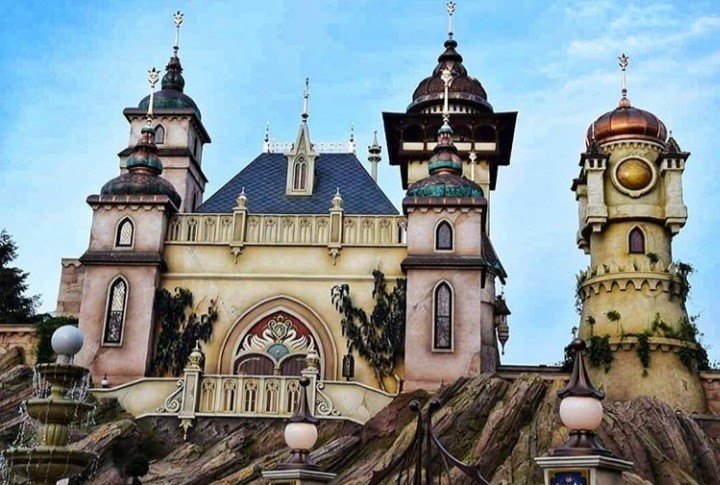
Many of the world’s most well-known theme parks started from something small, and Efteling, located in Kaatshuevel City in the Netherlands is now exception. From its origins as the Fairytale Forest in the 1950s, an enchanted forest where you can explore your favourite fairytales and children’s stories, Efteling has expanded to become one of the greatest theme parks in Europe, and even in the world.

Throughout its sixty eight years of operation, Efteling has stayed true to its original charm, and kept some of its earliest attractions in the process, including the Kleine Zweefmolen Chair-O-Plane, and the Anton Pieckcarrousel carousel (the name is a reference to the designer of the original Fairytale Forest!).

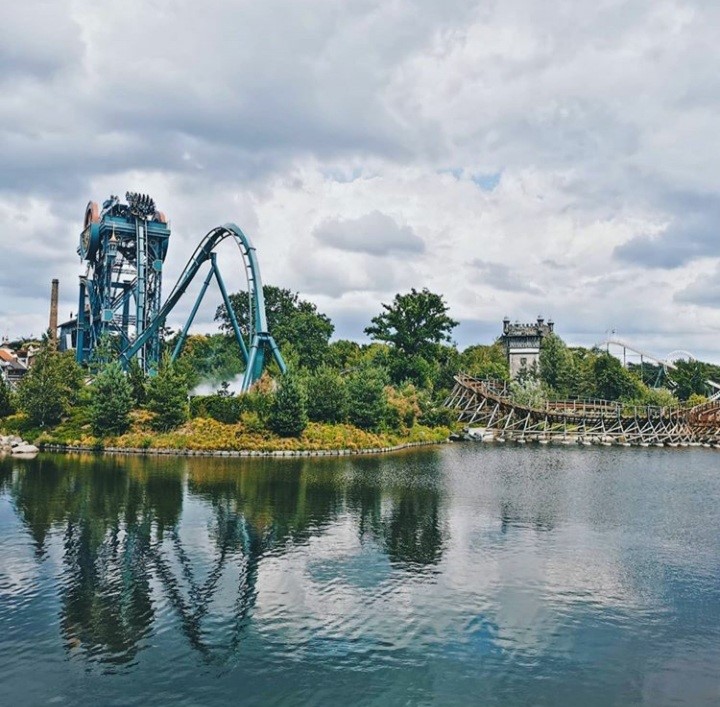
But as the theme park industry continues to innovate and grow, so has the park and its attractions, leading to some amazing attractions, with the beautiful theming Efteling is known for. A key example of this is Symbolica, a trackless darkride located not far from the Fairytale Forest, which combines an original theme and elaborate scenes both in the queueline and the ride itself. A little further into the park, Baron 1898 offers the thrills of a B&M Dive Coaster surrounded by steampunk theming and storytelling.

Since Efteling’s opening in 1952, many theme parks have opened in a range of different locations across Europe, with their own themes and styles of theming, but few have come close to the level of architecture offered in Efteling!

Cedar Point, Ohio, USA

If you’re a theme park enthusiast, you’ve most likely heard of this breathtaking theme park located on the edge of Ohio’s Lake Erie. Cedar Point is known as “America’s Rockin’ Roller Coast”, and has certainly earned its title, with what is possibly one of the most incredible coaster lineups in the world, combining cutting edge ride experiences like Steel Vengeance and Top Thrill Dragster, and nostalgic woodies such as Gemini and Blue Streak. Every rollercoaster that has opened at Cedar Point in the last several decades has broken some sort of record, making the park a bucket list destination for many of us enthusiasts.

But while most visitors go for the rides and attractions, Cedar Point has so much more to offer. Cedar Point’s extensive history is on display in the museum, and in the Summer you can take a break on the park’s beach, and relax under the Ohio sunshine.

Since its opening as a lakeside resort in 1840, Cedar Point has attracted visitors seeking to enjoy the stunning views and attractions, and is certainly one of the greatest coastal theme parks out there!

Dollywood, Tennessee, USA

Located in the heart of Tennessee, Pigeon Forge is home to a range of alpine attractions, including alpine coasters that create a debate on whether or not they can actually be counted as coaster credits (and, by the way, alpine coasters ARE in fact credits!), but these controversy-creating coasters aren’t the only amusement offerings in Pigeon Forge. Since its opening in 1961, a family theme park has called this area home, and this park is Dollywood!

Originally called Rebel Railroad, the park had two main attractions- a small carousel and a steam train- but relied on theming and entertainment such as a General Store and Saloon to tell the story of a small town during the American Civil war of the 1860s. In its first few decades of operation, the small theme park in Tennessee was renamed several times, each rename bringing something new to the park. When renamed as Goldrush Junction as 1970, an outdoor theatre, a log flume and a Church. The name was shortened to just Goldrush in 1976 after being bought by Herscend Family Entertainments, then changed completely to Silver Dollar City Tennessee (after the theme park Silver Dollar City in Missouri) a year later, with many improvements being made to the park during this time.

It wasn’t until 1986 when country singer Dolly Parton purchased interest in the park, and it gained the name we all know today- Dollywood! While the park was getting new rides and attractions before then, such as Blazing Fury, an indoor rollercoaster built by park maintenance in June of 1978, the park’s attraction offering really began to grow after becoming Dollywood. A waterslide-type ride, Mountain Slidewinder, opened in 1987, and Thunder Express, an Arrow Mine Train opened two years later in 1989.

Come the 2000s and 2010s, ride numbers were increasing rapidly, but throughout all this expansion, Dollywood never lost sight of the original Rebel Railroad, and the theme of a small American town has always stayed significant in the park’s design. The natural landscape of forests and hills in the heart of Tennessee, combined with the well-themed rides, attractions and entertainment, makes for a truly immersive and enjoyable experience!

What’s the most beautiful theme or amusement park you’ve visited! Let me know in the comment box below!

If you enjoyed this article, check out some of our other posts from theme parks and attractions around the world, and consider subscribing to have all the latest CoasterDreamers articles delivered straight to your inbox!

The Vekoma SLC- cloneable success or painful failure?

They’re some of the most well-known rides in the theme park industry, loved by much of the general public but hated by enthusiasts. The first Vekoma SLC, or Suspended Looping Coaster opened at Walibi Holland in 1994, and since then the Dutch ride manufacturer has continued to build SLCs, up until 2017 when the last…
You are all clear… and outta here! Thanks for reading, and have a great Christmas!

-Lily 🙂

A Ride Through Time- the twists and turns in history for the UK’s oldest coasters

There are some types of rides that are just a staple of that iconic theme park experience, and have been since pretty much the beginning- a carousel, a ghost train-esque darkride, and of course a rollercoaster. Coaster can come in many different variations, whether they be steel or wood, B&M or GCI, suspended, stand-up or sitdown, but where did it all begin, and what was our first introduction to these twisted wood/steel thrill rides here in the UK?

Pull down your restraint and keep your hands, arms and legs inside the train at all times, as we dive into the history of the UK’s first rollercoasters, operating and defunct!

Scenic Railway, Dreamland Margate

When you think of classic amusement parks in England, Dreamland, located in Margate, Kent, is likely one that comes to mind. And no wonder, the seaside resort and historic tourist attraction has been welcoming guests since around 1840! The first amusement rides arrived at the park in 1880, known as ‘Sea on Land’ attractions, which were similar to carousels but with a roughness intended to simulate being on a stormy sea.

The pleasure park continued to grow and expand throughout the following decades, yet after several changes in ownership and the opening and closing of a range of family flat rides, something huge was coming to the park.

The owner at the time, theme park entrepreneur John Henry Iles, visited Coney Island in 1906, and had the idea to transform his Margate park into the family and thrill attraction it is today. Soon the park was renamed Dreamland, and with construction on Dreamland’s first rollercoaster starting thirteen years later, the future was looking bright for the park.

Scenic Railway, a namesake to the very similar coaster at Coney Island, made its debut on 3rd July 1920, a side friction woodie, as the second rollercoaster to open in Margate after the Switchback Railway opened on the Margate coast in 1888. While attractions came and went at Dreamland and the park went through two name changes in the 80s and 90s, the Scenic Railway continued to deliver an exhilarating thrill to riders with almost no changes, and was granted a prestigious Grade II Listing in 2002 to symbolise its amazing history.

Sadly however, by the mid 2000s, the Scenic Railway’s future was looking rough, as was the park’s itself. Dreamland began to fall into decline, with attractions being in visible disrepair and rumours circulating that the park would be demolished, so the historic seaside resort was sold to Thanet Street Council and closed for extensive refurbishment in 2007. The Save Dreamland campaign begun with £18 million in public funding, and it seemed that the popular resort was finally being restored to its former glory.

But not everyone was on board with the campaign, unfortunately. In 2008, a suspected arson attack caused a fire to destroy the middle part of Scenic Railway’s track, as well as the station and a nearby workshop. Kent Fire and Rescue Service were able to respond and put out the fire quickly, and the reimagining of Dreamland continued with not too many other setbacks.

9th June 2015 was a massively symbolic day for the UK theme park industry. A completely reimagined Dreamland Margate welcomed back its first visitors in over five years, with a range of new attractions including a Reverchon Wild Mouse, Dodgems and a Zamperla Enterprise. Although Dreamland have confirmed that they will not open during 2020, it is likely the nostalgic park will be able to reopen once again in 2021, and we will be able to ride the UK’s oldest operating rollercoaster once again.

Big Dipper, Blackpool Pleasure Beach

This 1923 out-and-back woodie is well known for just having a lot of history, but its famous for another reason too. In 1998, the Big Dipper hit the record books after teacher Richard Rodriguez marathoned the coaster for 1000 hours straight, before riding it for a further solid 1000 hours two years later in the year 2000 to raise funds for a charity. Now that’s dedication!

But as with all of these rides, lets start right from the beginning. When Big Dipper was constructed in the early 1920s, Blackpool Pleasure Beach was by no means new to rollercoasters, with four coasters already operating and one having closed in 1922. Four coasters may not sound too impressive for a popular park like BPB today, but it was almost unheard of at the time. The park was also home to a range of thrill rides, including a W.F. Mangels Whip ride and a Rainbow Wheel attraction, however neither rides are in operation today.

Overall, the park was way ahead of its time in the way of amusement offerings, so the possibility of a new ride was certainly on the horizon. This came in the form of a new rollercoaster, designed and built by engineers William Strickler and John A. Miller. When the Big Dipper opened on the 5th May 1923, costing £25,000, it operated with very little change until 1936, when the coaster underwent a major extension. Soon it would have extra drops and areas of track arching over one of the park’s entrances.

Dreamland’s Scenic Railway has not been the only older wooden coaster to experience a fire- 1952 left parts of the ride damaged, before another fire twenty three years later in 1975 destroyed a nearby arcade as well as the Big Dipper’s engine room.

Now one of ten rollercoasters at Blackpool Pleasure Beach, Big Dipper is still going strong, as the oldest operating coaster at the park!

Nickelodeon Streak, Blackpool Pleasure Beach

Staying at the UK’s most ICONic theme park, lets visit the third coaster on this list. Making its debut with the very creative rollercoaster name Roller Coaster, the ride was the second out-and-back woodie to open at Blackpool Pleasure Beach, but is pretty unique- in that it is partly an amalgamation of several other rollercoasters! During construction, parts were taken from the recently defunct Velvet Coaster, which had closed just a year earlier, including the lift hill. This wasn’t the only time parts from another ride were used for Nick Streak, however, as, in 2006, trains were taken from Big Dipper, which had restraints while the original trains did not.

Roller Coaster operated relatively uninterrupted for the best part of seventy-seven years, until came a huge announcement from Blackpool Pleasure Beach which would change the future of the coaster forever. A great new land themed to the cartoon-centric TV channel Nickelodeon was unveiled, along with a range of new rides from a Zamperla Crazy Bus to a small Droptower, but what was arguably the biggest change for the area would be the retheme of Roller Coaster as Nickelodeon Streak.

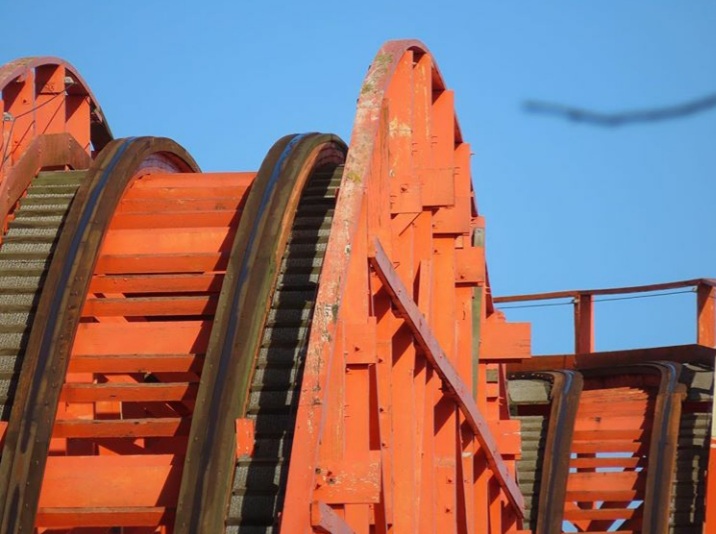
As part of the refurbishment, the coaster was repainted orange so as to fit with the new theme, as well as parts of the coaster being rebuilt to have a more modern feel. Being a family coaster it fitted amazingly into the area, as Nickelodeon Land’s headliner attraction.

Grand National, Blackpool Pleasure Beach

The Grand National may be the name of a famous UK horse race, but it is also a wooden rollercoaster, and one of the oldest in the country at that! Grand National thrilled its first riders in 1935, when it opened as the largest rollercoaster at Blackpool Pleasure Beach, and very likely one of the largest in the UK. The Big One, an Arrow Hyper opened in 1994, has now taken both of these records, and Grand National’s height record of 62ft isn’t all that impressive today, but it was a lot more so at the time.

The Mobius Loop woodie was built by Charles Paige, who built several other rides at the park, with the station being designed by an architect who played a major part in the design of many of BPB’s oldest buildings. Grand National is loosely themed to its namesake horse race, featuring sections of the ride with signs saying “They’re Off” as riders reach the top of the lift hill and “Winning Post” at the end, as well as a racing element that makes the experience all the more exhilarating.

Like all the rides on this list, Grand National has had some pretty interesting and, in some cases obscure history in its eighty-five year run. The early 1990s brought a bit of romance to the thrills, when enthusiast Andy Hine got married on the ride, but some more… unusual events have also occurred on the coaster, and quite recently, too. In March of 2019, the rather strange record of the number of naked people on a rollercoaster was broken with 195 clothes-less riders conquering the twists and turns of Grand National.

The racing-themed ride has certainly had its ups and downs over the years, from an electrical fire in May of 2004 to its prestigious Grade II Listing thirteen years later, and you can still find Grand National beside Big One and the Thrill-O-Matic darkride at Blackpool Pleasure Beach today!

Have you ever ridden any of these iconic coasters? Which is your favourite? Let me know in the comment box below!

If you enjoyed this article, you’ll love my other posts from theme parks and attractions around the world! Check them out here!

Blackgang Chine: A little park on a collapsing cliff

Sitting on the edge of the Blackgang’s cliffs for over 175 years, Blackgang Chine is one of the Isle of Wight’s only theme parks, and a far cry from the hustle and bustle of larger, newer parks like Alton Towers and Thorpe Park. Here you can take a stroll through your favourite fairytales, pay a…

Magic and History: The oldest theme parks around the world

Amusement/theme parks have been entertaining families and thrillseekers for generations, evolving over the years to feature newer, smoother and better themed attractions. But some of these parks we know and love today are older than you’d expect- some even date back to the 1840s! Many of the world’s oldest theme parks elaborate histories with remnants…

The Vekoma SLC- cloneable success or painful failure?

They’re some of the most well-known rides in the theme park industry, loved by much of the general public but hated by enthusiasts. The first Vekoma SLC, or Suspended Looping Coaster opened at Walibi Holland in 1994, and since then the Dutch ride manufacturer has continued to build SLCs, up until 2017 when the last…

Consider subscribing to have all the latest CoasterDreamers content delivered straight to your inbox, and be sure to find us on Facebook and Instagram!

Photo credits:

@themepark_mad on Instagram https://www.instagram.com/theme_parkmad/

You are all clear… and outta here! Thanks for reading!

-Lily 🙂

Blackgang Chine: A little park on a collapsing cliff

Sitting on the edge of the Blackgang’s cliffs for over 175 years, Blackgang Chine is one of the Isle of Wight’s only theme parks, and a far cry from the hustle and bustle of larger, newer parks like Alton Towers and Thorpe Park.

Here you can take a stroll through your favourite fairytales, pay a visit to an old-style cowboy town and even play a life-size version of snakes and ladders, all while surrounded by stunning coastal scenery, but the Isle of Wight’s Land of Imagination is slowly being swallowed up by the English Channel. Lets dive into the charming history of this family-owned park, and explore how Blackgang Chine’s clifftop location has affected it over the years!

Creating a Seaside Resort

Throughout the Victorian Era, tourism was booming. The upper and middle classes began searching for locations at which they could take a break from their busy lives, and coastal areas were some of the most popular. Meanwhile, Alexander Dabell made the decision to turn the previously quiet fishing area into a tourist hotspot, getting to know a businessman who had opened a small hotel in the area, and started making his vision a reality. By 1843 Blackgang Chine Amusement Park had opened to visitors, with a multitude of gardens as well as pathways around the ravine and leading down to the beach below.

One of the few attractions to open with the resort was the giant skeleton of a whale beached at the Needles, a stunning rock formation on the West of the island. From here the park continued to evolve to feature more and more attractions and experiences, and you can still spot the whale today in one of the indoor areas!

The Growth of Blackgang Chine

Even after a hundred years of entertaining visitors, Blackgang Chine was still expanding. 1953 brought the addition of a model village, showcasing historic and enchanting buildings and attractions from around the Isle of Wight, while nine years later the Water Gardens, a trail of plants and water features were built and opened by park employees. Around the same time the Hedge Maze also debuted, which is quite likely the maze with the most beautiful views in the world!

This maze is stunning!

The 1970s were a time of massive expansion for the park. In the first year of the decade, Blackgang Chine opened Adventureland, featuring a range of old vehicles as well as a spaceship! (Pretty different from the Disney park version of Adventureland!) 1972 was the opening year for Dinosaurland, a walkthrough at which you could get face to face with some rather terrifying dinosaurs in a safari-type setting. Four years later Buffalo Creek made its rootin’-tootin’ debut, as an area where visitors can become cowboys and cowgirls and explore a wild west town complete with wagons and a last chance saloon.

Since 1976 Blackgang Chine’s cowboy area has now recieved a new location and name, as Buffalo Canyon and later Cowboy Town, but a tribute to the land that once was can be found at Cowboy Town’s train station!

In 1974 Nurseryland opened its doors to visitors, a land that allows you to come face to face with your favourite nursery rhymes from Hickory Dickory Dock to The House That Jack Built, as well as a whale (known as Jonah’s Whale, now Moby Dick’s Revenge) that squirts water at innocent guests as they try to run through. I’ve had my fair share of times where I’ve gotten soaked by that whale!

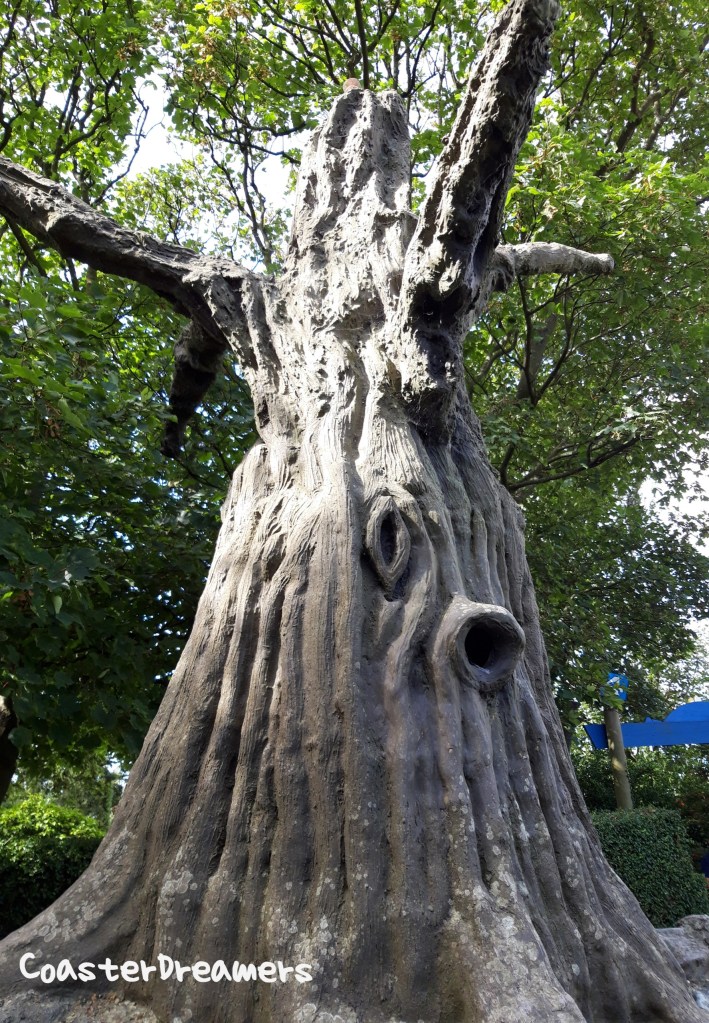
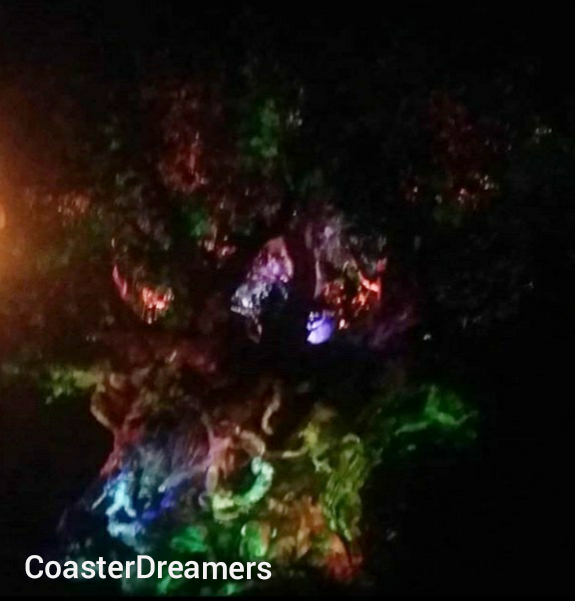
There doesn’t seem to be anything magical about this tree in Nurseryland, that is, until you look inside!

Yet just as the park was evolving and thriving, a sudden event soon occured that would change not only the park, but also Blackgang village forever.

The 1994 Landslide

Around 9PM on 12th January 1994, local residents and tourists in Blackgang village began to notice the ground moving. Areas of land atop the Isle of Wight soft rock suddenly fell into the sea, while homes, holiday homes, caravans and hotels were swiftly evacuated and residents temporarily housed in Chale Village Hall, just a short distance from the area. Crumbling roads were shut off and rescue teams as well as the Coastguard turned up to assist those who were evacuated. Heavy rain had saturated the rock, causing it to become unstable, and even today many of the areas close to the landslide zone are closed off, derelict.

No visitors were in Blackgang Chine at the time of the landslide, but some attractions and buildings around the park didn’t survive the event. Buffalo Creek and Adventureland had to be closed completely, and while the majority of Buffalo Creek’s set pieces were moved inland to the new Buffalo Canyon area, parts of Adventureland were left abandoned on the cliff edge years and even decades later.

Despite the devastation this landslide caused, the park took it in their stride, did everything feasibly possible to relocate attractions that were damaged and/or deemed unsafe, including Snakes and Ladders ,which was moved to an area next to Buffalo Canyon (now Cowboy Town). The Crooked House, despite opening two years before the rest of Adventureland, had been a signature part of the land before the 1994 landslide, but was then relocated further inland and can now be spotted at the end of the Giant Bug Walk (which is quite possibly the one of the steepest uphill walks you will ever do in a theme park!) Fairyland was also moved to another site close to Snakes and Ladders, and the Mouth of Hell now sits a short walk from Rumpus Mansion, after it was moved from Dinosaurland in 2016.

Today Blackgang Chine features an indoor exhibition where visitors can learn more about the 1994 landslide and how it affected the local area, as well as a simulator where you can experience the landslide for yourself (though obviously significantly more safely!)

The Tornado Tantrum

If you were building a new £197,000 rollercoaster, especially one that wasn’t particularly revolutionary or obscure, you’d expect it to be safe, right? Well, when Blackgang Chine’s first coaster, Tornado, was being constructed, it was assumed that it would meet UK safety standards, stating that a ride’s supports have to be a certain distance from the track, however, this was not the case. Blackgang Chine requested that the manufacturer, Westech, fix the issue so that Tornado would be able to open as planned. Westech failed to do this the first time… as well as the four times after that.

Eventually it was decided that Tornado would just be removed, which Westech agreed to do, yet at first the company refused to refund Blackgang Chine for the coaster. The park took Westech to court over the matter and won their case, and Westech were forced to fully refund Blackgang Chine for the failed rollercoaster (and rightly so!)

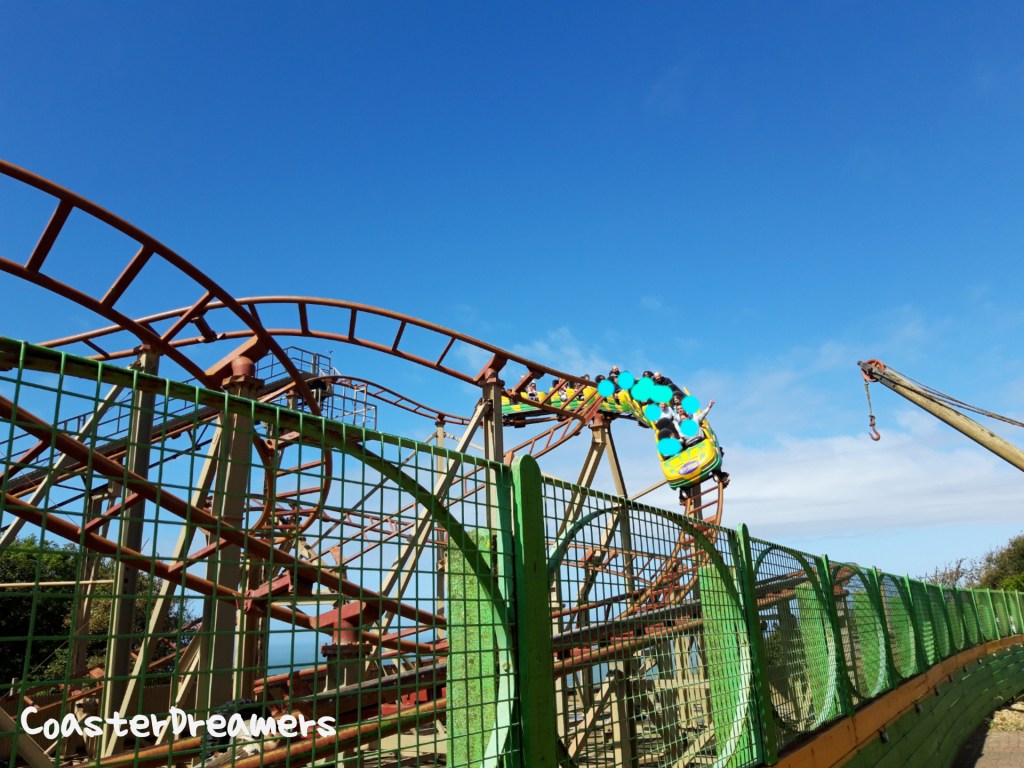
A year after Blackgang Chine won the court case in 2004, another rollercoaster would make its debut at the park, this time manufactured by I.E. Park. The new ride, known as Cliffhanger, is a compact family coaster sitting on the cliff edge (hence its name!) and it’s pretty intense for a family coaster! To this day it’s unknown as to what actually happened to Tornado, though its likely it was sold into the Travelling Fair Circuit or to a park somewhere else in Europe.

Lands Lost Along The Way

Theme parks are constantly growing and evolving, and Blackgang Chine is no different. From refurbishments to complete rethemes, the Land of Imagination has had its share of attraction openings and closures, some larger than others, with one of the park’s largest rethemes being the transformation of Fantasyland into Underwater Kingdom in the mid-2010s. From its opening in 1991, Fantasyland was one of the main lands at Blackgang Chine, and was home to three attractions: a giant animatronic dragon known as the Angry Dragon (which now watches over the park entrance!), the Liquorice Factory, a charming little walkthrough attraction home to several animatronic based scenes, Fantasyland’s largest attraction, the Weather Wizard.

This magical walkthrough allowed visitors to explore the different types of weather, from snow to sun, before coming face to face with the wizard himself, who had a rhyme ready about, of course, the weather. The Weather Wizard actually opened in 1989, two years before the other two Fantasyland attractions, but became part of the land when it opened in the 1990s.

Fantasyland delighted guests until its closure in 2016, when it was announced that the area would undergo a complete retheme. After just a year of construction the new area debuted as Underwater Kingdom- a land that takes you under the sea to meet a frantic crab looking for his children, a few cool turtles, and a huge whale!

Underwater Kingdom has some amazing animatronics and theming!

While many fans were upset at the closure of Fantasyland, Underwater Kingdom is a concept that hasn’t really ever been done in a lot of theme parks, and is a good change for a park that already has two Fantasyland-type areas (Fairyland and Nurseyland).

While not exactly a retheme, the conversion of Dinosaurland to Restricted Area 5 was also a pretty big change. Restricted Area 5 has more of a safari-ish Juarassic Park type theme than Dinosaurland ever did, and so some theming elements needed to be added or removed in order to rebrand the area. Several of the dinosaurs were upgraded or replaced altogether with newer technology to make them more realistic and up-to-date, but guests can still meet some of the older dinosaurs at the end of the walkthrough to climb on and take photos.

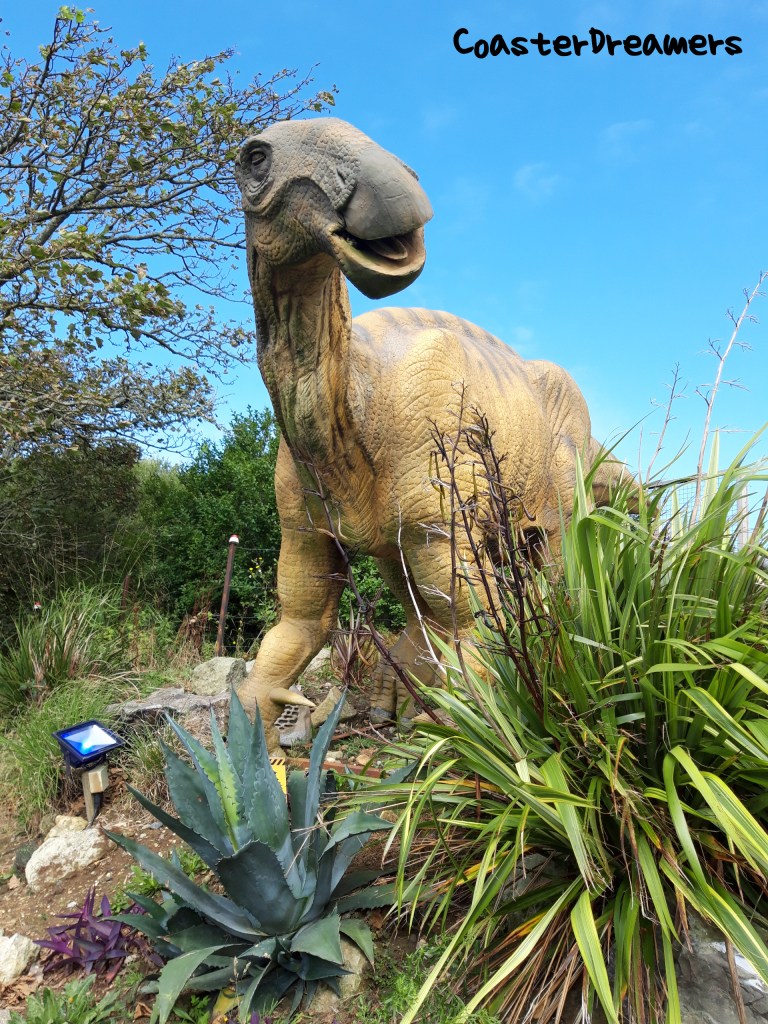
This dinosaur is loving life in the Isle of Wight sunshine!

For twenty-two years, Dinosaurland/ Restricted Area 5 wasn’t the only place in Blackgang Chine where dinosaurs made an appearance. The Isle of Wight is known as the dinosaur isle, after all, so it only made sense that they would have another attraction- and this was known as the Triassic Club.

Here, smartly dressed dinos would invite you to a dinner party, where you could stand on a set of scales to find out which dinner course someone of your size was fit for, then meet the three Triassic Club dinosaurs, Allosaurus, Wallace and Oscar, who were hungry for their dinner! The attraction closed in 2016, but the three dinosaurs appeared at an event in 2018, showing that since the Triassic Club’s closure, Darwin the Allosaurus, Wallace and Oscar have been kept in a good condition!

Have you visited Blackgang Chine? What is/was your favourite attraction or walkthrough? Let me know in the comments below!

If you enjoyed this article, you’ll love my other posts from theme parks and attractions around the world! Check them out here!

Indiana Beach: A little park with a lot of history

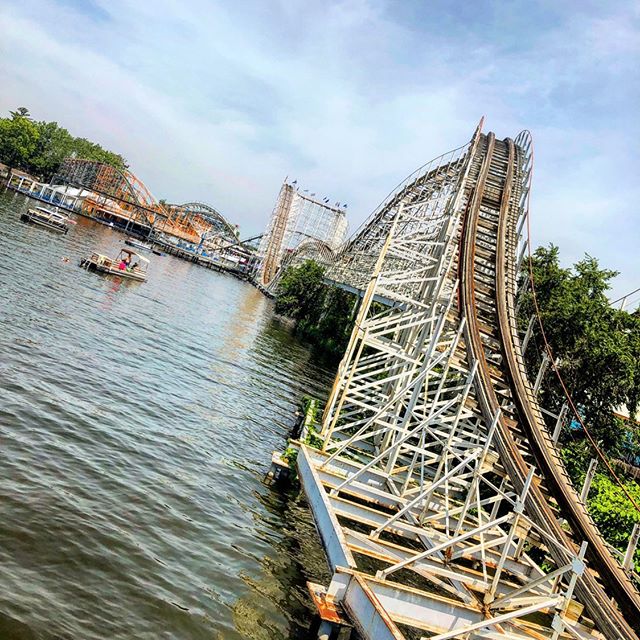
From it’s origins as Ideal Beach in 1926, Indiana Beach has entertained and thrilled visitors for almost 100 years. This small boardwalk park is located on Indiana’s beautiful Lake Shafer, and has previously been home to over twenty rides and attractions, aimed at families and thrillseekers alike. On February 20th 2020, Apex Parks announced the…

Disneyland’s Black Sunday: What was it and how did it happen?

“As long as there is imagination left in the world, Disneyland will never be complete” Walt Disney When you think of Disneyland, what comes to mind? Castles, family, and Mickey Mouse? What about fires, dehydration and stampeding crowds? Okay, those last three maybe aren’t so likely. But all these actually happened on Disneyland’s opening day,…

Magic and History: The oldest theme parks around the world

Amusement/theme parks have been entertaining families and thrillseekers for generations, evolving over the years to feature newer, smoother and better themed attractions. But some of these parks we know and love today are older than you’d expect- some even date back to the 1840s! Many of the world’s oldest theme parks elaborate histories with remnants…

Make sure to subscribe to have all the latest Coaster Dreamers blog posts delivered straight to your inbox!

You are all clear… and outta here! Thanks for reading!

-Lily

A Short(ish!) History of the Disney Decade

September 1984 marked the beginning of Michael Eisner’s reign as Disney CEO, and he had huge plans for the company. At the time Disney were struggling to stay afloat, with consistently delayed projects piling up; the innovative magic we all know and love today wasn’t exactly the top priority.

In spite of Disney’s many struggles throughout the 1980s, 1989 was a colossal year for the company. Two hit movies, Honey I Shrunk The Kids and The Little Mermaid were released in June and November respectively, and Disney MGM Studios, a new theme park that allowed guests to explore the wonders of Hollywood all while staying in Florida, had opened in May, and was going strong. Staying at Walt Disney World, EPCOT Center (now just Epcot) was also doing well, with a new pavilion, known as Wonders of Life, debuting between the Energy and Horizons pavilions.

As the year came to an end, Eisner proposed something that had never really been done before on such a large scale, a gigantic and almost aggressive expansion of Disney’s theme parks and properties, as well as the studio as a whole, which would change the company forever. Let’s take a look at the decade that made the Walt Disney Company what it is today, and explore the history of some of the projects that came with it!

Euro Disneyland (now Disneyland Paris), April 1992

Prior to the 1980s, Disney theme parks were a uniquely American thing- if you wanted to meet Mickey and get that iconic castle photo, you’d have to take a trip to either Anaheim in California, or Walt Disney World in Florida. April 1983, however, brought the long-awaited opening of the first ever Disney park outside of the US- Tokyo Disneyland! The new park was a huge success, putting a unique twist on the traditional Disneyland model while still in-keeping with some of the most loved elements, and it was soon decided that Europe should be the next location for a Disney park.

The next step was deciding where exactly the theme park would go. The area had to have a large population of people that would enjoy the park, as well as good connections by air and sea to other European countries to make for a good amount of visitors.

One consideration was Spain- the country already had a thriving tourism industry and two sites were large and easily accessible enough to house a theme park. The plans for a Spain Disneyland were quickly abandoned however, as construction would mean destroying a local beauty spot. France was another consideration that would soon become the decided location for the park; the area of land was located in the North-West just outside of the country’s capital Paris, and wasn’t too far of a drive from other areas of France, too. An agreement was signed by Michael Eisner in 1985, and construction would begin on the park, officially named Euro Disneyland around three years later in August of 1988.

However, not everyone was in favour of the new development. Local people were understandably upset at losing their land, while journalists worried about the potential implications the park might have on France and its culture. Concerns were also raised about the name of the new theme park- Euro Disneyland- saying that the word ‘Euro’ implied that Disney were trying to make the development all about money and not actually about fun or culture. That’s pretty fair really, it would have made a lot more sense if Disney had followed the same naming conventions that were used for Tokyo Disneyland, and just called it Disneyland Paris from the beginning.

Despite the criticism for many these different aspects of the park, a farmers’ protest in 1992, and its branding as a “Cultural Chernobyl” by critics, the new theme park’s creation went forward mostly as planned, and Euro Disneyland opened to the public on 12th April 1992.

On its opening day, Euro Disneyland was expected to draw in huge crowds, with predictions of up to 90,000 cars entering the car park. But while the original Disneyland was overcome with far too many guests on its 1955 opening, Euro Disney didn’t have nearly enough. Many were boycotting the park in protest against the controversies mentioned earlier, among other things, but there was a far larger problem, one that had nothing to do with land losses or worries about too much consumerism.

Check out this post to learn about another not-so-magical Disney opening day!

Disneyland’s Black Sunday: What was it and how did it happen?

“As long as there is imagination left in the world, Disneyland will never be complete” Walt Disney When you think of Disneyland, what comes to mind? Castles, family, and Mickey Mouse? What about fires, dehydration and stampeding crowds? Okay, those last three maybe aren’t so likely. But all these actually happened on Disneyland’s opening day,…

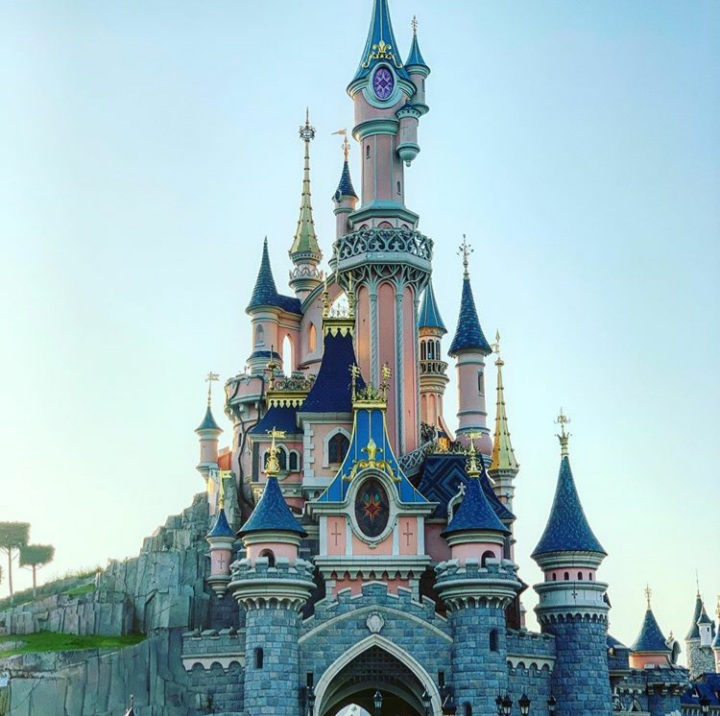
Fantasyland is arguably one of the most important areas across any of the traditional Disneyland parks: the land is often home to the highest number of rides and attractions, and is easily recognisable by its Medieval-Europe style architecture and of course the castle. In Japan and the US this style is a novelty and has a sort of magical ambience, but in Europe, old-style buildings can be found in almost every town and city, and castles are quite a common thing. Sure, European castles aren’t usually waiting at the end of a 20th century style Main Street, but there are still a lot of castles nonetheless. It just didn’t have the same draw as it did in Tokyo, Anaheim and Orlando, and Euro Disneyland would continue to struggle in finance and popularity throughout the next few years.

Many Euro Disney Cast Members were resigning due to both unacceptable working conditions and the extremely picky requirements to work for the park- employees were required to limit the amount of makeup they wore, and restrictions against beards and tattoos were in place, too. Financial issues forced planning for the second Paris park (now Walt Disney Studios Paris!), inspired by Disney’s MGM Studios in Florida, to be put on hold until further notice, and a range of other changes were put in place to try and save the park. By 1994, several businessmen had bought stakes in Euro Disneyland, and it finally looked like the park might have the chance of a great big beautiful tomorrow.

1995 brought a giant overhaul of the park, opening a new version of Space Mountain in Discoveryland, and changing the name to the significantly better fitting Disneyland Paris. Today Disneyland Paris is a resort, home to two parks including Walt Disney Studios Paris, as well as the shopping district Downtown Disney, which has been expanding well since its opening!

Disney’s Animal Kingdom, April 1998

Disneyland Paris wasn’t the only brand new theme park to open as part of the Disney Decade, another park would open just six years later in Florida! Originally proposed by legendary Imagineer Joe Rhode, Animal Kingdom would allow guests to explore three groups of the animal world: living, extinct and mythical. The new park, which would be Walt Disney World’s fourth and so far final theme park, was initially planned to be known as Wild Kingdom, yet this name was dropped due to another company already owning the rights to Wild Kingdom as a TV show.

Each of the three animal groups were intended to reside in their own themed land, and while not much is known about the “extinct” area, the mythical land, known as Beastly Kingdom got quite far along in the planning stages before being cancelled altogether. The area was set to be divided into two “realms”, one being the Good Realm, home to creatures such as unicorns and all our favourite animals from Fantasia.

The realm would have been dominated by two attractions, including a boat ride showcasing scenes from the 1940 animated classic Fantasia, as well as an enchanted maze known as Quest of the Unicorn. On the other side of Beastly Kingdom was the Evil Realm, with a dark atmosphere watched over by a giant dragon. A ruined castle would look over the land, containing a rollercoaster that took guests through the burned remains of the towers, while escaping the dragon and his fire.

Sadly, Beastly Kingdom never came to fruition, but some aspects of the area can still be found around Animal Kingdom today, including the Evil Realm’s dragon in the logo. Expedition Everest uses a similar concept to Beastly Kingdom, in the sense that it brings mythical creatures to life, except that instead of a dragon, you’re escaping a Disco Yeti!

Plans for Animal Kingdom continued to be formulated, and by 1995 ground had been broken for the newest and largest Walt Disney World theme park. The park opened three years later on Earth Day 1998, yet, like Disneyland Paris, Animal Kingdom faced a lot of controversy in its earliest years, for a different reason. Some conservation groups worried that Disney were not handling their animals correctly, and that the company had not learned from mistakes with animals at other parks. Several animal deaths were reported in the early years of the park, and even today concerns are voiced about the treatments of certain animals, such as elephants, in and around the park.

Despite the concerns, Animal Kingdom have actually done a lot for the natural world, and put significant efforts into protecting the environment! Balloons are not allowed into the park, and biodegradable alternatives are used in substitute to more common plastic products. Whatever your views on Disney’s Animal Kingdom, its fair to say its an amazing fit with the other three WDW parks, and is possibly the most beautiful!

Rides and Attractions

Every Disney park that existed at the time benefitted from the Disney decade in some shape or form some more than others. While some parks didn’t expand too much during the 1990s, such as Magic Kingdom and Disneyland, others received major upgrade and a multitude of new attractions. Here are some of the Disney theme parks that were the top priorities throughout the Disney Decade!

Disney MGM-Studios (now Disney’s Hollywood Studios)

Having opened just a year prior, by 1990 Disney MGM-Studios was still developing and growing at a rapid pace. What is arguably one of WDW’s most popular nighttime shows, Fantasmic, made its debut in 1996, inspired by Disneyland’s version, utilising some incredible effects and A LOT of boats. Bringing to life the power of imagination, Fantasmic follows the adventures of Sorcerer Mickey as he summons all your favourite Disney characters from Ariel to Rafiki, as well as a giant imposing Maleficent dragon! (Let’s face it, that dragon is TERRIFYING)

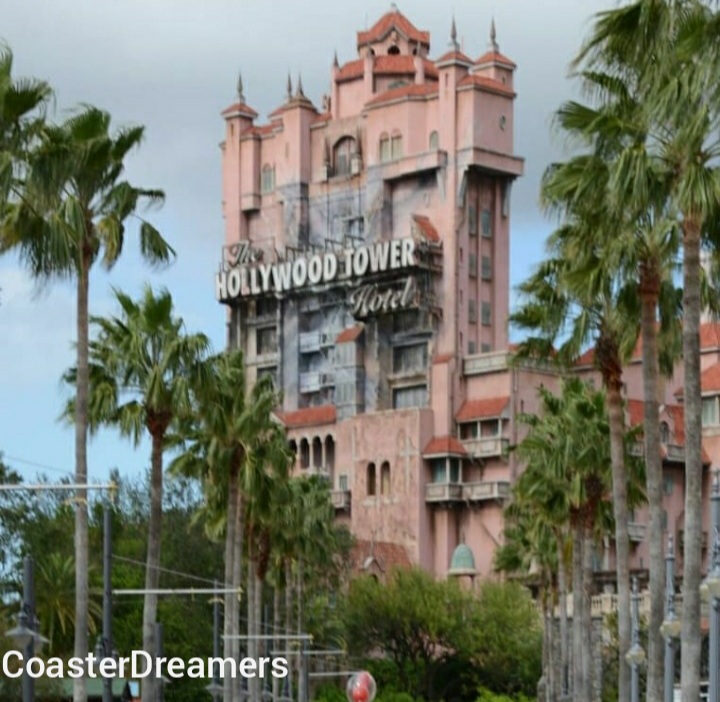
1994 brought the opening of one of the most iconic attractions at the park, the Tower of Terror. This innovative droptower/darkride allows guests to explore the world of the Twilight Zone TV show, and get a spooky thrill along the way as you’re dropped from 19ft up!

The end of the decade meant the debut of another well-loved attraction: Rock n’ Rollercoaster! While Tower of Terror drops you in a haunted lift, Rock n’ Rollercoaster delivers the thrills and spills through means of a track, with the catchy Aerosmith music playing as you soar through three inversions in the dark.

The 1990s were also a time of proposed rides and attractions that never made it into the parks due to budget cuts or other reasons, including a Muppet overlay to The Great Movie Ride (which would have been amazing!) as well as a darkride based on the 1990 film Dick Tracy. Unfortunately these were soon scrapped, but the plans show just how ambitious the Disney Decade really was!

Disneyland and the Disneyland Resort

Throughout the 1990s, Walt Disney’s original theme park was going through some major changes. Walt Disney World in Florida had been classed as a resort for many years, Disneyland was still just one theme park with no other parks or surrounding hotels- but Michael Eisner was out to change that.

Disneyland originally had just one car park, known as the Hundred Acre Car Park, which took naming inspiration from Winnie The Pooh’s iconic Hundred Acre Wood. This was closed in favour of a new parking method that divided the car park into zones based on our favourite Fab 5 characters, but the Hundred Acre Car Park would have a completely different fate. Once the area was demolished, it would become the foundations of a brand new theme park, the second at the new Disneyland Resort!

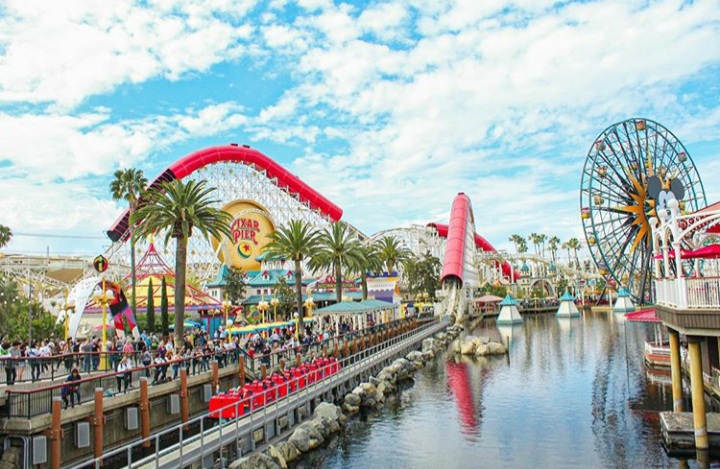
The upcoming park, Disney California Adventure, was planned to showcase all the best of California with a Disney twist, incorporating some elements of Disney’s Hollywood Studios such as the Twilight Zone Tower of Terror, as well as original attractions like the disastrous Superstar Limo and the significantly more successful California Screamin’ (now the Incredicoaster).

Similar to Euro Disneyland which had opened eight years prior, Disney California Adventure was expected to bring in massive crowds in its opening year of 2001, and these predictions turned out to be wrong. Guests felt there weren’t nearly enough high-quality rides and attractions, and as word spread about the disappointing park, visitor numbers continued to drop.

An expansion of the park was announced in 2007, and this was the thing that made Disney California Adventure what it is today. However, I would still argue that the park has never really been what it was expected to be- its nowhere near as popular or as famous as Hollywood Studios or Disneyland, and since its opening it has been a strange mix of IPs and actual California-themed attractions, though hopefully the recent opening of Pixar Pier means DCA has chosen to go down the IP route, as I feel that would really suit the park and fit well next door to the more classic Disneyland!

Throughout DCA’s construction, other things were happening to truly turn Disneyland into a resort. Disneyland Hotel underwent a major renovation as an already existing hotel became the Paradise Pier Hotel, and a brand new one: Disney’s Grand Californian Hotel. With now three major hotels on the site, a shopping district was also constructed, which would soon be announced as Downtown Disney.

By early 2001 Disneyland had finally completed its conversion to a resort, with the Disneyland theme park itself being renamed Disneyland Park. The Disneyland Resort will likely never be as big as Walt Disney World Resort in Florida, but it doesn’t need to be, as its just incredible that a small park that opened in 1955 where families could make memories has grown into the incredible resort it has today!

EPCOT Center (now Epcot)

Since the Experimental Prototype Community of Tomorrow opened in 1982, the 1980s were naturally a time of growth and expansion for Epcot, but while the 1990s were a reasonably good time for the park, they were also a time of a lot of closures and changes. Many of the attractions’ sponsors were only valid for ten to fifteen years, so by the new decade, deadlines were rapidly approaching to find new sponsors for many of these attractions. While in some cases this was successful, such as in The Land pavilion, others it was not so much, and this forced many to close as they fell into disrepair. Horizons, a darkride that took guests on an adventure into the 21st century to see the future of technology and human life, lost its sponsorship by General Electric in 1993, then closed due to a lack of maintenance, as well as a sinkhole that made the building unsafe.

But pavilions that were able to keep a sponsorship or find a new one were also subject to changes. Both Kitchen Kaberet in The Land Pavilion and Journey into Imagination in the Imagination Pavilion received low-budget rethemes that weren’t exactly loved by guests, requested by the pavilions’ sponsoring companies, Nestle and Kodak. Even the park’s name was changed at one point, with the name “Epcot ’94” to represent the year, then Epcot ’95 a year later. This had actually led to Epcot as an acronym no longer being used by Disney, and it is now in the lower-case form we know today!

During this time many new rides and attractions came to fruition too. Jumping on the success of the Honey franchise that at the time included Honey I Shrunk the Kids and Honey I Blew Up The Kid, a new 3D film debuted in Imagination’s MagicEye Theatre, replacing Captain EO in 1994. The show, Honey I Shrunk The Audience, took guests inside the Imagination Institute for the Inventor of the Year Award, where they would be “shrunk” and then returned to normal size again using a range of special effects. Over at the Energy Pavilion, Universe of Energy was getting a retheme as Ellen’s Energy Adventure, centring around the adventures of talk show host Ellen DeGeneres.

While Epcot wasn’t impacted as much by the Disney Decade as some other parks like Hollywood Studios and Disneyland, the 1990s were still an experimental time for the park, and some of the attractions we love at Epcot now may not be exist today if it wasn’t for this changing time!

Disney Renaissance Era, 1989-99

Disney’s theme parks weren’t the only things to get a major upgrade in the 1990s- the company’s film portfolio was greatly expanded too! While just a few years prior, Disney were struggling to find where they stand in the movie industry, they had now found their feet, and during this time many of our favourite animated movies made their debut!

The era began with The Little Mermaid in November 1989, then The Rescuers Down Under just a year later (which didn’t perform nearly as well as the others, it’s only really part of the Renaissance because of the time it was released). Following these vastly different movies came Beauty and the Beast in 1991, then Aladdin, The Hunchback of Notre Dame, Pocahontas, Mulan, Hercules and Tarzan in the next few years.

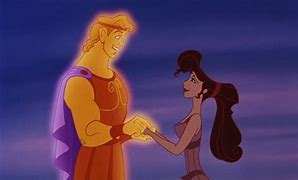
Before this time only three Disney princesses existed: Snow White, Cinderella and Aurora, but the Renaissance largely increased the number of leading ladies in our favourite animated movies, with intelligent princesses that love to read, like Belle, and princesses that knew they weren’t a prize to be won, like Jasmine. Mulan was the first not to have a love interest (well, until the sequel when she seems to have feelings for Li Shang), while Megara was likely the first Disney character to have an ex-boyfriend.

Whether you prefer Disney of the 1990s or more modern Revival era films like Frozen, Moana and Zootropolis (or Zootopia depending on where you’re from!) there’s no denying that the Disney Renaissance Era was a massive time for the company, and on our childhoods!

Were you alive during the Disney Decade? What was your favourite addition or change? Let me know in the comments below!

If you enjoyed this article, you’ll love my other posts from theme parks and attractions around the world!

Europe’s Greatest Darkrides- one continent, many amazing worlds

Europe is home to many incredible darkrides, from the thrills of indoor rollercoasters, to the beauty of many of the scenes in some trackless and water-based darkrides. Not all rides are created equal however, and some parks go all out with creating the most immersively impressive darkride experiences for their guests, combining technology, story and…

Rides That Never Left The Drawing Board- Part 1 (Disney Parks)

It takes years for a new ride or attraction to be constructed, from the initial planning permissions being submitted and approved, to the announcements and teasers, to construction then finally a grand opening. But some rides never get off the ground, with plans being kept in storage or scrapped altogether. Join me in exploring what…

Don’t forget to check us out on Instagram and Facebook, and consider subscribing for more Coaster Dreamers content!

Instagram:

https://www.instagram.com/coasterdreamersblog/

Facebook:

https://www.facebook.com/search/top?q=coasterdreamers%20blog

Subscribe!

Photo credits:

@disneyalldaylong83 on Instagram https://www.instagram.com/disneyalldaylong83/

@disneyryan__ on Instagram https://www.instagram.com/disneyryan__/

You are all clear- and outta here! Thanks for reading!

-Lily 🙂

A Different Kind of Magic- The strangest, creepiest and outright terrifying attractions to operate at Disney Parks; Part Two

When you think of Disney rides and attractions, it’s unlikely your mind would jump to confusing storylines, creepy concepts and attractions that look too insane to be real, but they do exist! In fact, some Disney rides can be the strangest of all! We have now reached part two of this two-part-post, so let’s dive into the weird and explore the history of the strangest and scariest Disney attractions!

Make sure you check out Part One if you haven’t already!

Snow White’s Scary Adventures, Fantasyland, various Disney parks

Magic mirror on the wall, who is the creepiest of them all? It has to be Snow White’s Scary Adventures, at parks from Magic Kingdom to Tokyo Disneyland! Snow White and Her Adventures, as it was originally known, was an opening day attraction at Disneyland, and has been bringing nightmare fuel to riders ever since. The different versions of this ride vary slightly at each park, but for this post I’ll talk mostly about the Disneyland version.

In it’s 1955 incarnation, riders would begin the experience in the mine, where they would meet the dwarves as they chop away at diamonds and other precious gems. Soon you would leave the mine and enter a seemingly innocent-looking forest, but this was an early Disneyland darkride, nothing was going to stay innocent and kid-friendly. A sign appeared in the distance displaying two arrows, one pointing towards the dwarves’ cottage; the other leading to the Evil Queen’s castle. As you can imagine, the cottage door slams with a horrifying thud, leaving riders with no choice but to enter the imposing door of the castle.

Snow White’s Scary Adventures, once known as Snow White and her Adventures, is truly haunting at night ©wingchunjourney on Instagram https://www.instagram.com/wingchunjourney/

On entering uninvited, riders were greeted with a few terrifying skeletons warning you to turn back. But nope, your ride vehicle would keep venturing further and further into the castle’s darkness, as the shadow of the witch begins to creep along the walls. The witch materialised and offered riders a poisoned apple. It actually became a tradition for new graduates visiting the park to try to steal the apple, and many succeeded.

The witch would appear one more time at the seven dwarves’ cottage before crashing through several sets of doors as the final petrified screams of the witch ring out through the halls.

While some riders loved the ghost-train style darkride and its creepy atmosphere, many had questions and concerns. Snow White and Her Adventures was considered, by some, to be too scary for children, while others were confused that the more uplifting elements of the 1937 movie, such as the seven dwarves and Snow White herself, made little to no appearance in the attraction. Disneyland’s first darkrides were designed to allow guests to step into the shoes of the main character, which is why Snow White, Alice, Mr Toad and even Peter Pan weren’t even in their own rides at first!

In 1983, Fantasyland underwent a major overhaul, in which each ride recieved it’s own individual updates. When reimagining Snow White, imagineers made sure to remove some of the 1955 nightmare fuel, and add extra warnings throughout the queueline warning that the ride may not be the bright, magical adventure you and your kids were hoping for. Well, the signs don’t say exactly that, but it’s more or less the same meaning. Even the attraction itself recieved a new name, becoming Snow White’s Scary Adventures.

The ride layout was completely reworked, too. Now, riders would begin the experience in the castle, first meeting the Evil Queen during the iconic ‘transformation’ scene, in which the queen turns round from the magic mirror to reveal a dastardly witch staring into the souls of unsuspecting riders. This effect was first used in the version at Magic Kingdom in Florida! You then pass through several other scenes that are a lot more true to the film (and actually feature Snow White this time!) The experience ends when the witch falls from the cliff, similar to the original, but instead of the abrupt end you got before- now Snow White and her Prince Florian would ride off into the sunset. Much more cheerful than the original ride.

Almost every version of Snow White’s Scary Adventures still exists today, with the exception of one: Magic Kingdom’s incarnation of the ride operated for the last time in May 2012. Around a year later Princess Fairytale Hall opened in Snow White’s former show building, as an immersive meet and greet area.

Kaiser Aluminium Hall Of Fame, Tomorrowland, Disneyland

With the Walt Disney Company being one of the largest in the world today, working on a small budget doesn’t seem like something they would have ever had to deal with. Yet with tight budgets and even tighter deadlines, the construction of Disneyland in the 1950s was absolute chaos. Some projects were altered to be more cost efficient and easier to construct on a time limit, while others were shelved altogether, and massive parts of the park’s original plans were losing priority to work on other areas.

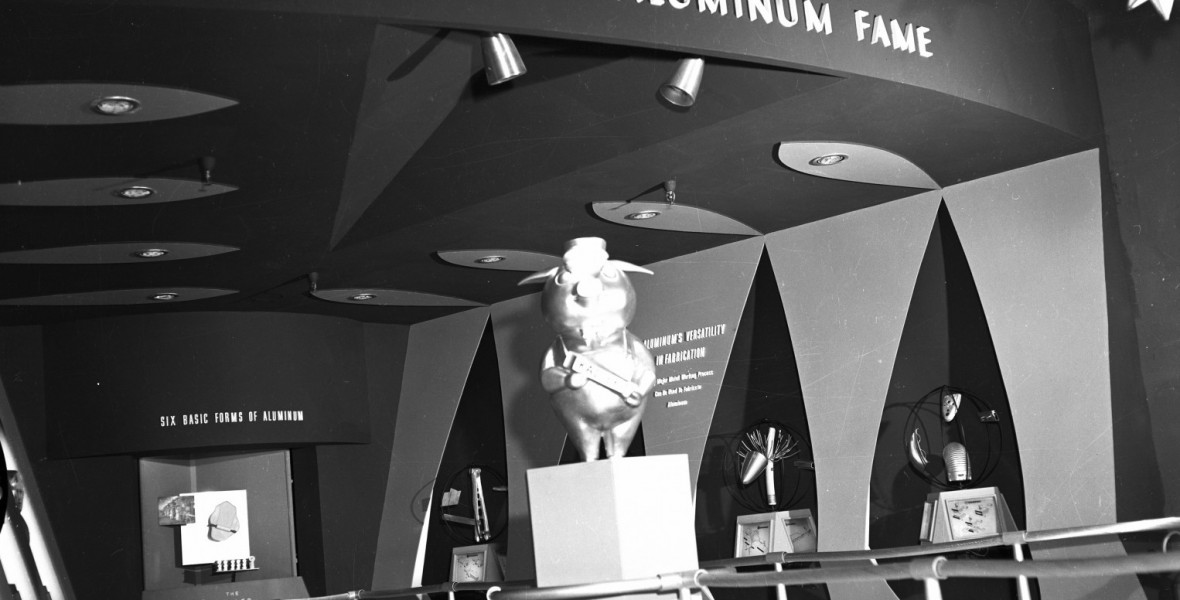
One now iconic area of Disneyland to be compromised was Tomorrowland; Walt Disney’s initial visions for the land were proving too ambitious to be ready for park opening, and the Disneyland TV series had been building up so much hype for the area that it couldn’t just be cancelled or even delayed. Something in Tomorrowland had to be ready for opening day, and one of the only solutions was to gain sponsorships for the area. Technology, research and science companies from across the US saw the opportunity and, working with the Imagineers, created attractions that brought their industry to guests. This led to some pretty strange rides and attractions, one of these being the Aluminium Hall of Fame.

Metal company Kaiser was certain that aluminium is the material of the future for construction and manufacturing, and based their walkthrough attraction on the production and uses of aluminium. The company even managed to convince Walt Disney to build the cars of Autopia from this thin transition metal- yes, the same material tin cans are made from- needless to say, the cars would constantly become dented and the material was eventually switched.

A tour of Kaiser’s Aluminium Hall of Fame began by teaching guests how aluminium is created, before entering a showcase of Kaiser’s innovative and in some cases interactive aluminium products. These included a giant telescope, which would soon prove essential for another attraction on this list, as well as the aluminium Time Sphere and The Brightest Star In The Galaxy, and of course the Kaiser Aluminium Pig, or KAP. KAP was possibly one of the first original Disney Parks characters- before we got Dreamfinder, Figment or Timekeeper, the pig was one of the few characters to be exclusively seen at the parks.

Guests could interact with the Aluminium Pig, pressing buttons and pulling levers to change its shape, changing it from completely flat to large and round in just a few seconds. This was intended to show potential customers how versatile aluminium really is as a manufacturing material, but its likely that many didn’t really care about what the pig represented, it was just fun to change the shape of a metal pig.

After just five years of sponsoring the attraction Kaiser withdrew their support in 1960, and the Aluminium Hall of Fame ultimately closed. Many of Tomorrowland’s corporate showcase-type attractions weren’t intended to be permanent, only acting as filler for something big, or many somethings, that were coming in the mid-1960s, and this set up the opening of the next attraction on this list!

Adventure Thru Inner Space, Tomorrowland, Disneyland

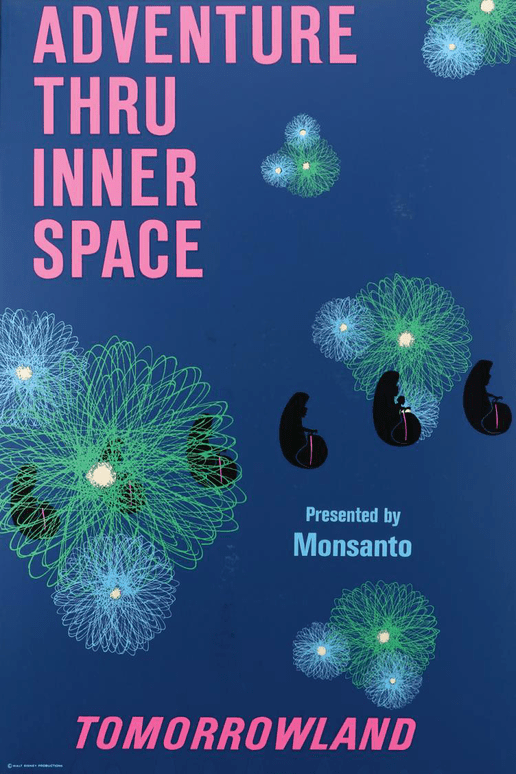
July 1967 brought Tomorrowland’s first massive update since Disneyland’s opening in 1955, and revived many of the now late Walt Disney’s initial visions for the area. Carousel of Progress was moved from the 1964-65 New York World’s Fair to Tomorrowland, while Autopia received a much-needed refurbishment, but there were completely new attractions too. The concept for one of these attractions, Adventure Thru Science, dated back to ten years before, as a darkride that would allow guests to explore the inner space of a droplet of water.

By the time the project finally came to fruition, the name had been changed, becoming Adventure Thru Inner Space, as was the storyline- guests were no longer exploring the inside of a water droplet, but a snowflake as it freezes and melts. But with a range of attractions being expanded or created from scratch across Tomorrowland, a key aspect to consider was where the darkride would go.

Kaiser’s Aluminium Hall of Fame had closed several years prior in 1960s, leaving behind many old set pieces, including the giant telescope. One of Adventure Thru Inner Space’s main themes from the beginning was microscopes, and the aluminium telescope could easily be redesigned as one- so it only made sense that the darkride would take advantage of the space left by the Aluminium Hall of Fame.

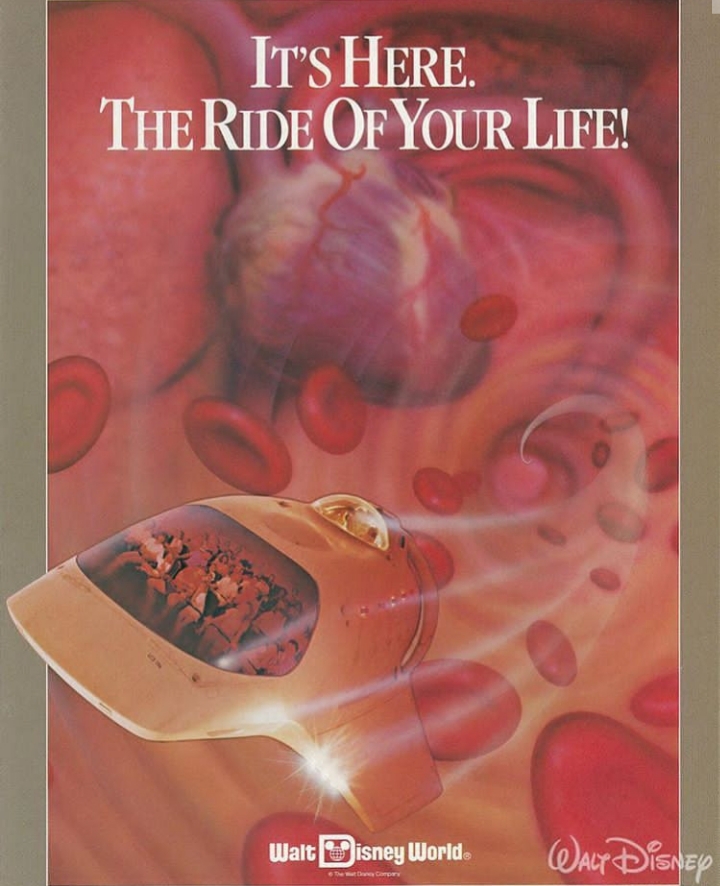
The queueline for the ride was based mostly in one of the former attraction’s halls, and when waiting in line guests could hear the ride’s narrator, Paul Frees (also the Haunted Mansion’s “ghost host”!) introducing the ride experience while tests and safety checks were occurring in the background. On boarding your Atommobile ride vehicle, which held their own legacy as the first OmniMover ride system, you would enter the Mighty Microscope and begin to “shrink beyond the smallness of an atom, the smallest building block of matter” as you explore the inside of the snowflake.

On emerging from the microscope, guests found themselves surrounded by imposing snowflakes, which would soon turn to water molecules. As you shrink down further, you could see the individual atoms of the molecule, resembling not-so-hidden Hidden Mickeys. I guess even water molecules have to be Mickey-shaped in Disneyland!

The voice that follows riders through the attraction asks if he can enter the atom itself, and that’s exactly where your Atommobile takes you: the electron shell of the atom, where electrons are buzzing around like “fiery comets.” To quote the attraction spiel- “how can you possibly survive”? As guests penetrate the atom’s wall, a pulsating crimson nucleus can be seen in the distance, the main light in the mostly dark, empty room. Your adventure through the inner space of an atom ends here, and soon you are back on visual and returning to your normal size.

Despite the technological advances that came with the opening of Adventure Thru Inner Space, it was considered one of the most boring and confusing attractions to ever operate at Disneyland. The storyline was somehow simple and complex at the same time, and made absolutely no sense without Paul Frees’ narration, which was supposed to be the thought waves of the scientist that took the journey before you, but even this was a confusing enough concept for many riders. Queues were relatively long however, as when Adventure Thru Inner Space debuted, Disneyland’s paid ticket system was still in operation, and this attraction was one of the few that was free.

Adventure Thru Inner Space was popular for another, slightly more adult reason too. The almost complete darkness combined with the boring-nature of the attraction provided the perfect opportunity for teenagers and young adults to, well… do things you wouldn’t expect in the Most Magical Place on Earth. This was so common, in fact, that the ride actually earned the nickname “Adventure Thru Intercourse” according to some CMs who used to work at the attraction. Yikes!
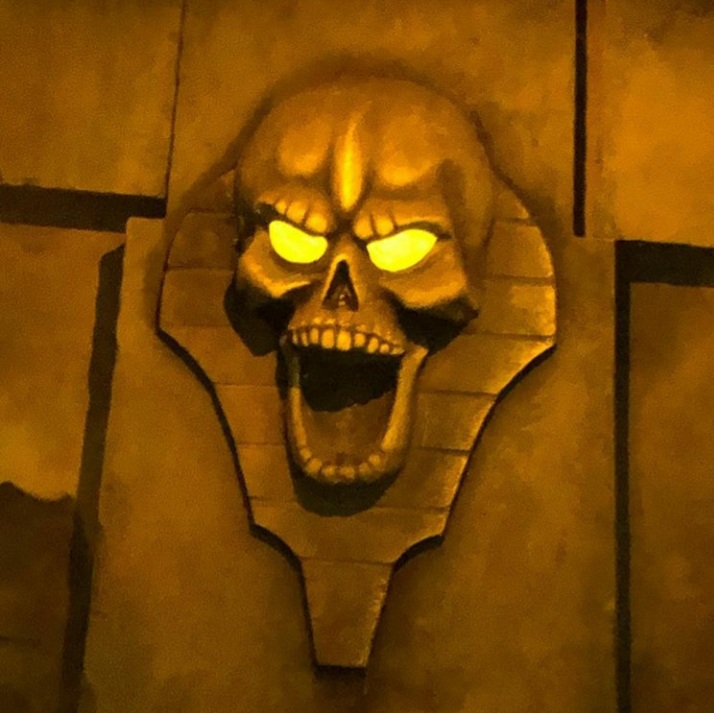
The ride was one of the last in Tomorrowland to rely on a sponsorship, but when the ride’s sponsor, chemical company Monsanto failed to renew their contract in 1977, ten years after the attraction opened. Adventure Thru Inner Space continued to operate for five years after this, before it closed in 1985. All the sets and most of the Atommobiles were removed and disposed of, and its replacement, Star Tours, opened to a mostly positive reception in 1987.

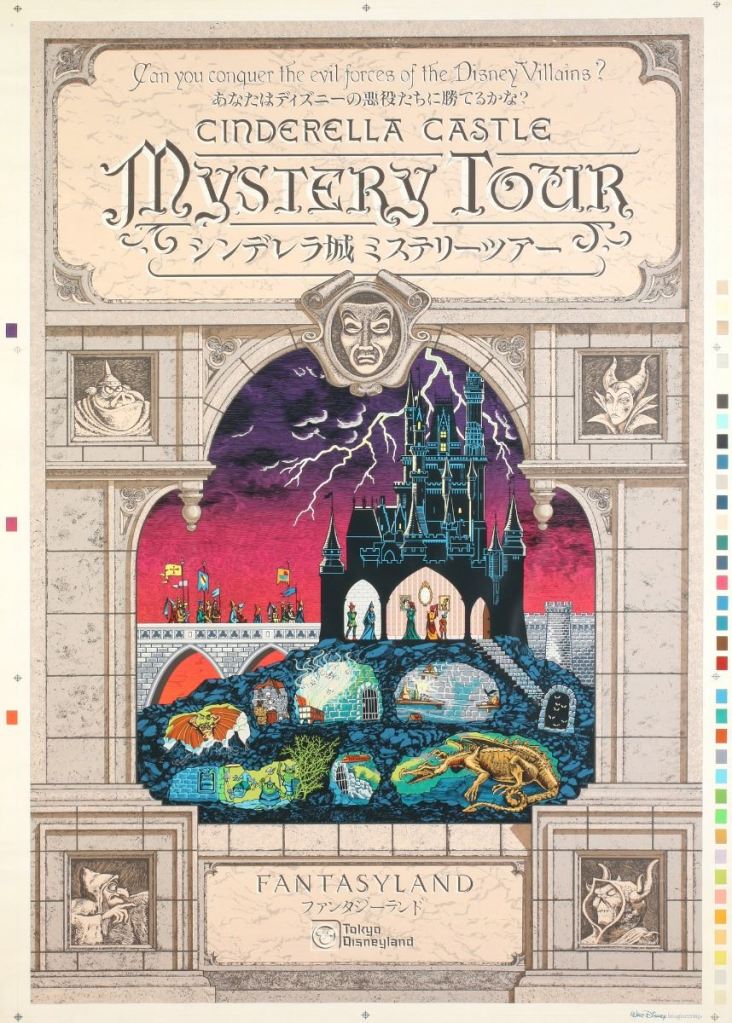
Cinderella Castle Mystery Tour, Fantasyland, Tokyo Disneyland

Cinderella Castle Mystery Tour sounds more like a family-friendly (ish) Halloween maze, not a 1980s Disney attraction, but that’s exactly what it was. This terrifying walkthrough made its debut in July of 1986, and took guests on an adventure through the caverns and dungeons beneath Cinderella Castle. The experience started innocently enough, with your guide telling the stories of all our favourite Disney protagonists ranging from Snow White to Peter Pan. Your tour would quickly take a darker turn however, as the villains become angry that the heroes are receiving so much attention, and the heroes’ portraits melt away as evil takes the limelight.

The Evil Queen’s magic mirror appears on the wall, informing guests that “no hero is complete without a villain”. Suddenly and unexpectedly the mirror would open up, revealing a dark passageway into the caverns. But if you thought this is as scary as it’s going to get, you’d be wrong. Guests would walk down the steps, descending into the dungeons, where the villains were waiting to get their revenge.

One of the first scenes guests encountered was the Witch’s laboratory, where the spellbook was open to a recipe for poison apples. Nope, no actual apples guests could steal here. The next scene at first seemed normal, until armour-laden statues began shaking as an axe is swung in the distance. From here a corridor would lead to Maleficent’s lair, where she would threaten guests to escape or face evil. Your guide would lead you down another hallway to escape the evil fairy, but she wasn’t just letting you escape- Maleficent’s goons would chase guests into the darkness, poking their heads through holes in the wall.

This hallway led you to a jewel-filled cavern, but a flash of lightning informed you that you’re still in danger, and the dragon that materialised in the cave confirmed that. The guide then ushered guests into a lift for safety, yet you weren’t even safe here as a demonic voice filled the lift before the doors would open at another creepy corridor. Here a tapestry lined the walls, telling the story of the 1985 animated movie The Black Cauldron.

The guide would choose a guest from your group to carry the legendary sword, then lead the group into the Horned King’s lair. After catching sight of the guests the terrifying audio-animatronic villain would begin an absolutely horrifying speech about how the guests are about to be sacrificed to the cauldron and it would “all be over soon”- not exactly the most magical or whimsical speech to ever be used on a Disney attraction. The guest holding the sword would point it at the Horned King, and as the King is defeated the attraction comes to an end.

Cinderella Castle Mystery Tour is, even today, considered one of the scariest Disney attractions ever created, with its consistent death threats and various surprise elements. It was also a favourite among some guests at Tokyo Disneyland, yet like all defunct attractions the Mystery Tour did eventually reach the end of its life, and closed permanently in April 2006, after almost twenty years of scaring adults and children alike.

Did you ever ride any of the attractions on this list? Which is your favourite? Let me know in the comments below!

If you enjoyed this article, you’ll love our other posts from theme parks and attractions around the world!

Breaking News: Intamin releases four unique new coaster models… but are they really that unique?

Intamin Amusement Rides of Switzerland has always been a manufacturer that’s known for pushing the boundaries of theme park technology, creating attractions that offer safe and unique thrills for the whole family. Overnight this well-known manufacturer has released concept videos for four new coaster models, but ‘new’ may not exactly be the correct word for…

Europe’s Greatest Darkrides- one continent, many amazing worlds

Europe is home to many incredible darkrides, from the thrills of indoor rollercoasters, to the beauty of many of the scenes in some trackless and water-based darkrides. Not all rides are created equal however, and some parks go all out with creating the most immersively impressive darkride experiences for their guests, combining technology, story and…

Arrow Masterpieces from Around The World

November 1945 was the beginning of something incredible for the amusement park industry, which then was practically non-existent, other than a few regional parks temporarily closed (that sounds all too familiar!) due to the Second World War. In a small workshop in Northern California, engineers Karl Bacon and Ed Morgan began a machine shop, and…

Consider subscribing to have all the latest Coaster Dreamers content delivered straight to your inbox!

Photo credits:

-@wingchunjourney on Instagram https://www.instagram.com/wingchunjourney/

-Disney D23

You are all clear… and outta here! Thanks for reading!

-Lily

Breaking News: Intamin releases four unique new coaster models… but are they really that unique?

Intamin Amusement Rides of Switzerland has always been a manufacturer that’s known for pushing the boundaries of theme park technology, creating attractions that offer safe and unique thrills for the whole family. Overnight this well-known manufacturer has released concept videos for four new coaster models, but ‘new’ may not exactly be the correct word for them. So, let’s dive in to Intamin’s most recently released coaster models!

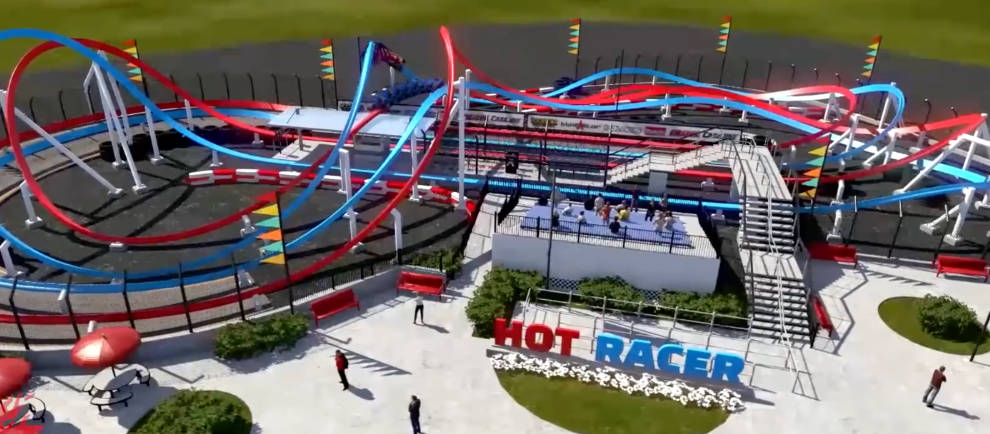
Hot Racer

A rollercoaster train running on a single rail is a completely new concept, or it was, until Idaho-based Rocky Mountain Construction did exactly that in 2018, with Wonder Woman Golden Lasso Coaster at Six Flags Fiesta Texas. The difference with Intamin’s take on the Raptor track is the introduction of a racing element- yes, we are getting a duelling raptor!

The Intamin Hot Racer will be available in three variations, one being Infinity, a compact thrillride offering two twin tracks that duel and race beside each other. The concept video shows the two tracks as red and blue, but it’s likely the coaster’s colour scheme will vary based on the park and theme.

The second variation is Overdrive, a high-speed racing experience featuring a double launch. Overdrive will also introduce a new inversion: the Wallride Dive, however not much information on this has been released. The racing aspect doesn’t seem to be as crucial to this version as it is to the other two, focusing more on speed, but it will still hopefully still be a big part of the overall ride experience.

Last but by no means least is Autodrome, with a groundbreaking 75 seconds of duelling between the two trains on 1019 metres of track. Autodrome will also feature the two launches utilised on Overdrive, and riders will get not one but two laps of this racing-centric duelling coaster!

We’ve all been waiting for an RMC to come to one of the UK’s theme parks, with a Raptor being one of the most realistic options. Perhaps we’ll get something similar by Intamin at either Blackpool Pleasure Beach or Thorpe Park- both have worked with Intamin before so it wouldn’t be too much of a stretch. The compact nature of Intamin’s Hot Racer means both parks could possibly find enough space to build one of these. Another possibility will be that the UK’s (or even the world’s!) first Hot Racer will make it’s debut at Alton Towers as SW9!

Ultra Splash

The next concept on this list seems to combine two existing coaster models, one of these being the Intamin Impulse, and the other, strangely, being the Mack Rides Water Coaster! From what can be seen in the concept video it seems that the station will sit in the centre of the track, just like an Impulse, but as riders fall back down from the top they’ll get seriously wet on one end of the ride, hence the name ‘Ultra Splash’.

The Intamin Ultra Splash is being advertised as having a high capacity due to utilising just one station, and a unique track system will be used (though it looks quite similar to the Hot Racer track!)

There are a few different parks I could see this going to, one of them being Thorpe Park as a replacement for Loggers Leap, though this is probably quite unlikely. Another possibility would be Energylandia in Poland, as they’ve been aiming towards the thrill market more and more these past few years, with additions such as Hyperion in 2018 and Zadra a year later.

Vertical Launch/LSM

While the Intamin Vertical Launch coaster doesn’t appear as too similar to other models at first glance, it still has its not-so-new elements and aspects. The Vertical Launch Coaster is said to feature three separate launches (LSM!), one of these being inverted, and is set to be the most compact triple launch coaster model in the world. Riders will also navigate what is being called a zig-zag loop, though whether this is an actual new inversion or just a more unique name for something that already exists hasn’t been confirmed as of yet.

There’s a possibility the zig-zag loop will be inspired by Maurer Sonhe’s non-inverting loop, found on coasters such as Hollywood Rip Ride Rocket at Universal Studios Florida. If that is true however, Intamin will have to undertake the challenge of making the loop as un-Maurer Sonhe as possible, as the non-inverting loop is actually patented by its manufacturer.

It didn’t take too long for enthusiasts to spot the similarities between this concept and Premier Rides’ Sky Rocket II model. Both are compact, launched experiences with tracks twisting and turning and duelling. The Sky Rocket II has existed for ten years and is still going strong, with the latest installation set to open some time this year (hopefully!) as Ice Breaker at Seaworld Orlando, so it only makes sense that Intamin would want to jump in on the success of this model.

As for potential installations, well, the first Vertical Launch Coasters could go to any park in need of a new coaster yet working with a smaller footprint than is ideal, but price may be a factor that prevents many parks from getting one of these. Intamin coasters are generally a lot more expensive than those from other manufacturers, yet if they really want to compete with Premier Rides there’s a possibility they might drop the price, to make the Vertical Launch more appealing to parks with a more limited budget.

Giga Splash

What is arguably the largest (well, by height at least) announcement on this list is the new Giga Splash model, which seems to be aimed at parks with scenic surroundings. The ride experience begins with a vertical lift hill utilising theatre-like seating, offering panoramic views of the park or area the coaster is based in, and while Intamin is stating that this will increase capacity, the slow-ish ascent to the drop seems more likely to decrease the throughput rather than increase it.

Once riders have reached the top, they’ll fall down an 87 degree drop of approximately 131ft, or 40m (yes, I’m disappointed it’s not an actual giga too!) . At the bottom will be what Intamin are calling an “interactive water channel” and crest an airtime hill sticking out of the water. As the train falls down the drop a giant splash is said to be created, soaking not only the riders but also those looking on from the bridge above.

I can definitely see the Intamin Giga Splash debuting somewhere like Cedar Point, a park with breathtaking views, a reasonable amount of space that could be expanded by removing some less popular attractions, and a constant need to break records with its revolutionary and record-destroying rides. That said, the park may wait until several other parks have built one first, to ensure the Giga Splash model is reliable and popular with riders.

But are Intamin really ripping off other manufactures? We don’t think so!

As soon as these new concepts were released, many enthusiasts (myself included!) were quick to jump on the idea that Intamin are blatantly ripping off Premier, Mack and several other manufacturers. But, looking back at theme park history, a lot of our favourite coaster models wouldn’t have been created without the manufacturer taking an already existing concept and putting their unique take on it.

B&M didn’t invent the suspended coaster, Arrow technically did that, they just made it their interpretation and the inverted coaster was born. Innovation, not just among amusement rides but across all industries, couldn’t happen without existing products to build upon and improve, and that’s essentially what Intamin are doing with their four new models… they’ve just made it slightly more obvious than likely intended.

These coasters may not be the most original concepts around, but they are still brand-new coaster models that really do look like they’ll offer a great ride, and I think its safe to say we’ll be able to see some of these rollercoasters at our favourite parks in the next 5-10 years!

So which of these new Intamin coasters are you most excited for? What parks can you see them going to first? Let me know in the comments below!

If you enjoyed this article, you’ll love my other posts from theme parks around the world!

Tall and Speedy: the story of the Intamin Accelerators

There was a time when lifthills were not just commonplace on coasters; they were compulsory for a working ride. A train travelling up a lifthill was the only way to gain enough momentum to complete the circuit- that was, until 1978 when Montezooma’s Revenge opened at Knotts Berry Farm in California, the first coaster to…

Arrow Masterpieces from Around The World

November 1945 was the beginning of something incredible for the amusement park industry, which then was practically non-existent, other than a few regional parks temporarily closed (that sounds all too familiar!) due to the Second World War. In a small workshop in Northern California, engineers Karl Bacon and Ed Morgan began a machine shop, and…

Consider subscribing to have all the latest Coaster Dreamers content delivered straight to your inbox!

Thanks for reading!

-Lily

A Different Kind of Magic- the strangest, creepiest and outright terrifying attractions to operate at Disney Parks- Part One

The main target market for Disney’s many theme parks around the world has always been families- this was made clear by Walt Disney even before Disneyland opened in 1955, when he said he wanted to create a fun little park for kids and kids-at-heart to enjoy together.

But that’s not to say Disney rides and attractions have always been bright, whimsical and child friendly: sometimes a ride is unintentionally weird or creepy, while other times we question whether the Imagineers want to give us nightmares. So let’s start the creepy, and explore the history of Disney’s strangest and most terrifying attractions!

Original Alice In Wonderland, Fantasyland, Disneyland

Alice in Wonderland is the enchanting story of seven year old Alice, who falls down a rabbit hole into the magical and slightly psychedelic world of Wonderland. Seems innocent enough, right? Well, apparently not. Among the initial plans for Disneyland was an ornate maze based on the 1951 Disney adaptation of Alice In Wonderland, which was strange enough seeing as it was one of Disney’s least popular movies at the time.

The maze would be somewhat similar to Alice’s Curious Labyrinth at Disneyland Paris, allowing guests to explore Wonderland and meet its strange residents along the way. The project was abandoned for a while as other attractions received priority during Disneyland’s construction, and Mad Tea Party, an innovative teacup ride built by Arrow Development was built instead.

Not too long after the opening, however, the plans were revived as part of the second stage of Disneyland. This time it was not a maze, but a darkride utilising a system similar to Snow White’s Adventures, with many elements and scenes from the original drawings adapted to fit this. The ride, known simply as Alice in Wonderland, would be built on the second floor of Mr Toad’s Wild Ride- you can even hear some of the soundtrack from the one of the rides if you get stuck on the other! – with guests travelling in caterpillar cars through the attraction. Alice in Wonderland opened in June 1858, with a grand opening at which Walt Disney, along with a young actress as Alice, opened the attraction with a giant key.

Check out this awesome video from Diz Avenue on Youtube of the ride’s 1958 opening!

But the first riders were in for a surprise. While the movie was bright and imaginative, the ride was a lot darker, and seemed to focus only on the more terrifying aspects of Wonderland. The experience began with riders falling down the rabbit hole and into the upside-down room, a scene not included in the film which made the ride even more confusing, before passing into the oversized room.

Soon you would come face to face with the Cheshire Cat, laughing insanely through speakers in his… eyes, as if that scene wasn’t creepy enough. After venturing even further into this twisted version of Wonderland, riders would visit the tea party scene, but here you weren’t an honoured guest- more of an unwanted visitor.

WDWmagic forums have some great (and terrifying pictures from the original ride!)

https://forums.wdwmagic.com/threads/original-alice-in-wonderland-ride.864119/

You would be “welcomed” into the scene with the Mad Hatter and March Hare screaming about how rude you are, before quickly trying to KILL you with an exploding Unbirthday cake. Crashing through three sets of doors, terrified guests would end the indoor part of the experience with Goofy’s shrieks of pure terror ringing from the speakers. Wow, that’s an intense ride- it’s as if the designers looked back at the Alice in Wonderland movie and decided what it really needed was a bit of nightmare fuel.

This strange adventure through Fearland, sorry, Wonderland, lasted for over fifteen years, closing in the 1980s to make way for the Fantasyland overhaul. Mad Tea Party received its own updates during this time, and was moved to be just outside Alice In Wonderland. As for the darkride itself, Alice in Wonderland was given a drastic reimagining to keep the mysterious nature of the film, but make it a lot more family-friendly. This new version, opened in 1984, incorporated many more scenes from the movie, as well as adding 3D scenes and sets as opposed to the mostly flat set pieces used before. The 1984 incarnation of Alice In Wonderland remained mostly unchanged until 2010, when newer, more up-to-date technology was added.

While it would have been awesome to experience the original, more creepy version of this classic Disneyland darkride, I’m glad we have the modern ride… a lot less people are getting nightmares from this one!

Superstar Limo, Disney California Adventure

Ahh, Superstar Limo. How can we do a “strangest Disney rides” list without discussing this failed darkride? Superstar Limo was an opening day attraction at Disney California Adventure in 2001, but lasted for less than a year. The ride was originally meant to be a high-speed limo chase through the streets of Hollywood, in which riders were celebrities fleeing the paparazzi in order to reach the Chinese Theater. After Princess Diana’s death in 1997, this theme was abandoned as it would just hit too close to home, but the ride was too far along in production to be shelved altogether.

The theme and overall experience of Superstar Limo had to be completely reworked, without much success. The ride vehicles were slowed down, and as many references to the paparazzi removed as possible, but this resulted in many of the old sets being simply impossible to work into the new storyline of riders travelling calmly through Hollywood. The solutions to this? Either keep them in despite not making much sense, or remove scenes that didn’t fit, and create new ones that portrayed Hollywood and celebrity life in a much more positive light.

Due to swiftly approaching deadlines and Superstar Limo needing to be finished by DCA’s opening, the sets ended up feeling low-effort and two-dimensional. The experience felt distinctly not-Disney, and most riders hated the strange storyline.

But this wasn’t the only factor working against Disney when creating Superstar Limo. It seems Pop Culture ages faster than it takes to build a ride, so by the time the attraction opened in 2001, many of the celebrities represented in the weird-looking and unnerving animatronics were not as relevant to younger audiences as they were back when it was designed, and the Hollywood in-jokes scattered throughout the ride were outdated too.

Superstar Limo was one of the few rides included in Disney California Adventure’s plans from the very beginning, set to be one of the park’s headliner attractions, yet it seems this darkride was doomed to fail from the start. After the failure of Superstar Limo at DCA, plans for a much more elaborate version of the ride at Disney MGM Studios (now Hollywood Studios) over in Florida were subsequently scrapped, and California’s version closed in January 2001 to be replaced by Mike and Sulley to the Rescue.

Body Wars, Wonders of Life, Epcot

Leaving California now for Florida, let’s visit an attraction that riders always either loved or hated. Seven years after Epcot Center opened in October 1982, a new “life and health” pavilion would complete Future World’s nine pavilion layout- and this pavilion was known as Wonders of Life. Sponsored by life insurance company MetLife, Wonders of Life focused on teaching guests the importance of taking care of our health while still getting the most out of life, through two main attractions: Cranium Command and Body Wars.

While Cranium Command took guests inside the brain of a 12-year-old boy to learn how to reduce stress, Body Wars got right into the ‘gory’ side of health, allowing riders to explore the inside of a splinter, complete with blood cells, vessels and everything else you can expect to see on the inside of the body.

Riders would enter the labs of MET- Miniaturized Exploration Technologies- where they would see a range of pre-shows exploring the science behind healing wounds. Soon you would board your spaceship-like vehicle, and embark on a high-speed adventure by the means of a slightly violent (okay, extremely violent!) simulator ride system. Body Wars was Epcot’s first thrillride, and it certainly packed a thrill, lurching riders backwards and forwards and this way and that way as their ship navigates the inside of a blood vessel.

Unfortunately, not everyone enjoyed the thrills Body Wars had to offer. For many, it would make wars happen in their own bodies- meaning vomit! The rigorous twists and turns of the simulator combined with the somewhat gross imagery shown on the screen was too just much for many, and therefore Body Wars was avoided by those who prefer the more gentle rides that even today are more common around Epcot.

Body Wars wasn’t the only strange attraction to inhabit the pavilion’s shining dome- Wonders of Life was also home to what is considered Epcot’s most controversial show! The Making of Me debuted in one of the pavilion’s theatres in October 1989 along with Cranium Command and Body Wars, but with a much more mature theme: the making of, well… you! Cartoon sperm race to reach the egg, with actor Martin Short narrating the story of how his parents met and how he eventually was born. The show was so controversial, in fact, that a warning had to be placed outside the theatre, warning parents about the show’s sensitive nature. Wow, Wonders of Life really was an unusual pavilion.

After MetLife ended their sponsorship of Wonders of Life in 2001, the golden pavilion would have just declining six years left before it was forced to close. Since then the gold dome that once housed Wonders of Life has been used as a Festival Center among other things, and parts from Body Wars are used for Star Tours over in Hollywood Studios. The new Epcot overhaul will bring a complete redesign of Wonders of Life as the Play! Pavilion, but it’s sad to see such a loved pavilion fall into decline as quickly as it did.

Check out my article exploring the rise and fall of Wonders of Life if you want to learn more about this nostalgic pavilion!

ExtraTERRORrestrial Alien Encounter/Stitch’s Great Escape, Tomorrowland, Magic Kingdom

Magic Kingdom is possibly the most family-orientated park in Walt Disney World, and especially in Tomorrowland, where you can meet your favourite characters from Toy Story, Lilo and Stitch, and more. So it may seem impossible that the building that would go on to house Stitch’s Great Escape once was home to what is known by some as Disney’s most frightening attraction- but it was, and the attraction in question is ExtraTERRORestrial Alien Encounter!

Mission To Mars, a screen-based show inspired by the version at Disneyland, closed in 1993 to make way for the New Tomorrowland expansion as part of Michael Eisner’s “Disney Decade” (post on this coming soon!). Mission To Mars’ predecessor, ExtraTERRORestrial Alien Encounter, opened in December 1994, making use of the in-the-round seating and screens, and was already reasonably frightening for younger guests, but, according to then Disney CEO Michael Eisner, not scary enough. After being open for just two months, Alien Encounter went down for an extensive refurbishment in order to up the fear factor on this already scary attraction.

The result? A show so terrifying that it was considered too scary for children, despite the dark jokes thrown in to make the show slightly more family-friendly. Guests would be seated in harnessed seats surrounding a tube, where they were be greeted by X-S tech scientists Spinlok and Dr Femus, before encountering a hideous, horrifying alien rising up into the tube. Water would spray out at guests, but for the sake of even more terror it was never specified that it was in fact water- so it could have been anything, really. This wasn’t the only fear-inducing special effect however, guests would feel the alien moving round the theatre as their seats rumble and shake beneath them.

ExtraTERRORestrial Alien Encounter sure did terrify its fair share of guests, and honestly seemed like something you would find in a Universal park, not in the middle of Magic Kingdom close to Space Mountain and Buzz Lightyear’s Space Ranger Spin. The show did its final run in October of 2003, and while its replacement was a lot more child-friendly, it wasn’t exactly loved by guests.

Stitch’s Great Escape was hated before guests even experienced it, and the problem was with the way the attraction was promoted. Stitch had completely taken over Cinderella Castle, scrawling over the walls in bright red paint “Stitch is King” and covering the turrets in toilet paper (hey Stitch, we could really use all that toilet paper now!). While some guests found this overlay hilarious, others didn’t, particularly if they were on a once in a lifetime trip and wanted to get that iconic Cinderella Castle photo. Once guests actually entered the theatre, many considered Stitch’s Great Escape to be boring and pointless compared to Alien Encounter.

From 2016 Stitch’s Great Escape began operating only during peak times and when Magic Kingdom was at its busiest, but soon began opening less and less before becoming abandoned altogether, with an area of the attraction being used as a meet-and-greet area. Earlier this week, however, Disney announced that they would be closing three attractions across two parks- one of these being Stitch’s Great Escape. Hopefully this means we’ll see something else occupying the space in the next few years, maybe a new, more up-to-date Lilo and Stitch attraction!

Kitchen Kaberet/Food Rocks, The Land, Epcot

Need some motivation to eat healthier? Have you considered a band of singing audio-animatronic foodstuffs singing about the importance of health? Okay, you probably haven’t. But this was the aim of Kitchen Kaberet, an opening day attraction at EPCOT Center, located in The Land pavilion where Soarin’s queueline is today.

Bonnie Appetite would open the show, singing about her ‘mealtime blues’ and how exhausting it is to cook nutritious meals over and over again every mealtime. Soon the foods would take over, as the Kitchen Krackpots (cool name, by the way!), a set of singing condiments, showed you how to Chase Those Mealtime Blues Away, and this was when the action really began.

A great video of Kitchen Kaberet from Mousesteps.com!

Mr Dairy Goods, The Cereal Sisters, and Ham and Eggz performed their own pieces about the food groups that were recommended by the US government for a healthy diet at the time. This all led up to the signature character of Kitchen Kaberet, Mr Broccoli, singing that extremely catchy song Veggie Veggie Fruit Fruit. Kitchen Kaberet certainly was a crazy and unique experience, and fans loved this craziness, which is why many were heartbroken when the attraction’s closure was announced in the early 1990s.

Around this time The Land’s sponsor, food company Kraft, had not renewed their sponsorship, allowing for Nestle to step in as the new face of the pavilion. They didn’t invest as much effort and money into The Land as Kraft did before, meaning that Kitchen Kaberet’s retheme was kinda disappointing. Food Rocks opened in 1994, with a similar premise to Kitchen Kaberet- singing food items is quite a strange and unique concept in itself- but the animatronics seemed cheap compared to what was there before, and the whole show just felt a bit low-effort for a Disney attraction.

The storyline was completely changed: Bonnie Appetite was removed from the show altogether, and Fud Wrapper led a concert in advocacy for health and nutrition. Excess, a rock band consisting of those foods we all love but our bodies don’t, kept interrupting the show, singing about why they think you should eat as much unhealthy food as possible (though really, I think we’ve all been eating a little more than we should in lockdown!) Food Rocks concluded with a song known as Choose Before You Chew, adapted from Queen’s Bohemian Rhapsody.

Food Rocks wasn’t Epcot’s worst retheme ever (that title goes to Journey Into Your Imagination!), but was disliked as it lacked the charm and weirdness that Kitchen Kaberet was loved for. By 2004 the attraction had reached the end of its life, yet much of the theatre remained intact. Some of the area occupied by Kitchen Kaberet/Food Rocks was reused as the queueline for Soarin… Over California… In Florida. Soarin Around The World makes so much more sense in Epcot!

It’s A Small World, Fantasyland, Various Disney Parks

There, I said it. It’s A Small World is CREEPY. This classic water-based darkride first debuted at the 1964 World’s Fair in New York, along with Carousel of Progress and Great Moments With Mr Lincoln. This World’s Fair wasn’t like the others that came before it- while most have attractions and pavilions sponsored by various countries and companies, the 1964 World’s Fair was run by Walt Disney and his company. The pavilions had a focus on progress and were a way for Disney to experiment with new rides and experiences that would eventually find their way into Disneyland, and later Magic Kingdom in the 1970s.

It’s A Small World was a new kind of attraction. It put a new spin on the age old darkride concept by adding water, allowing riders to sail through a range of scenes depicting audio-animatronic children that represented countries from England to Egypt. Then called Children of the World, the ride was sponsored by UNICEF, but lost its sponsorship when the World’s Fair came to an end in 1965 and the attraction was moved to Disneyland, becoming It’s A Small World.

The Happiest (and possibly most annoying!) Cruise That Ever Sailed was soon recreated in Florida for Magic Kingdom, with a few changes. While the original begins outside before sailing into an indoor portion, Magic Kingdom’s is completely indoors, opposite Peter Pan’s Flight. Small World’s façade was different too at the two parks: Disneyland’s uses a regal looking white and gold colourscheme, while Magic Kingdom’s contains a brightly-coloured entrance sign on a castle type-building. Despite these small aesthetic changes, the ride experience remains more or less the same at both parks, and at every other park with a version of It’s A Small World, with the exception of Tokyo Disneyland, which features Disney characters in their home countries. Can we please get that on every version, please? It would be awesome!

But what’s creepy about this, you may ask. Well, the animatronics are kind of nightmarish! Their soul-staring faces singing that loud, repetitive song- agghhhhh!

It’s A Small World may be one of the most annoying attractions Disney have ever created, but its an old classic with so much history, and we wouldn’t want it any other way!

Have you ridden any of the rides and attractions on this list? Which do you think is the scariest or weirdest? Let me know in the comments below!

If you enjoyed this article, you’ll love my other posts from theme parks and attractions around the world! Don’t forget to come back for part two- coming soon!

Rides That Never Left The Drawing Board- Part 1 (Disney Parks)

It takes years for a new ride or attraction to be constructed, from the initial planning permissions being submitted and approved, to the announcements and teasers, to construction then finally a grand opening. But some rides never get off the ground, with plans being kept in storage or scrapped altogether. Join me in exploring what…

Disneyland’s Black Sunday: What was it and how did it happen?

“As long as there is imagination left in the world, Disneyland will never be complete” Walt Disney When you think of Disneyland, what comes to mind? Castles, family, and Mickey Mouse? What about fires, dehydration and stampeding crowds? Okay, those last three maybe aren’t so likely. But all these actually happened on Disneyland’s opening day,…

Consider subscribing to have all the latest Coaster Dreamers content delivered straight to your inbox!

You are all clear… and outta here! Thanks for reading!

-Lily

Magic and History: The oldest theme parks around the world

Amusement/theme parks have been entertaining families and thrillseekers for generations, evolving over the years to feature newer, smoother and better themed attractions. But some of these parks we know and love today are older than you’d expect- some even date back to the 1840s! Many of the world’s oldest theme parks elaborate histories with remnants spread throughout the park if you know where to look, so lets explore the stories of the world’s first theme parks!

Note: I won’t be covering every park that opened during the early age of theme parks, as there are so many- particularly during the 1930s! This list will only cover the parks that are most famous today.

Blackgang Chine, Isle of Wight, UK

Starting this list off at the UK’s ‘Land of Imagination’, Blackgang Chine has been clinging to the edge of Blackgang’s cliffs since 1843, over 175 years! Throughout its long life this classic UK park has experienced its share of landslides, due being on a cliff, so attractions are moved inland every 10 years or so to prevent them being swallowed up by the sea. Some lands and attractions have even had to close permanently due to no longer being safe, sometimes leaving set pieces abandoned on the edge of a cliff, which is pretty eerie.

Throughout the Victorian era the tourism industry was growing and blooming, with more and more people wanting a real “get away” on the coast and in the countryside. Blackgang Chine, then an actual chine and ravine, was soon founded by Alexander Dabell, and Blackgang Chine Amusement Park was born. The park would continue to grow and new themed lands would open: the Model Village 100 years later, as well as the famous Water Gardens and Snakes and Ladders.

Many of Blackgang Chine’s most nostalgic attractions still remain at the park today, albeit in a slightly different position due to being moved back several times. You can now explore the cursed Rumpus Mansion, get up close and personal with dinosaurs, and even ride a rollercoaster on the edge of a cliff (aptly named Cliffhanger!) all in one day at this historic, family owned and oriented theme park hanging on to the Isle of Wight’s cliffs!

Indiana Beach, Indiana, USA

There’s more than just corn in Indiana! That’s the slogan for this classic Indiana amusement park opened in 1926, originally known as Ideal Beach. This small boardwalk park located on the Lake Shafer has brought joy to locals and tourists alike for almost 100 years, and today features rides such as Cornball Express, Lost Coaster of Superstition Mountain (awesome name!) and Steel Hawg.

Sadly however, come February 2020, the future of Indiana’s major theme park looked rough. Indiana Beach’s latest owner, Apex Parks had announced that several of their parks would be forced to close, and while Indiana Beach was eventually saved by businessman and coaster enthusiast Gene Staples a few months after the announcement, some of Apex’s other properties weren’t so lucky.

Check out this post I wrote a few days after Indiana Beach announced it would be closing for a detailed history of this iconic park!

Indiana Beach: A little park with a lot of history

From it’s origins as Ideal Beach in 1926, Indiana Beach has entertained and thrilled visitors for almost 100 years. This small boardwalk park is located on Indiana’s beautiful Lake Shafer, and has previously been home to over twenty rides and attractions, aimed at families and thrillseekers alike. On February 20th 2020, Apex Parks announced the…

Tivoli Gardens, Copenhagan, Denmark

When Tivoli Gardens opened in August 1843, it was largely inspired by Europe’s growing amusement and pleasure park industry. The park’s initial name was Tivoli and Vauxhall, Tivoli after Paris’ Jardin de Tivoli, and Vauxhall after London’s Vauxhall Gardens. Neither of these resorts are still operating today, but Tivoli Gardens was luckily able to survive the many factors that caused Jardin de Tivoli and Vauxhall Gardens to close. The story of how Tivoli Gardens came to be is kind of interesting- a businessman encouraged the king of Denmark, King Christian VIII to lease him some land by saying that if people are amusing themselves, they won’t be thinking about politics.

The entrepreneur was given the use of 15 acres of land, on which he began to the legacy that is Tivoli Gardens, beginning with various amusements including band stands, cafes, and even some small rides such as a scenic railway and a carousel.

Tivoli Gardens is a staple of the European theme park industry as well as having a lot of historical significance. It is considered one of the most famous parks in Europe, beside Disneyland Paris, Efteling and Europa Park. Throughout 1943 many of Tivoli’s buildings and attractions were burned as a result of the war, yet the park was able to make a remarkable recovery and reopened soon after. Today Tivoli Gardens continues to delight visitors from around the world with its classic atmosphere and evolving attractions!

Cedar Point, Ohio, USA

Cedar Point, looking over Sandusky’s famous Lake Erie, feels as if it has always been the rollercoaster capital of the world. However, just like Blackgang Chine, it was originally a fishing location! The area was known as the Cedar Point Peninsula, earning its name from the abundance of cedar trees up from the beach. Around the 1860s and 70s tourism was booming in the US, with an increasing demand for holidays around coasts and lakes. Cedar Point’s tourism history dates back to the 1870s, when holidaymakers would pay to take a ferry ride on the boat Young Reindeer across the Lake Erie.

In 1882, two businessmen saw the success of the Cedar Point Peninsula as a tourist destination and purchased some land around the area, on which a ballroom and several bathhouses were built. Each year the resort would continue to expand, with picnic tables and a baseball court. A few years later, design and construction would begin on the Grand Pavilion, featuring two floors with a photo studio and grand ballroom among other things. The Grand Pavilion remains at Cedar Point even now, as one of the oldest structures at the park!

Cedar Point’s first ride, a sort of water toboggan that launched brave riders into Lake Erie, opened to visitors in 1890. The installation of electricity at the resort in the 1890s created new exciting opportunities for the park, and the first ever rollercoaster at the park, Switchback Railway, made its debut in 1892. Switchback Railway may have only been a family coaster, but it paved the way for the groundbreaking and thrilling rollercoasters that tower intimidatingly over the lake today!

Efteling, North Brabant, Netherlands

When you think of European theme parks, Efteling, located in the Netherlands, is likely one that comes to mind. Since opening as a children’s play area in 1935, the park has evolved and grown into the incredible theme park it is today, but Efteling wasn’t put on the map as a theme park until the 1950s. The magical play area became Efteling Nature Park Foundation, founded by the mayor of a nearby town, and planning soon began on a new area that would entertain locals and tourists young and old.

Fairy Tale Forest opened to visitors in May 1952, with immersive sets and bright storylines, combined with genius lighting techniques and special effects. The enchanting walkthrough was made all the more magical by its location in a forest, meaning lighting could be manipulated even more to really immerse visitors in their favourite fairytales.

Twenty six years after the opening of Fairy Tale Forest, Efteling began to expand even further. Early that year the Haunted Castle opened to mostly positive reviews, securing the park’s future as one of Europe’s favourite family theme parks. Python opened in 1981 as the park’s first rollercoaster, a double loop-corkscrew manufactured by Vekoma.

Efteling is actually a very significant part of European theme park history. When Euro Disneyland (now Disneyland Paris) was being designed in the 1990s, several Imagineers visited Efteling to find out which theme park features would appeal to a European audience in order to implement them into Europe’s first Disney park, and the Netherlands theme park would eventually go on to win the prestigious Thea Classic Award in 2004, nominated by well-known Imagineer Tony Baxter!

Disneyland, California, USA

Where better to finish this list than at the US’s first true theme park?

During the 1950s something big was brewing in the city of Anaheim, California. Walt Disney had purchased a significant amount of farmland on the outskirts of the city, and construction soon began on a castle, a railroad and much more. The project was soon announced as Disneyland, with a new TV series debuting that gave a preview of Disneyland’s many themed areas: Fantasyland, Tomorrowland, Adventureland, Frontierland and of course Main Street USA.

Disneyland was constructed in just a year and a day, and this quick construction time led to many problems on opening day. In order to meet deadlines some parts of the park had to be scaled right down, especially Tomorrowland, which ended up being more like a permanent (and much smaller) World’s Fair than a world of the future in its earliest years. But on July 17th, 1955, the day Disneyland opened its doors, there were much more pressing issues at hand. Counterfeit tickets, a lack of water fountains due to a plumber’s strike, a gas leak and parents literally throwing their kids onto rides- so much that the opening day is now referred to as ‘Black Sunday’ by fans and even the company itself.

July 17th really wasn’t the most magical day on Earth!

Disneyland’s Black Sunday: What was it and how did it happen?

“As long as there is imagination left in the world, Disneyland will never be complete” Walt Disney When you think of Disneyland, what comes to mind? Castles, family, and Mickey Mouse? What about fires, dehydration and stampeding crowds? Okay, those last three maybe aren’t so likely. But all these actually happened on Disneyland’s opening day,…

Despite the rocky opening, Disneyland was able to quickly recover from its initial, well, disaster, and paved the way for many other theme parks around the world, including over ten other Disney parks from Florida to Shanghai!

Have you visited any of the parks on this list? Which is your favourite? Let me know below!

  1. lily712005's avatar
  2. Jv's avatar
  3. lily712005's avatar
  4. Al's avatar
  5. Simon vater's avatar

If you enjoyed this article, you’ll love my other posts from theme parks around the world! Check out just some of them here!

Arrow Masterpieces from Around The World

November 1945 was the beginning of something incredible for the amusement park industry, which then was practically non-existent, other than a few regional parks temporarily closed (that sounds all too familiar!) due to the Second World War. In a small workshop in Northern California, engineers Karl Bacon and Ed Morgan began a machine shop, and…

A Country of Innovation- The record-breaking and pioneering coasters of the UK

The UK: land of tea, history… and amazing coasters. Compared to many other countries across Europe, here in the UK we aren’t exactly known for our thrilling rides and rollercoasters, with many UK parks, particularly in the South and East, going for a more immersive, themed approach. However, British theme parks are home to many…

Photo credits:

@ky_coaster_club on Instagram https://www.instagram.com/ky_coaster_club/

@efteling_tycho on Instagram https://www.instagram.com/efteling._tycho/

@coasterbengel on Instagram https://www.instagram.com/coasterbengel/

@disneyland.brunette on Instagram https://www.instagram.com/disneyland.brunette/

Thanks for your help!

You are all clear… and outta here! Thanks for reading!

-Lily

From Cyberspace to the Desert: history of Chessington’s 5th Dimension and Terror Tomb

Over the past decades Chessington World of Adventures in the UK has been known for it’s immersive, family-friendly experiences, particularly in its earliest years. At this park you can fly through the trees of Transylvania with a vampire, venture into an African safari, and get up close and personal with tigers, but as the World of Adventures evolves, so does its rides, and some attractions get left behind and subsequently updated. The 5th Dimension, once located in the show building that now houses Tomb Blaster, is a key example of this, so lets explore the history of this nostalgic adventure through your TV!

The Earliest Incarnation

When creating the plans for what would eventually become Chessington World of Adventures, designers such as John Wardley had big plans. The New-For-1987 theme park would open in stages throughout the 80s and 90s, the first stage introducing attractions such as Runaway Mine Train, Dragon River, Safari Skyway and The 5th Dimension. Fun fact- each one of Chessington’s opening day attractions were created by the same manufacturer: Mack Rides!

The latter attraction was a darkride using a prototype ride system similar to an OmniMover, in which riders would travel through an unstable computer cyberspace led by troubleshooting robot Zappomatic. Sadly, the original 5th Dimension didn’t draw as many crowds as Tussards had hoped. Visitors just didn’t see the ride to be as exciting or enticing as the others, and queues were often minimal. Once on the ride there weren’t too many complaints, other than the storyline being kind of confusing and hard to follow, particularly for kids. The 5th Dimension was a relatively big budget attraction for the time, and as it wasn’t living up to expectations something had to be done.

From Computer To TV Set

Just a year after its opening The 5th Dimension went down for refurbishment, and while the physical aspects such as the sets weren’t changed too much, the storyline was completely reworked. Zappomatic remained a major part of the attraction, yet now he was trying to catch the mischievous Gorg- “reminds me of school dinners!”- who could be hiding in any of the TV set’s five dimensions. The story became much simpler in order to be easily understood by younger children, and an updated preshow gave you a better idea of the experience before you boarded the ride.

Check out this POV of The 5th Dimension taken by British Theme Park Archive!

In this new version, riders would shrink to ‘TV size’ and pass by oversized sets, then would enter the TV’s first dimension. Here you would meet Zappomatic, who would introduce the Gorg and enlist your help in finding him. Passing through the other four dimensions, riders would then find themselves in the 5th dimension (hence the name!). You think you’re safe from the Gorg for now… but then it appears, angry and ugly as ever, and riders must press the button on their ride vehicles to get rid of the evil virus once and for all.

The dimension begins to collapse, and Zappomatic leads riders to safety, and the final few scenes of the attraction. This simplified incarnation of The 5th Dimension was a lot more popular with riders, becoming one of Chessington’s most popular rides, yet even the greatest things can’t last forever. By the mid 1990s it was becoming outdated, and it was time for something new.

The First Tomb

In 1993, Chessington World of Adventures announced that The 5th Dimension would close permanently, to make way for a brand new darkride utilising the latest technology. The old sets were removed and new ones put in, this time for a ride themed to a mystic haunted temple and a diamond thief. Terror Tomb opened in The 5th Dimension’s former show building in 1994, following tour guide Abdab as he takes every opportunity possible to steal a forbidden gem. Detailed animatronics, static figures and sets brought the story to life, and mixed classic jokes with some pretty dark scenes.

Check out this awesome POV of Terror Tomb, captured on its test day in 1994! ©British Theme Park Archive

Your ‘tour’ ended with the evil thief Abdab being captured and punished by the tomb’s mummies, and sacrificed while, erm… hard rock music plays in the background. I don’t really get that bit either.

Terror Tomb was the first ride to inhabit a new for 1994 themed area between what was then Dragon Falls and Calamity Canyon (now Tiger Rock and Mexicana): Forbidden Kingdom! A year after Terror Tomb opened, Forbidden Kingdom’s second attraction made its debut- Rameses Revenge, an all new Huss Topspin, and the first and only attraction at Chessington World of Adventures to invert.

Many rides to replace a much loved attraction are hated by some visitors simply because its not as good as the original, or because it replaced their favourite ride, but Terror Tomb was loved by riders regardless of whether they rode The 5th Dimension or not. The storyline was perfect, as were the sets and the dark humour, and a lot of riders considered Terror Tomb to be better than the ride that was there before!

Same Tomb, Different Ride

Despite being a favourite among visitors, Terror Tomb was coming to the end of its life by the 2000s, and in 2001, Abdab gave his last tour and stole his last gem. After a year’s refurbishment a new darkride opened as Tomb Blaster, with a similar theme in that riders are still venturing through a tomb, but other elements of the ride were completely changed. For a start, Abdab is no longer part of the attraction, and the hard rock concert finale is gone too.

The majority of Terror Tomb’s sets were left intact during the update, but the animatronics were removed altogether. What was arguably the biggest change however, was the addition of laser guns to the ride vehicles! Ancient Egyptian-esque sets were updated with targets that riders shoot at to earn points, and the aim (get it?) became to score as many points as possible in order to save the tomb. There are people who are able to max out the score and somehow shoot all the targets… but that’s definitely not me- I have terrible aim! My highest score, well let’s just say it’s pretty embarrassing!

The Future of the Tomb of Forbidden Kingdom

Tomb Blaster has now outlived both attractions that came before it, lasting for nearly eighteen years with only minor refurbishments until quite recently. The 5th Dimension lasted in both forms combined for seven years, while Terror Tomb had almost the same lifespan! Along with many other parts of Chessington World of Adventures, Tomb Blaster received a major upgrade during the 2019/20 off-season, implementing a more detailed storyline like the ones the Chessington darkrides of the 80s and 90s were known for.

Now, riders have been recruited to dispel the tomb’s ancient curse, by hitting as many targets as possible, though some targets were taken out, likely to draw more attention to the sets and the new story. Other, more subtle upgrades have been made over the years, including lighting and small aspects of the soundtrack, and this really suggests that Tomb Blaster is here to stay for at least another five to ten years!

Tomb Blaster isn’t the only attraction at Chessington World of Adventures with a detailed history- Gruffalo River Ride Adventure has had its ups and downs too! Check out this post if you want to learn more about the history of Bubbleworks and how it eventually ended up being rethemed!

Did you ever get to ride The 5th Dimension or Terror Tomb? What’s your highest score on Tomb Blaster? Let me know below!

  1. lily712005's avatar
  2. Jv's avatar
  3. lily712005's avatar
  4. Al's avatar
  5. Simon vater's avatar

If you enjoyed this article, check out my other posts from theme parks around the world, and consider subscribing to have all the latest Coaster Dreamers content delivered straight to your inbox!

A Country of Innovation- The record-breaking and pioneering coasters of the UK

The UK: land of tea, history… and amazing coasters. Compared to many other countries across Europe, here in the UK we aren’t exactly known for our thrilling rides and rollercoasters, with many UK parks, particularly in the South and East, going for a more immersive, themed approach. However, British theme parks are home to many…

Frozen vs. Maelstrom: the battle of the Norway Pavilion

Norway is a country of beauty, wonder and of course adventure, and this was represented incredibly well by the Norway Pavilion in Epcot’s World Showcase. The pavilion opened in June 1988, and for over 25 years remained largely the same, with a single darkride that brought the spirit of Norway to Florida, among other services…

Arrow Masterpieces from Around The World

November 1945 was the beginning of something incredible for the amusement park industry, which then was practically non-existent, other than a few regional parks temporarily closed (that sounds all too familiar!) due to the Second World War. In a small workshop in Northern California, engineers Karl Bacon and Ed Morgan began a machine shop, and…

Photo credits:

-Parks, Scares & Glitter Blog http://psgblog.co.uk/

-@loopsandlaughs on Instagram https://www.instagram.com/loopsandlaughs/

Thanks for your help!

You are all clear- and outta here! Thanks for reading!

-Lily

Rides That Never Left The Drawing Board- Part 2 (Non-Disney)

If you read our previous post on Disney rides and attractions that were designed but never built, you’ll know that many attractions go through a few different drafts of an idea before finally building something. Parks outside of Disney (and maybe Universal) don’t do this as much, generally speaking, but it does still happen from time to time, so lets explore the rides and attractions of non-Disney parks that never make it off the ground!

Secret Weapons 1 and 2, Alton Towers

Have you ever wondered why Nemesis is known as Secret Weapon 3? What happened to Secret Weapons 1 and 2? Well, they did almost exist. After Thunder Looper, a Schwarzkopf Shuttle Loop installed at the park as a temporary attraction, was removed in the early 1990s, Alton Towers along with theme park designer John Wardley began looking for a new rollercoaster to fill the space. At the same time Arrow Dynamics had been working on a new Pipeline coaster model, having already created a prototype in their workshop, and the two companies were a perfect fit.

Check out my first ever post if you want to learn more about Alton Towers’ Secret Weapon programme!

Alton Towers’ Secret Weapon Programme: what is it and how does it work?

Alton Towers is considered to be one of the most amazing theme parks in the UK and even in Europe, with many coaster enthusiasts making the park a bucket list location to get some awesome creds. Nestled among some beautiful scenery and historic locations in Staffordshire, England, Alton Towers is home to some incredible rides,…

Or so they thought. Arrow were struggling financially at the time, and the Pipeline coaster really wasn’t ready to debut- technical issues weren’t fully ironed out and the design was constantly facing problems. On top of this, Alton Towers realised that those pesky height restrictions meant that the ride would only feasibly have a track length of 300ft, or 980 metres.

For a while the project was abandoned, leaving both Alton Towers and Arrow Dynamics to work on other things for a year or so, but hope for a new ride wasn’t completely lost. The park returned to Arrow when the Pipeline design was perfected, and John Wardley flew out to the Arrow workshop in Utah to try out the new prototype, known as SW2. It didn’t live up to expectations, with John Wardley reportedly finding it mundane and boring, and the energy efficiency of the design wasn’t great neither.

Alton Towers and John Wardley later heard about a new, innovative coaster model being developed by Bolliger and Mabillard: the Inverted Coaster. The first B&M suspended coaster, Batman: The Ride, had opened at Six Flags Great America (before opening at almost every single Six Flags park subsequently!) in May 1992, as the prototype model. John Wardley rode Batman and realised it would be a perfect fit for Alton Towers: themed to an alien that had been found under the park, and we know what happened from there. Nemesis opened in March 1994, but the previous two attractions weren’t totally lost- the rock blasting technique used to clear land for Nemesis was originally going to be carried out for Secret Weapon 2!

Tornado, Blackgang Chine

While the vast majority of rides on this list were designed yet never built, here is one that doesn’t quite fit that criteria. Many people haven’t heard of this little park on the edge of the Isle Of Wight’s cliffs, but it has an elaborate history among it’s nostalgic walkthroughs, play areas and attractions. Blackgang Chine isn’t really known for its rides, so it’s easy to understand why Isle Of Wight residents and holidaymakers alike were so excited when Tornado was announced to open as the park’s first ever coaster in the early 2000s.

Designed by an Italian ride manufacturer now owned by Westech, the New For 2003 rollercoaster was one of Blackgang Chine’s biggest investments yet at £300,000, decorated with red track and silver supports. Yet, to the dismay of fans, Tornado never opened. The coaster didn’t meet UK safety standards due to unsafe supports as well as other issues, and amid a legal battle between the manufacturer and Blackgang Chine, Tornado lay standing but not operating for a year. The manufacturer agreed to dismante the coaster but at first refused to refund the park, but eventually Blackgang Chine won the case and received a full refund. No one outside of Westech seems to know what happened to the ride after its removal, but the most likely theory is that it was simply relocated to another park outside of the park that didn’t realise it was a relocation.

A year after Tornado’s removal, Blackgang Chine made another attempt to open a rollercoaster, and this proved successful when Cliffhanger opened in 2005- and still operates today, despite being right on the edge of a cliff. (hence the name!)

Strangely, this isn’t the only time a ride was built then abandoned shortly after. Blizzard at Fort Fun Amusement Park in East Sussex, England was constructed quickly by kiddie coaster manufacturer Cavazza Diego in 2007, when the park’s owners were struggling financially. It’s likely that they believed the new coaster was going to be a way to revive their financial security, but bankruptcy was declared before Blizzard could open. A new owner subsequently purchased the park and the coaster was dismantled after just a few days of being SBNO. I guess this sort of thing isn’t so uncommon after all.

750ft Arrow Fish-Hook, Las Vegas Stratosphere Hotel

Okay, lets face it- the Stratosphere Hotel attractions in Las Vegas look… terrifying. Yes, they’re technically just family rides (with the exception of the SkyJump!) but they dangle you off the side of a building. Even as an enthusiast I don’t know if I’d ride them if given the chance! The Stratosphere features four rides and attractions, Big Shot, Insanity, X-Scream and the Las Vegas SkyJump, however in the early 2000s another ride was being planned.

The Coaster Wars of the 1990s and 2000s were well underway- every park wanted to build the biggest, tallest, fastest rollercoaster, and the Stratosphere was no exception. Arrow were suffering financial issues at the time, so when the chance came up to design a record-breaking ride they jumped at it, hoping the project would put an end to their economic problems once and for all. The new coaster would be a brand new concept, a fish hook style-ride beginning close to the top of the Stratosphere and winding 750ft down to the ground.

When the plans were first announced to the public, they were met with criticism from local residents, likely due to the noise pollution the coaster would have caused. This, along with the maintenance nightmare that was X (now X2) at Six Flags Magic Mountain in 2001, spelled the end for Arrow Dynamics, and the company sadly filed for bankruptcy in 2002.

This is not to say, however, that you could never pick up a cred at this iconic Las Vegas hotel. Between April 1994 and December 2005, High Roller stood on the Stratosphere’s top deck, and when it closed, the coaster was cut into tiny enough pieces that it could be taken down to the ground using a lift! Now that’s an original way of removing a ride!

S&S Shot Tower, Thorpe Park

After the major fire of 2000 in which several attractions were damaged and one completely destroyed, Thorpe Park began moving towards a growing market for UK thrill parks despite being family-oriented since its opening as a theme park in 1979. Wicked Witches Haunt, an amazing darkride formerly known as Phantom Fantasia, had been damaged beyond recovery and was demolished soon after the fire, leaving a large empty space. To fill the gap left by the lost ride and bring up the ride count, Thorpe Park applied for temporary planning permission for a Mega Drop Tower manufactured by Fabbri.

When the new droptower opened as Detonator in 2001, it was a massive success with riders- I guess visitors to Thorpe Park had wanted a few thrill attractions outside of X all along! Detonator became a permanent installation at Thorpe and paved the way for many other thrilling attractions that made Thorpe Park what it is today, such as Zodiac and Nemesis Inferno.

Check out this post exploring the Thorpe Park fire of 2000 and its impact on the park today!

The Thorpe Fire of 2000- the event that changed the park forever

The aims, target audience and actions of all theme parks and park companies are largely influenced by past events, some more than others. Sometimes these events will only affect small aspects of the park, such as a ride closing or being rethemed, but occasionally they can change the future of the park and it’s owners…

That’s the story of a droptower-style attraction that did end up coming to fruition at Thorpe Park. You’d assume Detonator, now Detonator: Bombs Away to fit in with the theme of Angry Birds Land, was the first of its kind to be considered for the park, right? Well, an S&S Shot Tower was actually proposed in 1998, two years before the fire, overlooking what is now Rumba Rapids. Due to planning restrictions the tower would have reached a top height of just 147ft, making it more of a family oriented ride, but then perhaps that could have worked as Thorpe was a family park at the time? Anyway, the project was abandoned soon after with no real reason given, though it was likely as a result of some sort of financial concerns, or the realisation that such a short Shot Tower wouldn’t be all that thrilling.

Which would you have preferred? Do you love Detonator, or do you think the abandoned Shot Tower would have been more fun? Let me know in the comments!

The ArrowBATic Model

Ah, Arrow, we meet again. Arrow Dynamics was a leading pioneer in the theme park industry throughout its operational life, creating many groundbreaking rollercoaster models that continue to thrill riders even today. However, as we’ve seen, some of these never saw the light of day, and one of these was the ArrowBATic. Created around the time Arrow were approaching bankruptcy, the revolutionary ArrowBATic model was a sort of inverted wild mouse, offering two versions- the Family and Extreme.

As you can imagine the Family model was aimed at thrillseekers that didn’t want too much height or speed, featuring a downward helix, several switchbacks and overbanked turns, careful not to invert too much or create an excessive amount of airtime (though on more thrilling coasters, you can never have too much airtime, right?). The Extreme model really ramped up the thrill level, with multiple inversions including barrel rolls, a dive loop and a cobra roll, as well as a 90 degree drop from 152 feet up!

Not much is known about this innovative Arrow model as no park ever applied for planning permission, let alone built one, so we can only dream of what the ArrowBATic would have been like, and the themes that could been attached to the ride.

Which of these attractions would you most like to have experienced? Are there any you would like to see added to the list? Let me know in the comments below!

  1. lily712005's avatar
  2. Jv's avatar
  3. lily712005's avatar
  4. Al's avatar
  5. Simon vater's avatar

If you enjoyed this article, check out my other posts from theme parks around the world, and make sure to read Part 1 if you haven’t already!

Rides That Never Left The Drawing Board- Part 1 (Disney Parks)

It takes years for a new ride or attraction to be constructed, from the initial planning permissions being submitted and approved, to the announcements and teasers, to construction then finally a grand opening. But some rides never get off the ground, with plans being kept in storage or scrapped altogether. Join me in exploring what…

Europe’s Greatest Darkrides- one continent, many amazing worlds

Europe is home to many incredible darkrides, from the thrills of indoor rollercoasters, to the beauty of many of the scenes in some trackless and water-based darkrides. Not all rides are created equal however, and some parks go all out with creating the most immersively impressive darkride experiences for their guests, combining technology, story and…

Disneyland’s Black Sunday: What was it and how did it happen?

“As long as there is imagination left in the world, Disneyland will never be complete” Walt Disney When you think of Disneyland, what comes to mind? Castles, family, and Mickey Mouse? What about fires, dehydration and stampeding crowds? Okay, those last three maybe aren’t so likely. But all these actually happened on Disneyland’s opening day,…

Consider subscribing to have all the latest Coaster Dreamers content delivered straight to your inbox!

Photo credits:

-@uk_coaster_media on Instagram https://www.instagram.com/uk_coaster_media/

Thanks for your help!

You are all clear- and outta here! Thanks for reading!

-Lily

Design a site like this with WordPress.com
Get started