Throughout its forty-three year history, Thorpe Park has been home to some pretty amazing rides. From petting farms to high-speed thrill rides, there has always been something for everyone, and some attractions leave more of a legacy than others.
Among now defunct greats is X:/ No Way Out, which took riders on an adventure through the darkness when a computer virus, and later a rave, made lights flash, music play and the trains go backwards rather than forwards. X has been on quite the journey over the years, through refurbs and rethemes, and is now operating as The Walking Dead: The Ride. Take your seat and pull down your restraint, as we drop into the exhilarating history of X:/ No Way Out!
Whispers of Something New
Thorpe Park opened its doors on the 24th of May 1979, and over ten years later in the 1990s, it was continuing to evolve. Despite originally being more of a water park than a theme park, Thorpe Park now offered a small rollercoaster named Flying Fish, a collection of flat rides, a waterslide called Depth Charge that’s sure to get you absolutely soaked, and a Mack Rides log flume named Loggers Leap. I’m sure some of these attractions bring a lot of nostalgia for many people (Loggers Leap definitely does for me!) but throughout the decade, there was a lot more to come.
A new attraction became a possibility in 1995, when the vintage car ride Drive in the Country was rethemed and moved to the new Rangers County area, and the hill of Fantasy Reef, where the ride was located, was flattened. On the 1995 season park map, guests were informed of a “a top secret development” coming the following year. Making it even more secretive was the construction of a giant metallic pyramid, which could soon be seen in many areas around the park.
A Ride in Darkness
In 1996 all became clear for those curious about what was being built- Thorpe Park’s second and at the time largest rollercoaster, a Vekoma Enigma family coaster ominously named X:/ No Way Out. Housed inside a red and black pyramid, the new ride combined an original soundtrack, LED lights and the adrenaline rush that comes with riding in the dark, to create an experience that left many guests wondering what on earth just happened.
It wasn’t the first time Thorpe had done a rollercoaster in darkness- when Flying Fish first opened in 1990, it too was in a dark show building- but it was the first time they had sent riders hurtling backwards.
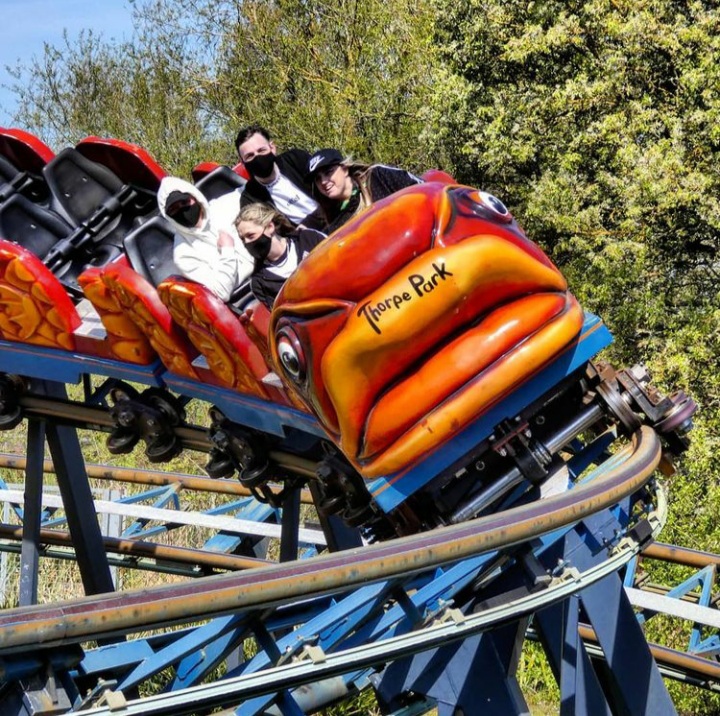
Thorpe Park sure used to like putting rollercoasters in the dark! Click below to dive into the history of Flying Fish and its thrilling indoor predecessor Space Station Zero
Thorpe Park is one of the largest and most well-known theme parks in the UK, up there with the likes of Blackpool Pleasure Beach, Alton Towers and Chessington World of Adventures. And with over forty years of successes, failures and everything in between, the park is of course home to plenty of nostalgic and iconic…
As with many indoor rides, the experience started long before you board the train. Winding through dark corridors, guests made their way into a series of themed rooms, with a spinning trommel tunnel, a room full of life-sized robots, and plenty of UV lights that were so bright they made many people’s teeth glow in the dark. There were just a few more steps before you began the ride- a preshow, and a vibrating lift to give the impression of being lifted into the station.
To begin the ride experience itself, the trains began to climb the lifthill, which may not seem too impressive until you realise they’re going up the lifthill backwards. Once at the top, riders dropped into a string of helixes until you barely know which way you’re going. And if you thought X’s three brakeruns would provide a break from the craziness, you’d be wrong. Music, mist and strobe lighting filled even these elements with a dose of disorientation.
After two minutes and 1,300 feet of twisting track, the trains pulled back into the station. Guests were led back out into daylight, and past a giant battery themed as the “Thorpe Park power supply”. During all the refurbs X:/ No Way Out went through before finally being rethemed, this battery was one of the only pieces of theming that remained the same!
An Evolving Experience
As time went on, riders’ expectations evolved, and so did the ride. For the beginning of the 2007 season, what was now Thorpe Park’s third largest rollercoaster opened with a new theme and storyline. Instead of revolving around a computer virus, X now offered a rave-style ride with UV flashing lights, dance music replacing the IMAscore soundtrack years later in 2014, and the on-ride photo camera eventually being removed. More and more people were experiencing motion sickness after riding X, so it made sense that the park were taking measures to make it a more comfortable ride.
Thorpe Park hadn’t finished experimenting with the ride yet however. During the 2010 season, guests had the opportunity to ride X illuminated by safety lights, in a unique experience that can only be compared to riding Space Mountain with the worklights on. Riders could finally see where they were going and how each of the helixes and breakruns intertwined, as well as just how close some of the tracks came to each other at some points. Three years later in 2013, it was decided that X should quite literally go “in a new direction”, as the park said, and run forwards instead of backwards.
To reflect what was now a much tamer ride, the height requirement was lowered to 1 metre when riding with an adult. This refurb was another attempt to reduce the number of people getting ill, and came with a host of other renovations, including the trains being repainted and spruced up.
The Zombie Retheme-pocolypse
By the end of 2017, X had been disorientating and dizzying riders for over 20 years, but it wasn’t long before the party would come to an end. On the 1st of December Thorpe Park submitted plans for a retheme of their second oldest rollercoaster, including a replacement of the entrance portal, a few landscaping changes, and a bit of a makeover for the show building.
The reimagining happened mainly behind closed doors, taking place during the 2017-18 off-season, however Thorpe Park didn’t leave guests completely in the dark. At the beginning of 2017’s Fright Nights, they posted a photo of the Walking Dead’s infamous door that spawned the subreddit and meme Don’t Dead Open Inside, as well as a selection of other (some slightly gory!) teasers.
Rumours on what might be coming to the park began circling even before X gave its final ride at the end of the 2017 season, and in February 2018, they were confirmed. X would be rethemed to the horror TV series The Walking Dead, which at the time had eight seasons, and follows deputy sheriff Rick Grimes as he fights to survive in a world overcome with Walkers (zombies, not the crisp brand!). The Walking Dead: The Ride made its debut on the 31st of March 2018, just four days after the opening date was announced.
In the story of the ride, Thorpe Park had been taken over by zombies, but guests didn’t need to worry, as the former site of X was now a safe zone. But it would soon become clear that the safe zone wasn’t that safe after all, as Walkers were beginning to breach the walls and fences of the area.
Guests are led through a series of dark tunnels into a preshow room, where they are questioned and led into the loading bay. To get down into the bunker, you must board your train and plunge down into the ride, where you rush (still forwards!) through darkness and theming to escape the zombies. The midcourse breakruns are woven into the ride’s storyline as points where the zombies are getting closer. At the end of the ride, you’re led out through another dark tunnel, back into daylight and safety.
On opening, The Walking Dead: The Ride received mixed reviews. Many were impressed with the preshow and the heavily-themed queueline, as well as the actors who are sometimes positioned in the queue, waiting to scare. However, it was the ride experience itself that divided- some felt that the new storyline massively improved what isn’t a particularly intense ride, while others came out a little underwhelmed. The height requirement was moved again back up to 1.4m, demonstrating that while it may have the statistics of a family coaster, the actual experience is a lot more terrifying.
From The Walking Dead’s opening until now, the ride has remained largely unchanged. The only thing to really impact the ride was the pandemic, which meant that throughout the 2020 season all of Thorpe Park’s indoor rides had to be closed to minimise the spread of the virus. Today, the ride gathers queues of up to fifty minutes, meaning that while it may no longer be the biggest or most revolutionary coaster at Thorpe Park, the Walking Dead is still popular among guests, whether you’re a fan of the TV show, horror, rollercoasters or all three.
Walking Into the Future, or Going Backwards into the Past?
Over the past few years, UK theme park enthusiasts have been begging Thorpe Park to give its coaster lineup a bit of love, especially considering the last time the Island Like No Other got a new coaster was back in 2012 with the opening of The Swarm. Our requests were answered in 2021 with the announcement of Project Exodus: plans to build a new rollercoaster on the site of the defunct log flume Loggers Leap. I’m super excited to see this much awaited new addition, and I have no doubt many of you are too.
A few other rides in the surrounding area have already closed to make way for Project Exodus, and while The Walking Dead isn’t close enough to the site to be at risk of removal, there is a possibility it could be affected if Thorpe Park decided to build another new ride after Exodus opens. The Walking Dead is the second oldest coaster at the park after Flying Fish, and even though it’s still popular, it can’t really compare with newer coasters like Stealth, Swarm or Nemesis Inferno. So will the Walking Dead be closing in the next decade? I don’t have any more information than anyone else so take what I say with a pinch of salt, but with Merlin investing more and more in their parks in recent years, there is a chance we could see this ride replaced with something new at some point.
Have you ridden The Walking Dead: The Ride, or did you ride X or X/: No Way Out when they were open? Let me know in the comments below!
If you enjoyed this article, check out some of my other posts from theme parks, attractions and destinations around the world!
Throughout its forty-three year history, Thorpe Park has been home to some pretty amazing rides. From petting farms to high-speed thrill rides, there has always been something for everyone, and some attractions leave more of a legacy than others. Among now defunct greats is X:/ No Way Out, which took riders on an adventure through…
CW: Mentions of War and the Pandemic For years, aviation has been a massive part of the travel industry, whether you’re travelling to a far-flung location, or your destination is just a little too far to drive or go by ferry. But like any flight, the story of London’s five airports hasn’t been without turbulence.…
If you’ve booked a European holiday in the past fifty-four years, chances are you’ve at least come across Center Parcs. First founded in 1968, this popular holiday park chain provides holidays aimed at those looking for an adventure, but also to escape the stresses of day-to-day life. But with an impressive twenty-eight resorts, two brand…
For years, aviation has been a massive part of the travel industry, whether you’re travelling to a far-flung location, or your destination is just a little too far to drive or go by ferry. But like any flight, the story of London’s five airports hasn’t been without turbulence. From a world where flying was reserved for a select few, to one where you can take to the skies and travel almost anywhere, lets take a journey back in time and explore the the history of the London Airports!
From Wars to Records
Before commercial flying found its feet, aviation served a different purpose- fighting wars. But after the First World War ended in November 1918, people began to see the potential for what was originally a much more narrowly-used invention. What if instead of waiting for shipments to be delivered by boat, they could have things arrive so much faster by air instead?
The concept of delivering cargo by plane had been around since 1910, when a race took place between a train and one of the first aeroplanes, to see which could deliver 10 bolts of silk across Ohio (with the plane winning!), however in the years and decades following, it began to really take off. The first air mail flight took place in 1911 in India. In 1919, a first attempt to carry heavier cargo between US cities Washington and Chicago was grounded due to technical problems, but the company running the flight, American Railway Express, continued to experiment.
The First London Airports
Across the Atlantic Ocean, more advancements were taking place. 1920 brought the opening of London Croydon Airport, in the south of the London. Other airports existed in the UK at the time, but this new one was bigger and more groundbreaking than ever before, paving the way for things now taken for granted in aviation, such as Air Traffic Control, airport terminals, and major UK-based airlines, mainly the now defunct Imperial Airways.
As the country’s largest and busiest airport at the time, and the only UK airport built between the two world wars, London Croydon was the site of a pretty impressive range of historical events. By the late 1920s, notable pilots were flying as far as Cape Town and Australia, however there were some accidents that took place at the airport too, tragically killing pilots and passengers. There was even a robbery in March 1935, in which £21,000 worth of gold was stolen, and to this day the gold has never been found.
Around the same time, a large grass field towards the North of London, and South East of a village called Heathrow, became a testing ground for planes built by aircraft manufacturers Fairey. Then named the Great West Aerodome, the field was redeveloped as the simply named London Airport in 1944; originally intended to be a hub for military aircraft, before being repurposed as London’s second civil airport once World War Two had ended. At the time, the area was much more peaceful than it is now, with country lanes and even a farm. With the redevelopment came the clearing of the entire Heath Row Village, to make way for runways that stretched over 3,000m, or 9,843ft.
Compared with the Heathrow Airport we know today, the early London Airport was a lot more humble. When it first opened, the four terminals were just marquees, repurposed after being used for military activities, but that’s not to say they weren’t comfortable. Passengers could rest on armchairs and sofas, and there were even vases filled of flowers to further brighten up the atmosphere.
Growth and Closures
In Heathrow’s first year of operation, passenger numbers reached an impressive 63,000, and in the years following, this success was yet to continue. Even more airports began to take flight (pun intended!) across London around this time, and as time went on, London Croydon Airport was used less and less. In 1952, it was decided that London’s first airport should close permanently, but even then, it took seven years before the last ever flight, a private jet leaving at 7:45, would take off from the airport.
As the birthplace of purpose-built airport terminals, Air Traffic Control and even the Mayday distress signal, there’s no doubt that London Croydon Airport played a massive role in making aviation what it is today. The airport was part of British military history too- having been the site of an attack in the Battle of Britain. The terminal and control tower still remain, now operating as a volunteer-run visitor centre.
In other parts of the city, airports Luton, Gatwick and Stansted were also moving away from military activity and increasing their presence as civil airports during the 1950s. London Luton Airport opened as London Municipal Airport in 1938, but benefitted from the growth of the holiday industry after WW2. Gatwick Airport had been the site of some passenger and cargo flights since 1946, but underwent a massive renovation in 1956, becoming a hub for a range of airlines and the world’s first airport to be directly accessible by train. To the Northeast, Stansted Airport was taken over by the British Airports Authority, a move that would lead to many expansions to come. It wasn’t until 1987 that London’s newest major airport, London City Airport, would open its doors, and it’s still expanding today.
The Capacity Conundrum
With hubs as big and central as airports, its only natural that there will be some crowds, and some passengers having to travel further than they may have liked in order to get to the correct airport for their journey. Flying was making the world more connected than it had ever really been before, and with came plenty of demand, with airports particularly in the South East of England serving more passengers each year, to the point where they were beginning to struggle with capacity.
So, on the 1st February 1978, the UK government brought in a plan to combat this: the White Paper Airports Policy. Just the name sounds terrifyingly formal, but all it aimed to do was divert passengers away from South East airports and towards other regions such as the Midlands and the North, and to increase the capacity of airports across the country. The policy discussed plenty of plans and proposals to do this, some of which came to fruition (such as Heathrow’s fourth terminal and a second terminal at Gatwick), while some of which didn’t, but most of the UK’s airports benefitted.
In 1986, work began for a huge expansion at Stansted, bringing its passenger numbers to 15 million passengers per year. The expansion took five years to complete, and the new terminal opened in 1991, later going on to win several awards. The 1980s also brought the introduction of the Gatwick Express over at Gatwick Airport, which offers a faster, more comfortable route to the airport from surrounding cities.
The 1978 Airports White Paper was a huge moment in the history of the London Airports, making flying easier and more accessible for lots of people. But with this ease came even more demand for aviation- and this brought the opening of the fifth and newest airport to serve this capital city.
A Journey of Controversy
If you followed the debate a few years ago surrounding whether or not Gatwick Airport should get a second runway, you’ll know that any kind of major airport development can understandably cause a lot of controversy. Local residents are often worried about the extra noise and air pollution, as well as traffic, caused by the developments, and this was exactly the case when a proposal for a new airport to open in London in 1987.
Plans for the airport first came into being after now defunct airline Brymon Airways found success using Short Take Off and Landing planes, that didn’t need a particularly long runway, and a short runway was built in Plymouth to accommodate these. The concept of a small runway by the sea was working well, so it made sense to create a similar airport not on the coast, but on the docklands of London’s River Thames.
It was decided that the new airport should be located in the East End of London, in a county named Newham. Some people hoped that it would bring economic benefits to the area, but others had some concerns. The airport, named London City Airport, would be uncomfortably close to residential areas, and to make matters worse, promises were made to console the concerned residents, yet not kept. London City Airport was intended to serve small, quiet planes only, but as the years went on, the aircraft using the airport became louder, larger, and more frequent.
The types of customers using London City Airport changed too. At first, it was used mainly by business travellers, and so had its own kind of rush hour traffic in the mornings and evenings. The rush hour still remains, but now much more of London City’s passengers are travelling for leisure.
With the airport’s growing popularity came more developments- most notably, a longer runway. The runway was still relatively small compared with other airports, but can now handle 120,000 larger jets which bring even more noise. There are a lot of differing opinions surrounding London City Airport; whether it is an important hub for business and leisure travel, or a nuisance that has brought too many broken promises. Either way, London City is a key example of how in a globally-connected world, the chance for more easily accessible flights can take off almost instantly.
The Present and Future of Airports
The past few years have had an impact on pretty much everything, and unsurprisingly, airports were no exception. The pandemic grounded almost all commercial flights, and with many countries shutting off their borders completely, airports were left virtually empty. But the aviation industry has fought through plenty of adversary before, and with the first flights returning just four months after the beginning of lockdown, it didn’t take long for airports and airlines to begin bouncing back.
Flying still hasn’t returned to its former popularity, and forecasts predict that it won’t return to 2019 levels until 2024, according to The Economist. Despite this, we can still see the industry going strong. The screenshot above is taken from the FlightAware online flight tracker, showing all the flights currently taking place in Western and parts of East and North Europe, on a Sunday mid-afternoon at the time of writing.
Another problem that airports themselves may not have to solve, but airlines and aircraft manufacturers definitely will, is the question of environmental impact. I am by no means an expert on planes, but I do know that with the amount of fuel that planes use, they tend to emit quite a lot of carbon dioxide. We can already see some airlines taking steps to reduce their impact, such as offering passengers the chance to offset their emissions, and Boeing and TUI’s Dreamliner is more fuel-efficient, using around 20% less fuel than other aircraft. However, there’s a lot more that will need to be done in order to bring aviation- and the airports that rely on them- into the environmentally conscious future,.
Have you ever been to an airport and/or on a plane? Where’s your favourite destination to travel to? Let me know in the comments below!
If you enjoyed this article, check out my other posts from theme parks, attractions and destinations around the world, and find us on Instagram and Facebook @coasterdreamersblog !
Of all the themed lands that have ever entertained guests at Disney parks, Tomorrowland has always been one of the most problematic. This hopeful world has gone through a range of updates since it first debuted with Disneyland in 1955, mainly to make sure it always remains as a promise of what’s to come, rather…
To say this decade so far has been crazy would be an understatement. From pandemics to who knows what else, its certainly been a rollercoaster… and not a fun one either. But that’s not to say there haven’t been some positives. In the last year alone we’ve heard much-anticipated announcements and seen new rides that…
Every theme park has that one thing they’re amazing at. At the Disney and Universal parks it’s immersive dark rides, at the Legoland parks it’s creating attractions that really look like they have been made from giant building blocks… and at Kings Island, the specialty is wooden coasters. Since the success of the Beast in…
If you’ve booked a European holiday in the past fifty-four years, chances are you’ve at least come across Center Parcs. First founded in 1968, this popular holiday park chain provides holidays aimed at those looking for an adventure, but also to escape the stresses of day-to-day life. But with an impressive twenty-eight resorts, two brand names and plans to expand into China, Center Parcs is likely bigger than you expect. Be sure to strap in, as we take a thrilling zipline through the history of Center Parcs!
Origins in Retail
Center Parcs may be an icon of Europe’s leisure industry, but it didn’t start out that way. In 1953, Dutch entrepreneur Piet Derksen sold a tennis court he had been operating for several years, seeing an opportunity in the sporting goods market instead. Derksen’s new venture, Sporthuis Centrum, was an almost instant success- so much, in fact, that the number of branches grew from one to seventeen. And with growth came diversification. Sporthuis Centrum delved into the world of leisure when they added camping goods to their offering, but there’s no point in tent pegs, torches and sleeping bags without a campsite.
In 1968, Derksen purchased a plot of wooded land near Reuver village, in the Limburg region of the Netherlands. Complete with tents which would eventually be replaced with bungalows, the new mini resort was used as a place for staff and customers as the shops to relax. This land plot was named De Lommerbergen, and as the park grew, the modern Center Parcs was born.
Growing Roots
The main Plaza at Center Parcs Longleat!
From the 1970s onward, Center Parcs began a fast and almost aggressive expansion. The second resort to open was Het Vennenbos in North Brabant, not too far from Efteling. The formula of luxury lodges and a range of facilities proved successful once again the following year when Het Meerdal opened, then in 1972 with the debut of De Huttenheugte in 1972.
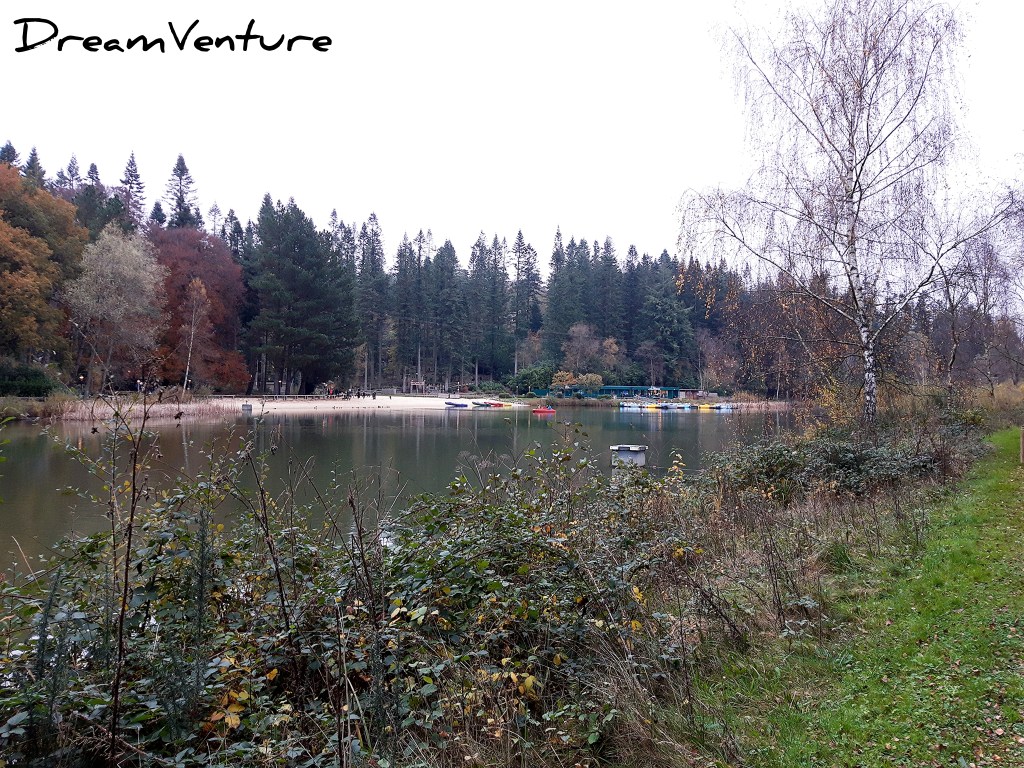
Most Center Parcs resorts contain a lake, offering boating, water sports, and, for the thrillseekers out there, some have a zip line!
By the end of the decade, Center Parcs had five resorts across the Netherlands, despite only having operated for eleven years. It wasn’t long before the chain would begin to spread its magic into the rest of Europe, starting with Germany. A verdant green area became home to the Park Eifel resort, then in 1980, the expansion returned to the Netherlands, with the opening of the Limburgse Peel resort.
Even today, Europe is continuing to see new Center Parcs resorts make their debut, with resorts set to open in Denmark, Germany and France over the next few years. The chain is starting to reach outside of Europe too- although the date hasn’t been decided yet, a new park is set to open in the Hubei region of China.
What do the Netherlands, Germany and Belgium all have in common? Other than all being in Europe, they’re not exactly the perfect locations for sunny beach holidays. Germany, Belgium and the Netherlands are landlocked- the natural landscapes of these countries consist instead of mountains and forests. With many holidaymakers in the 70s and 80s opting for sun-soaked destinations like India and Gibraltar, Center Parcs were blazing the trail for a market that hadn’t previously been very big. Being home to warm weather and beautiful beaches made France the odd-one-out in terms of countries with Center Parcs resorts, but with the opening of a new resort in 1987, this was all about to change.
From Bows and Arrows, to Bikes and Pools
As much as many of us in the UK like to complain about everything British- from weather to politics- I think we can all agree that it can make a pretty cool holiday destination. Center Parcs thought this too, and would soon open a new holiday park in what is arguably one of the country’s most iconic woods- Sherwood Forest. It was once the setting of the legends of Robin Hood and his crew of Merry Men, and now the adventures would be continuing in a new form.
It could be argued that this was an even larger risk than the parks on mainland Europe, but it more than paid off. When Center Parks Sherwood Forest opened its gates in August 1987, the concept quickly caught on. Like its predecessors, the resort featured shops, cafes, bars and a range of comfortable lodges, and of course, the Subtropical Swimming Paradise. At this last facility- offering everything from pools to slides to lazy rivers- you can easily spend several hours splashing and exploring. But the resort wasn’t finished yet.
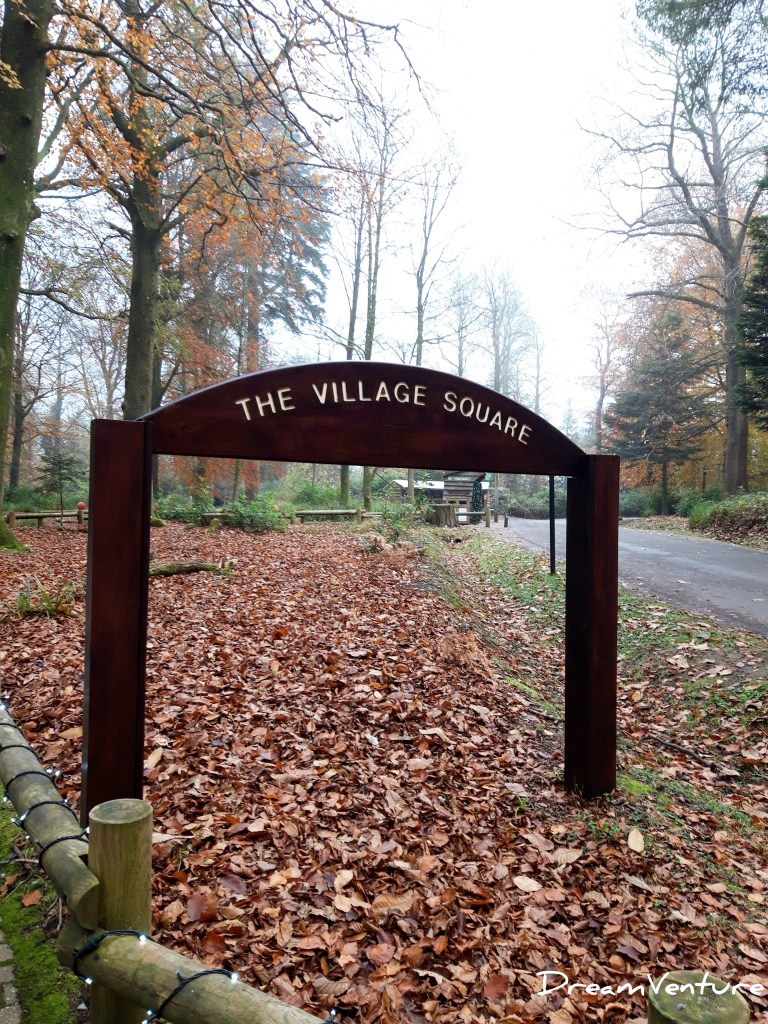
The Village Square at Center Parcs Longleat!
In the 35 years since, Center Parcs Sherwood Forest has seen the opening of a Sports Plaza, the Aqua Sana spa, and even thrilling experiences such as a waterslide and a VR experience. At the same time, other parts of the UK and Ireland were getting their own parks- which proved so successful that in 2001, Center Parcs UK and Ireland branched off into its own company, and from this point onwards, there would be a lot of action- both good and bad- to come.
The Elveden Forest Fire
Elveden Forest was the second Center Parcs resort to open in the UK. While Sherwood Forest served the North of the country, this new park was a bit further South, in the Midlands. The facilities offered were relatively similar to that of the first, with both indoor and outdoor activities, and a plaza in the centre. For 23 years, everything operated as normal. However, problems started at 10am on the 5th of April 2002 as a small fire started in the kitchen of one of the plaza’s restaurants, Hucklebury’s. As the flames grew, fire spread across the plaza. 400 staff were able to effectively evacuate around 3500 guests from the resort- only one staff member had to be treated for minor injuries.
The success of the evacuation was made even more impressive by the varied nature of Center Parcs’ resorts. Some guests were swimming when the fire broke out, and were given foil sheets to keep them warm until they could get back to their lodges. Guests said the fire could be seen from all around, with one saying she and her friends were about to begin canoeing on the lake, when “thick black smoke” could be seen coming from the plaza. Practically everything within the plaza was destroyed, including restaurants, a bowling alley, a sports centre and the swimming pool. At one point, the glass roof collapsed in, causing the flames to grow, now fuelled by the air.
As previously mentioned, there were no serious injuries, but the damage left behind was huge. The plaza was completely destroyed, Elveden Forest resort was closed for months, and 100,000 people had their holiday plans either cancelled or postponed. But all was not lost. In the months leading up to the park’s reopening, work began to rebuild the plaza, with a newer, more fireproof design. Eventually Elveden Forest was able to reopen, and the park returned to its usual tranquil glory.
The Start of Sunparks
Ever since the original Center Parcs resort opened in 1968, it has always been targeted towards a higher end segment of the market. But as the popularity of ‘staycations’ continued to grow, the company saw a new opportunity. After being open for around ten to twenty years, the Kempense Meren and Oostduinkerke resorts were given a new life as the first and only parks for a new, lower-priced chain of holiday parks- Sunparks. These would keep many of the things that make Center Parcs fun, such as a range of outdoor activities and an Aquafun Swimming Paradise with plenty of slides.
With the debut of Sunparks, however, came some more unique aspects. Guests have the opportunity to get food delivered to their lodge in a kind of takeaway/room service system, and the lodges themselves are a little different too- looking more like cottages and holiday homes than lodges where you’d stay for a few days. Children can run wild in the Kids World indoor play area, or come face to face with animals at the the Children’s Farm. Center Parcs’ main resorts are built for relaxation and have quiet, often wooden settings to match, however Sunparks is more about action, located not far from the Plopsaland and Plopsa Indoor Hasselt theme parks!
Sunparks launched in 2007, and while the resorts do get plenty of customers, the concept never truly took off the way Center Parcs did. TripAdvisor can’t seem to decide what it thinks about these parks- there are some massively positive reviews, there are also some that maybe didn’t have the best time- so I guess it all just depends on personal taste. Even so, Center Parcs never opened any more of these more budget-friendly resorts, and Kempense Meren and Oostduinkerke remain the only ones in operation to this day.
The Disney Connection
Disney and Center Parcs are both pretty big staples of the travel industry, but at first they may not seem like the obvious choices for an interrelationship. However, this wasn’t going to hold the two companies back. In 2017 (five years ago now- it still feels like yesterday!), Disneyland Paris collaborated with Center Parcs to open up their seventh accommodation option for guests staying on-site, and while most of their previous ones were hotels, this one was a little bit different.
Named Les Villages Nature Paris, the holiday park/hotel brings together Disney magic and the tranquillity of a Center Parcs forest. The resort includes both apartments and lodges, and while its not decorated with Mickey shapes like most other Disney park accommodation, it still includes the reasons we may stay in a Disney hotel- free access to the parks, and Extra Magic Hours! If you’re not familiar with this perk, it allows you to get into the theme parks an hour or so earlier, which can be helpful if there’s one or two rides that you really want to get on but the queues are just too long.
Center Parcs have been on a rapid growth spurt since the opening of the De Lommerbergen resort back in 1968, and fifty-four years later, it looks set to continue. The company currently have five parks in development, four of them in Europe- France, Denmark and Germany to be specific, and one of them offering the chance to branch out into a whole new market with a resort in China.
Having been part of the European tourism market for so long, it will be interesting to see if the concept takes off in Asia as quickly as it did over here, however as of yet the date for opening is still to be confirmed. Center Parcs’ twenty-six resorts, and two Sunparks resorts, have stood the test of time, and the test of the pandemic- in fact, they may have even benefitted from the rise in ‘staycations’ over the past few years, so it doesn’t look like this unique holiday chain is going anywhere any time soon!
Have you ever visited a Center Parcs or Sunparks resort? What were your thoughts? Let me know in the comments below!
If you enjoyed this article, check out my other posts from theme parks, attractions and destinations around the world, and find us on social media for more exclusive CoasterDreamers and DreamVenture content!
Of all the themed lands that have ever entertained guests at Disney parks, Tomorrowland has always been one of the most problematic. This hopeful world has gone through a range of updates since it first debuted with Disneyland in 1955, mainly to make sure it always remains as a promise of what’s to come, rather…
Every theme park has that one thing they’re amazing at. At the Disney and Universal parks it’s immersive dark rides, at the Legoland parks it’s creating attractions that really look like they have been made from giant building blocks… and at Kings Island, the specialty is wooden coasters. Since the success of the Beast in…
Since its conversion from a zoo to a theme park in the late 1980s, Chessington has always been marketed towards a family audience. Despite this, the park still has its fair share of attractions with a bit more of a thrill factor: mainly Dragon’s Fury, Monkey Swinger, Croc Drop, and most famously, Vampire. This nostalgic…
Of all the themed lands that have ever entertained guests at Disney parks, Tomorrowland has always been one of the most problematic. This hopeful world has gone through a range of updates since it first debuted with Disneyland in 1955, mainly to make sure it always remains as a promise of what’s to come, rather than a reminder of yesterday.
Combine this with budget problems during Disneyland’s constructions, and Tomorrowland has become a place where new technology can bloom, but also where imperfect ride concepts have the potential to flop… hard. Sit back, hold on and prepare for short-lived thrills as we explore the history of Rocket Rods!
The First Tomorrow
Disneyland is the most magical place on earth, but the kind of magic that builds a theme park requires a lot of hard work and ambition. The park took an impressive one year to build but it soon became apparent that the budget just wouldn’t stretch far enough to get everything finished- and while every land had plans pushed back, Tomorrowland was the worst affected.
Not wanting to postpone the opening day, or have Tomorrowland open later on, Walt Disney reluctantly decided to seek sponsorship for some of the attractions. Soon, companies selling everything from cars to paint had a place in the land, opening pavilions that both promoted their brands and offered a look into the future they hoped for. Most of these made sense being in a theme park, such as a House of the Future. Not all of them seemed particularly magical however- anyone fancy a walk through the Aluminium Hall of Fame?
Not every Disney attraction has been kid-friendly! Click below to learn about some of the strangest attractions ever to have a place at a Disney park!
The main target market for Disney’s many theme parks around the world has always been families- this was made clear by Walt Disney even before Disneyland opened in 1955, when he said he wanted to create a fun little park for kids and kids-at-heart to enjoy together. But that’s not to say Disney rides and…
Tomorrowland may have had a rocky beginning, but it wasn’t long before the world of the future found its feet. The opening of an updated version of the land in 1967 introduced a range of new attractions, many of which are still well-remembered today. Among the most popular was the PeopleMover, a prototype of tomorrow’s public transport, which offered riders incredible views of the land, via tire-propelled trains that were constantly moving.
Like the rest of Tomorrowland, the concept for the PeopleMover was built on new technology, but that’s not to say the idea had not been thought of before. When Walt Disney first came up with the idea for EPCOT, then planned to be a city of innovation rather than a theme park, the main form of transport was going to be a monorail that travelled through and around the city centre. This dream came to life with the opening of the Disneyland Monorail in 1959, however that still wasn’t the end of it. The technology appeared again on the Ford Magic Skyway at the 1964 World’s Fair, before finally being used inside a Disney park. Tire company Goodyear came forward to sponsor the attraction, and the PeopleMover was an instant success.
New Tomorrowland was a massive project, but it was far from being the only thing Disney were working on in the 1960s. Between developing films and attractions, Walt Disney and the Imagineers had developed plans for the ‘Florida Project’, originally intended to be a slightly different, but still very similar extension of Disneyland. The project didn’t actually break ground until after Walt Disney’s death, but with the oversight of his brother Roy, Florida’s newest theme park quickly grew from a second Disneyland into a full-blown resort, home to two golf courses, two hotels and the Magic Kingdom theme park.
It was famously said that Disneyland would never be complete, and the same applied to its East Coast reimagining. Walt Disney World first welcomed guests on the 1st of September 1971, with a range of new attractions and hotels opening in the following years. Around five months after Space Mountain, the PeopleMover made its Florida debut in 1975. This version would go through a number of sponsorships and voiceovers, and although not as popular as before, is still transporting guests through Tomorrowland to this day. However, the original did not have the same fate.
Looking Ahead
Out of all the CEOs the Walt Disney Company has had, Michael Eisner is arguably one of the most memorable. Making changes that some Disney fans have quite strong opinions on, Eisner brought both imagination and cost-cutting to the theme parks, and just one of the decisions he implemented is that the space and energy taken by older attractions may be better dedicated elsewhere. Sadly, Disneyland’s version of the PeopleMover was one of the rides affected by this, giving its last rides in August 1995.
The 90s were certainly an interesting time for the Walt Disney Company. Click below for a quick tour of the era referred to as the ‘Disney Decade’!
September 1984 marked the beginning of Michael Eisner’s reign as Disney CEO, and he had huge plans for the company. At the time Disney were struggling to stay afloat, with consistently delayed projects piling up; the innovative magic we all know and love today wasn’t exactly the top priority. In spite of Disney’s many struggles…
1967 was the year that Tomorrowland received its first major update, but it wasn’t until 1998 that a newer New Tomorrowland would open. In the place of the PeopleMover stood a new attraction, using the same foundations but different technology, and for a different target audience. Rocket Rods was more modern and exhilarating… but also a lot more problematic.
The PeopleMover and had been built for slow, gentle journeys, but Rocket Rods was designed for thrills. Riders would make their way through the building that was housed Circle-Vision 360°, now bringing to life the history of transportation. If this sounds familiar, that’s because it was the theme of the former World of Motion attraction at Epcot!
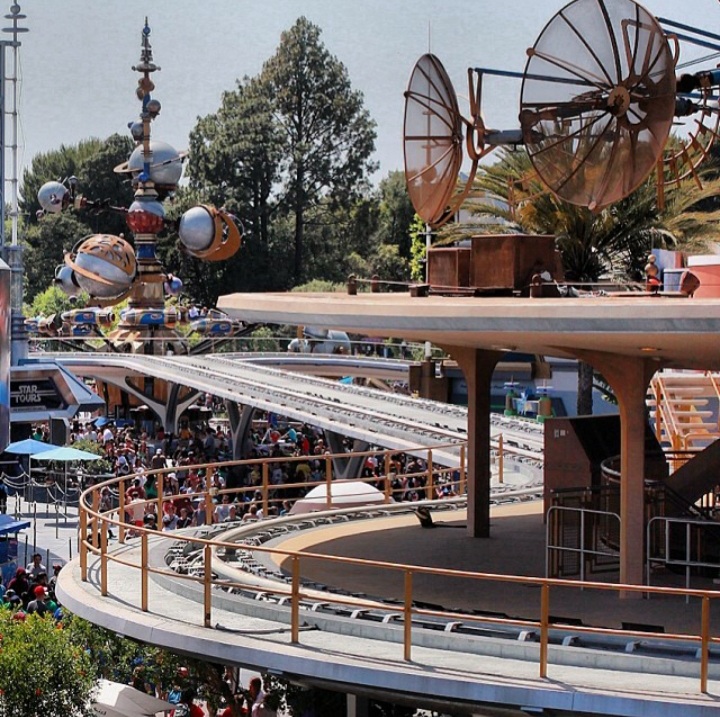
Before you knew it, it was time to board. Guests would wait for their ‘rods’ to arrive at the station, and once seated entered a room sure to get the adrenaline flowing. Lights would provide a countdown from red to yellow to green… then it was time to launch. Similar to the PeopleMover, your rod would take you on a journey through the Star Tours queueline, into the darkness of Space Mountain, as well as on a grand tour of Tomorrowland, only this version added some new thrilling elements too. At one point in the ride, a mirror created the illusion that you were heading straight for another rod, only to whizz past unscathed, while at another, you would race alongside the monorail.
Rocket Rods added an extra level of thrill to Tomorrowland, however it can be argued that the land didn’t really need it, considering many of the most popular attractions there were already thrill rides. The fact that it had replaced a beloved, classic ride also meant it may not have been as well-received as Imagineering had hoped, but the failure of Rocket Rods mainly came down to something that had caused and still causes many attractions to meet their demise: technical problems.
Downtime and Deceleration
Part of the appeal of Rocket Rods was that it was fast, however riders soon learned that this wasn’t quite the case. A pretty low budget had meant that the sides of the track couldn’t be properly banked, meaning that every time a rod approached a turn, it would have to slow down again just to make it around. The old PeopleMover structure was weakened by the stress coming from these awkward turns and the computer system couldn’t cope either- frequent changes in speed caused it to often shut down. Near-constant downtime due to this meant guests were spending hours waiting in line, and seeing as no one likes queueing this didn’t do much for the ride’s diminishing reputation. A short refurbishment in 1998 was supposed to fix at least some of the technical hitches, but was pretty much futile.
By 2000, everyone had just about enough of Rocket Rods’ plague of problems, and in September the attraction closed for a year long refurbishment. A year came and went… but the racing ride never reopened. In April 2001, around the same time Rocket Rods was originally meant to restart operation, it was announced that Disneyland’s almost-thrill-ride would close permanently. The rods were eventually scrapped, and the queueline formed part of Buzz Lightyear’s Astro Blasters. However, the old foundations and tracks were never removed.
Looking To the Future
All that remains today of Disneyland’s PeopleMover and Rocket Rods are a few foundations and track layout, but will the classic former attraction ever return? I definitely hope so! The only other version of the ride still exists at Magic Kingdom, now named the Tomorrowland Transit Authority PeopleMover, and isn’t showing any signs of closure, despite not gathering much of a queue. Its certainly not the most popular ride in Tomorrowland, but offers some salvation from walking around the park, which I think we all need sometimes when visiting theme parks.
There’s always demand for the type of ride you go on to relax, and I believe something like the Disneyland PeopleMover has a lot of potential for rethemes. Big Hero 6 would be a possible IP, with indoor sections themed to San Fransokyo, especially as the film seems to be gaining more of a presence across some of the Disney parks. A ride themed to Tomorrowland: A World Beyond may also work well, as this film literally features its own PeopleMover/Monorail type thing, and this could be an option if Disney didn’t want to do a full reimagining. (And its a great film too- I recommend it!)
Did you ever get the chance to ride Rocket Rods? What do you think Disney should do with the remaining structure? Let me know in the comments!
If you enjoyed this article, check out some of my other posts from theme parks and attractions around the world, and find us on Facebook and Instagram for exclusive content!
Halloween has crept around once again, and if there’s one thing synonymous with theme parks at this time of year, its scare mazes. These are the sort of labyrinths that are absolutely spine-chilling whether you have a good sense of direction or not, and with themes of cannibalism, curses and even evil itself, some theme…
All coaster fans know that feeling: when you’re up at the top of a lift hill and about to drop, and the ride layout stretches out before you and you’re questioning all of your life choices… and then you finally drop and it’s everything you ever imagined. And if you love this feeling as much…
There are few parks in the UK that sum up that seaside amusement park experience like Blackpool Pleasure Beach, and no wonder- in its 125 years of operation they’re sure to have picked up a few tricks. Since its opening in 1896, this beachside park has accumulated a lot of history, and has made its…
To say this decade so far has been crazy would be an understatement. From pandemics to who knows what else, its certainly been a rollercoaster… and not a fun one either. But that’s not to say there haven’t been some positives. In the last year alone we’ve heard much-anticipated announcements and seen new rides that have really taken the theme park world by storm, and if predictions are correct, it looks like this exciting time is set to continue.
Over on our Instagram we’ve been reminding ourselves at the most impactful events for the industry throughout 2021 in our Coaster Christmas Advent Calendar, but now its time to look to the future. Join me in this mega-post as we explore some of the biggest rides and attractions set to debut in the next year, because according to Slade’s Merry Xmas Everybody, its only just beguuuun!
Announcements and Updates
Project Exodus, Thorpe Park
If you’re a theme park enthusiast in the UK, or just interested in Thorpe Park and UK parks as a whole, I have no doubt you’ve heard the massive news that was dropped at the beginning of December. With almost ten years having passed since Thorpe’s most recent rollercoaster Swarm made its debut, the park has now confirmed it would finally be receiving its seventh and biggest coaster yet!
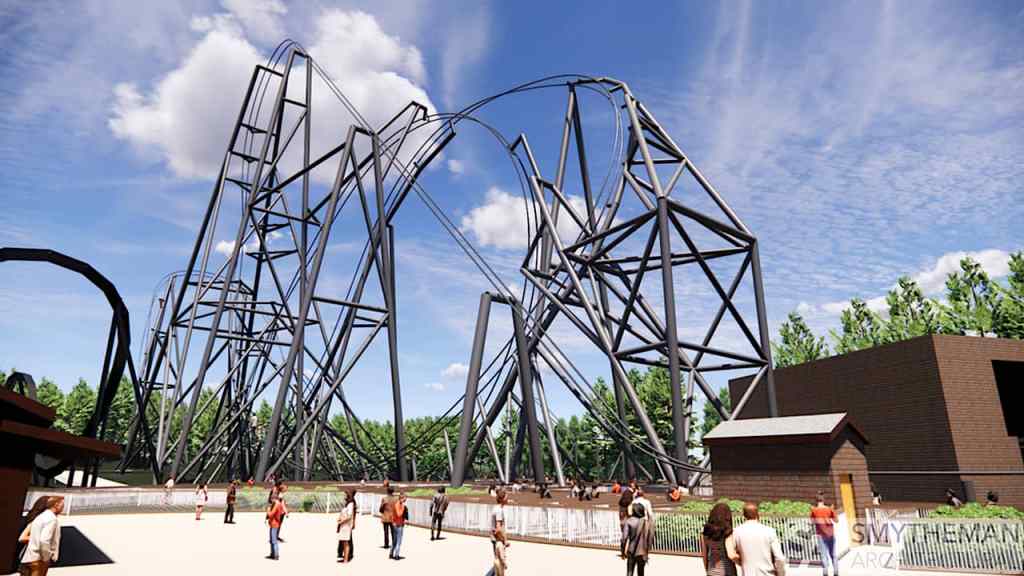
The Island Like No Other has broken some pretty impressive records in its time, from inversions to height, but now we will see this popular amusement park open the tallest rollercoaster in the UK, one foot higher than The Big One’s sea level height, and hopefully ten times crazier.
Although planning permission hasn’t actually been granted yet, the concept, codenamed Project Exodus, looks set to take UK theme parks by storm. Thorpe Park held a public consultation at the resort from the 9th through to the 14th of December, during which some pretty awesome concept art and details were released, and if you want to share your two cents on the proposed project, the park have a survey on their website, open until January 7th. At the beginning of 2022, Thorpe are set to apply for permission to build the attraction on the former site of Loggers Leap, possibly for a 2023 or 24 opening. We should hopefully learn more about Project Exodus throughout the new year, including the ride’s manufacturer, theme and the different types of inversions that will twist and drop riders through the layout!
London Resort
When you’re building a theme park, there’s a LOT of work that goes into every aspect of its construction. From attractions to themes to whether the concept can actually be feasibly built, its a complicated and lengthy process, and even then not all parks are as successful as the designers have hoped. So as you can imagine, on top of everything else that is going on at the moment, that a brand new theme park like the London Resort would be riddled with uncertainty and delays.
Originally named Paramount Park, the London Resort has been shrouded in uncertainty from the beginning. The project has faced many different objections for a range of reasons, and since being announced all the way back in 2012, the date for even starting construction has been pushed back time and time again. But despite all this, the London Resort does seem to have gained some kind of certainty over the past few years.
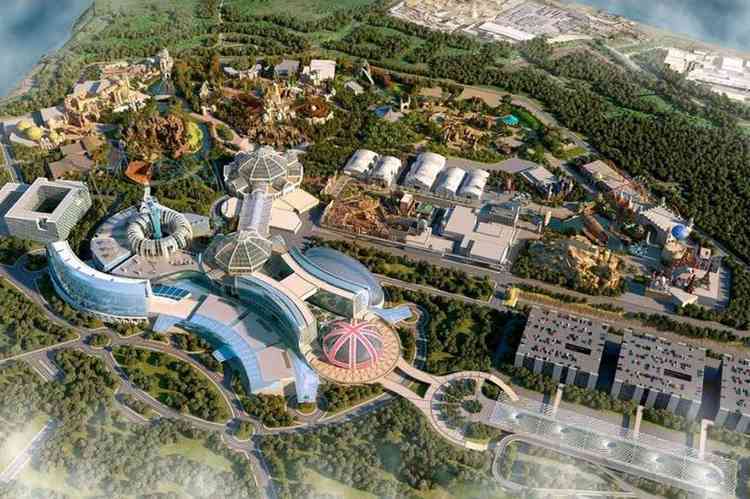
Now, we have concept art that, if the finished project is anything like it, assures us that the London Resort is going to be something incredible. The park will have six themed lands, a waterpark, an E-Sports facility, 3500 hotel rooms and, that’s not even everything. If the predictions are correct and construction will begin in 2022, the London Resort could open as early as 2024… and let’s face it, it looks incredible!
Rides to Add to Your Bucket List
Palindrome, Cotaland
If you hadn’t heard of this relatively new Texas theme park, you wouldn’t be the only one. Cotaland first made its way into the consciousness of many enthusiasts when it made a pretty big announcement at the IAAPA Expo in Orlando earlier this year- that it would be building an America’s-first ride that would be just one of the things helping a park that previously had only kiddie rides grow into one to watch. The new ride, named Palindrome, will stray pretty far from Cotaland’s original audience.
While the park already had two smaller coasters, this one will be a much more thrilling Gerstlauer Infinity Coaster, and has a bit of a unique selling point. Why is this? Because Palindrome will be America’s first coaster to travel over a road! Drivers will be able to see the terrified and exhilarated faces of riders soaring through the layout, and if that wasn’t cool enough, this ride will also be a shuttle coaster, so you’ll be able to experience it both forwards and backwards. Although a definitive opening date hasn’t yet been announced, we do know this unique rollercoaster should make its debut some time in 2022.
Enso, Blackpool Pleasure Beach
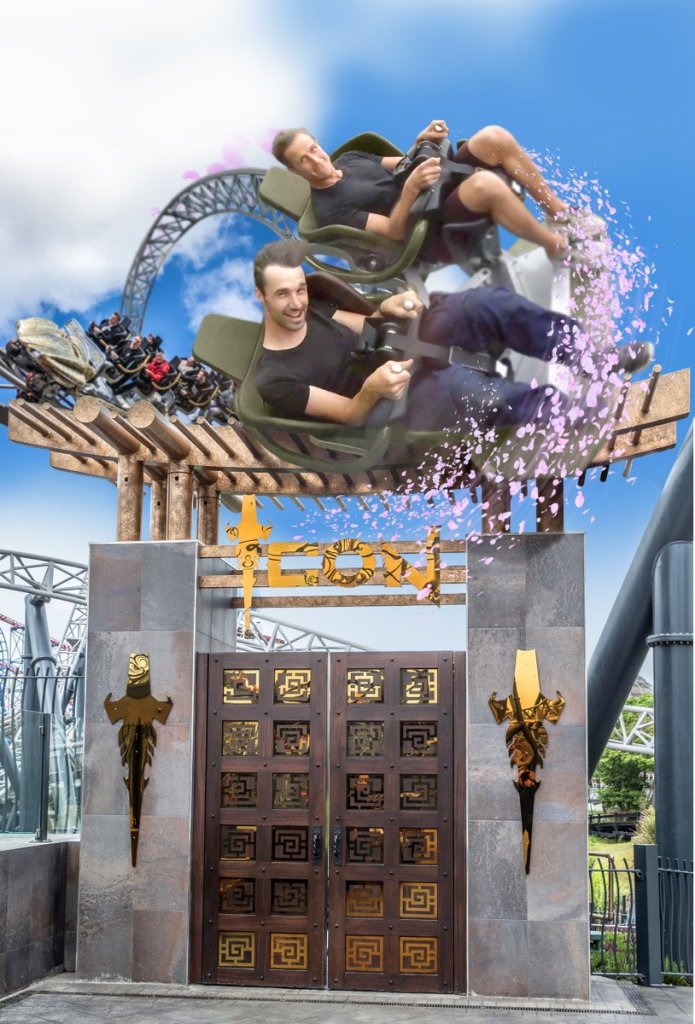
If you like getting dizzy to the point of not being able to walk in a straight line, this one is for you. Arguably one of the most surprising announcements to come out of this year is that soon, Blackpool Pleasure Beach will be offering riders the chance to experience their Mack multilaunch coaster, Icon, but with a unique twist. And this twist is… spinning! The back two rows of Icon’s regular launch coaster trains will be replaced with spinning trains, likely similar to those used on Mack spinning coasters such as Copperhead Strike, for the first time ever at a European theme park.
This sort-of-new-addition, named Enso, was announced through a series of social media posts back in November, and even as January is approaching, we still don’t know much about it- whether the experience will be an upcharge, or will it is permanent. With several other attractions at the park receiving updates in the new year, it looks like 2022 is set to be a pretty good year for Blackpool Pleasure Beach!
Iron Gwazi, Busch Gardens Tampa
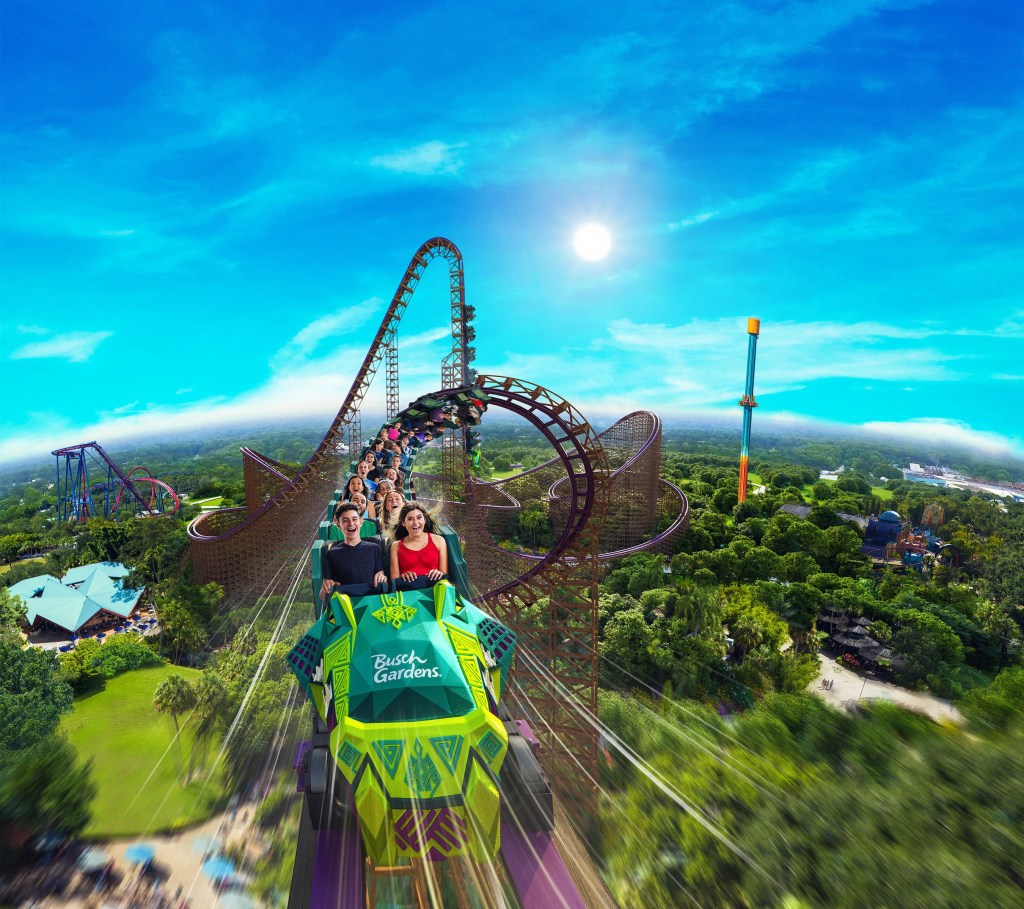
Ahh, Iron Gwazi. This RMC Hybrid coaster has already caused quite a stir in the theme park world and it hasn’t even opened yet, but this isn’t because of its record-breaking height or speed. Instead, its simply because its taking quite a long time to open! The story of this ride begins all the way back in 1995, when Busch Gardens’ Busch Brewery was demolished, and replaced with a new wooden coaster by Great Coasters International four years later. This new attraction, named Gwazi, pitted riders against one another in an exciting race between two duelling sides- the Lion and the Tiger. Gwazi operated pretty much solidly from its opening in 1999 through to February of 2015, when it closed and remained Standing But Not Operating up until 2018.
When a wooden coaster is SBNO, it generally means one of two things. Either the ride is going to close permanently, or, the option every coaster enthusiast hopes for- it’s getting the RMC treatment. In the case of Gwazi, this second option turned out to be the one that came to fruition, and as more and more information was released about the US’s newest hybrid coaster, excitement and speculation only grew and grew. Busch Gardens, along with RMC, actually finished construction at the beginning of March 2020, but due to the pandemic, Iron Gwazi couldn’t debut as planned. September 2020 brought the news that the ride’s opening would be postponed to Spring 2021, yet once again this was pushed back, this time until March 2022. With the proposed opening date now just four months away, let’s all hope that Iron Gwazi’s debut has been pushed back for the last time!
Busch Gardens Williamsburg is a lot further north than its counterpart in Florida, but these two sister Seaworld parks have something pretty big in common: both are planning to open record-breaking rollercoasters in the new year! Set to open in March 2022, BGW’s new coaster Pantheon will twist riders through a layout themed to five Greek gods, featuring an impressive four Intamin LSM launches to form the world’s fastest multilaunch coaster.
Adding to the experience will be two inversions. A Zero-G Winder not too long after the first launch will send riders upside down and round with a sensation only found on three coasters around the world, while later on will come a Zero-G Stall. If this wasn’t enough to create that mix of excitement and fear we all love, Pantheon also promises at least five moments of airtime, and even a vertical rollback.
Back when the original Seaworld park, Seaworld San Diego, opened in March 1964, no one could have predicted the journey the park, and eventually the Seaworld chain would go on to become what it is today. Now, with eight parks, forty-one coasters and plenty of rides still under construction, Seaworld looks set to continue their specialty of combining conservation with thrilling attractions.
Guardians of the Galaxy: Cosmic Rewind, Epcot
Since opening on the 1st of October 1982, Epcot has been through a LOT of changes. Back then, Walt Disney World’s second theme park used what it called ‘edu-tainment’ to bring the promise of a bright future and unity between all nations, through two main lands: Future World and World Showcase. This is a sentiment that is still at the heart of Epcot today, but now Future World is no more, replaced instead with World Nature and World Discovery, and many of the older attractions are being replaced, too.
One thing that was always pretty unique about Epcot compared to many other major theme parks, was that it doesn’t have any rollercoasters! At one point, there was an attraction named Sum of All Thrills in the main hub Innoventions, which allowed guests to design their own thrill ride and experience it on a robotic arm ride, but if you wanted to ride an actual coaster, you would have to go to one of the neighbouring Disney parks.
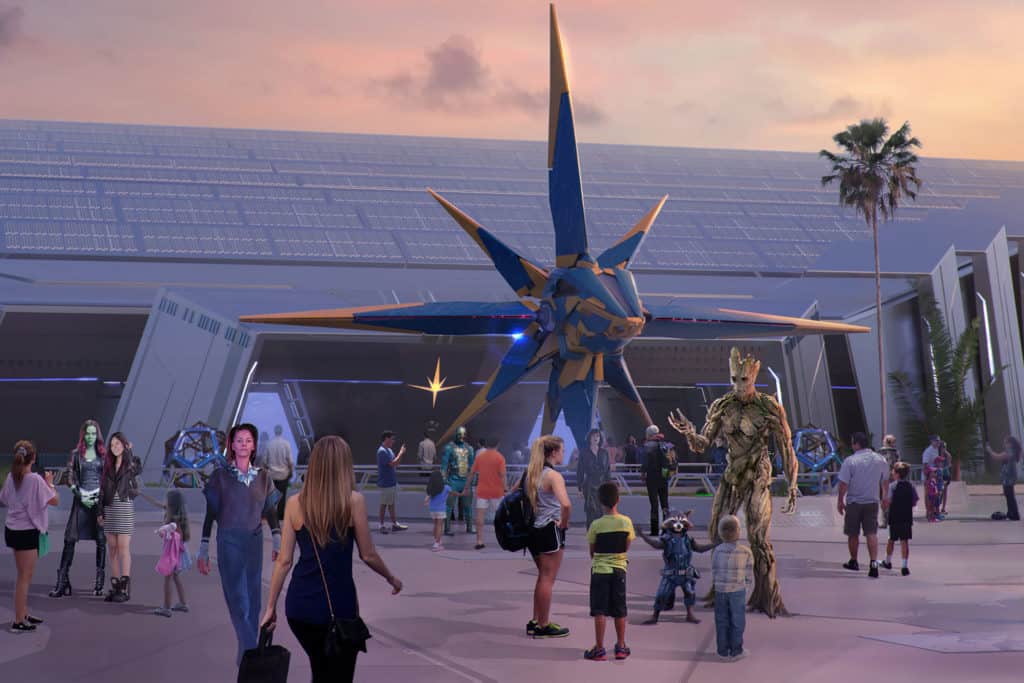
That is, until now. Set to open in Summer 2022 in time for Epcot’s 30th anniversary, Guardians of the Galaxy: Cosmic Rewind will be a Vekoma spinning coaster, and will break the record for the world’s longest indoor rollercoaster. The new ride is currently being built on the former site of the Universe of Energy pavilion, and should be a big step in Epcot becoming “more Disney”!
Jumanji: The Adventure, Gardaland
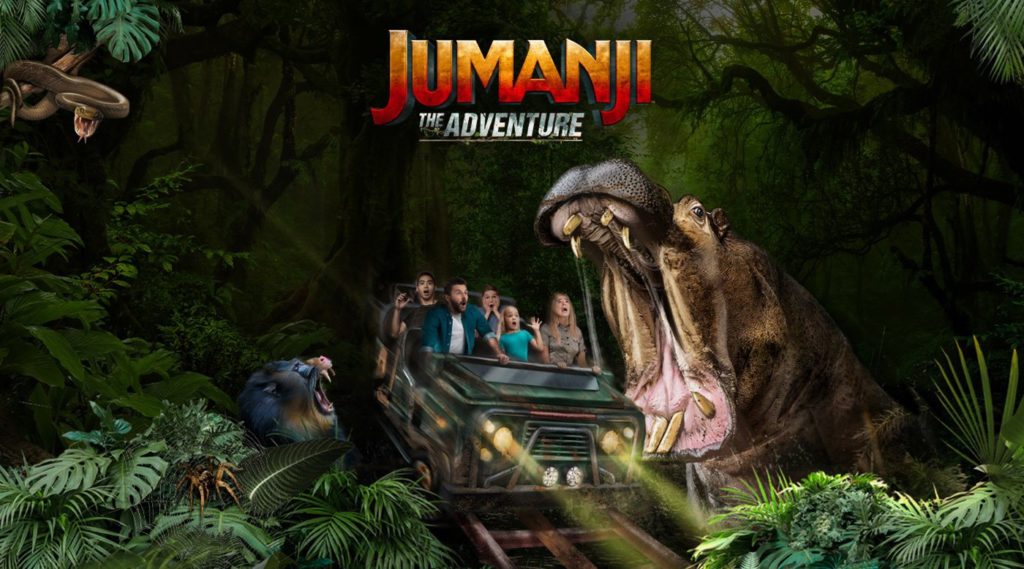
Jumanji is a “game for those to seek to find a way to leave their world behind”, and if you’ve ever wanted to explore this jungle where absolutely everything and anything could happen, you’ll soon be able to at Gardaland in Italy. Announced back in September 2021, Jumanji: The Adventure will use a range of animatronics and special effects to bring the world of Jumanji to life, being the first ever park to do so. A month after the announcement, the first rock was laid to mark the beginning of construction, and since then work has been progressing at a rate that looks set to ensure the ride should open on time.
Over on Gardaland’s website, updates and information about Jumanji: The Adventure have been popping up since October. Now, we can watch as an intimidating Stone Giant animatronic takes shape and finds its home in the ride, ready to create chaos throughout the experience. If you’re more interested in stats, November saw 287m/942ft of track arrive at the site, that will connect the twelve scenes in the ride.
This unique dark ride is set to open at the beginning of the 2022 season, meaning it won’t be too long before the adventure begins. Whether you grew up with the original 1995 Jumanji or the 2017 reimagining, I think we can all collectively hope that the experience will be as amazing and immersive as its looking so far!
New Lands to Escape To
Arendelle: The World of Frozen/Scandinavia, Hong Kong Disneyland and Tokyo Disneyland
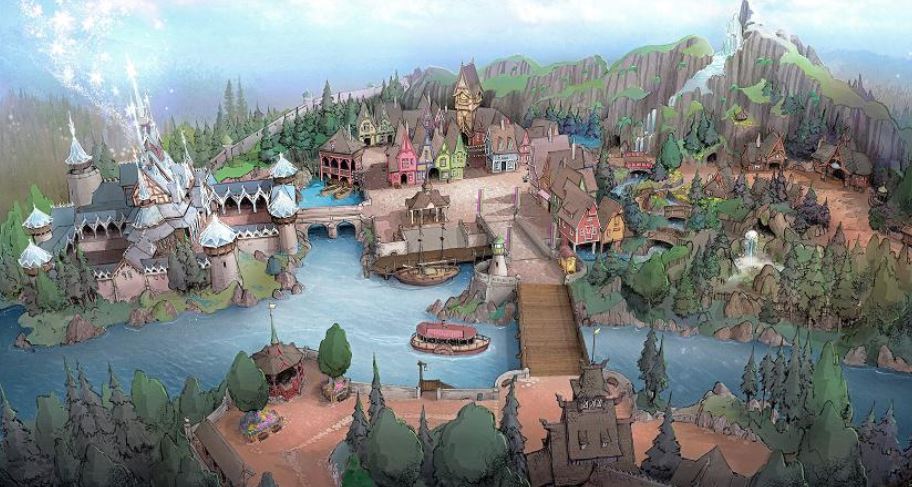
When the world was hit with Frozen Fever back in November 2013, we all found it pretty difficult to Let it Go. I’m sure my incessant need to make Frozen puns will all make sense when I’m older, but in the meantime, let’s take a look at a themed land set to bring the magical kingdom of Arendelle to life. At the time of the land’s announcement in 2016, we could already take a ride through this icily cool Disney animated film on Frozen Ever After over at the Norway Pavilion in Epcot, and parts of the pavilion had been given a snowy-summery makeover in time for the opening, but I think we all wondered what an actual Frozen land would be like.
Provided there aren’t any delays to construction, this dream should soon become a reality in 2022. Arendelle: The Land of Frozen will allow guests to join all their favourite characters in celebrating Elsa’s annual Summer Snow Day, taking a gentle boat ride in a similar version of Frozen Ever After, and a slightly less gentle race down the North Mountain on Wandering Oaken Sliding Sleighs. This second ride will only debut at Hong Kong Disneyland’s version, and will be a rollercoaster, but if you have little ones you know would love something like this, don’t worry! It’s only a Vekoma mine train similar to Seven Dwarves Mine Train over at Magic Kingdom, which has a height limit of 38 inches/97cm.
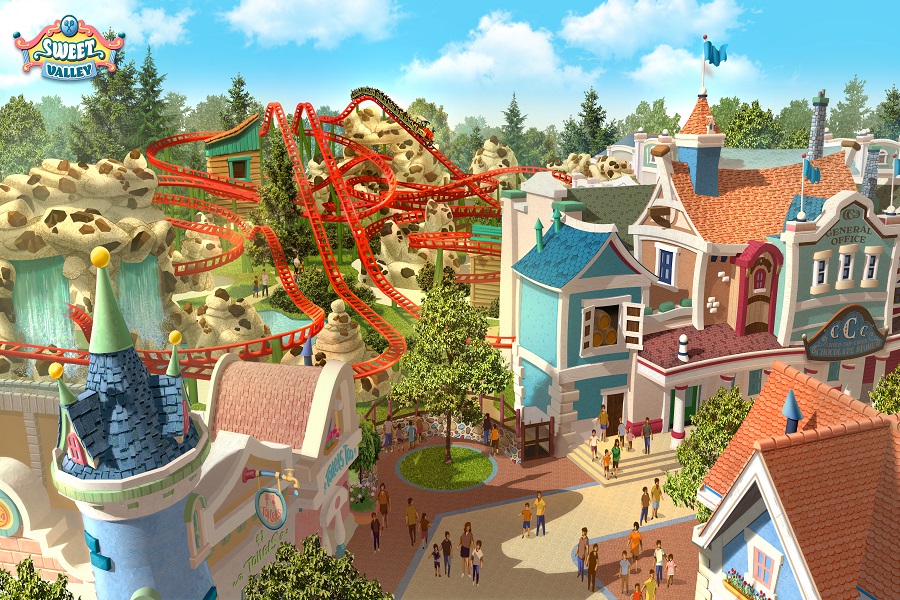
Energylandia in Poland may have only existed for seven years, but this incredible theme park has already earned a spot on many enthusiasts’ bucket lists. Between this and Cotaland, it looks like these small, emerging parks are putting some serious effort into their new attractions, so let’s explore a new land coming to Energylandia in 2022.
Back in April, the park made a pretty ‘sweet’ announcement- excuse the pun- that next year we would be seeing Sweet Valley make its debut in the 2022 season, with two rollercoasters, as well as a range of other attractions. Choco Chip Creek, the land’s headline attraction, will be a Vekoma mine train that looks to offer a fun and thrilling ride with views of Sweet Valley, while the slightly smaller Honey Harbour, also from Vekoma, doesn’t have too much information released about it yet, but will likely have sugary-based theming to fit in with the rest of the land.
Construction has already began on what could be one of the best themed lands in Europe, judging by the concept art and some of the other immersive attractions Energylandia has created in its almost eight years of operation. With many of Sweet Valley’s rides being family-orientated, but some still offering a bit of thrill, it looks like the park’s eighth land will have something for everyone when it opens next year!
Avengers Campus, Walt Disney Studios Paris
I interrupt this blog post to bring you a pretty big confession: I’ve never watched any Marvel or Avengers movie. I watched the Loki series when it was first released on Disney Plus, but that’s more or less where my Marvel knowledge ends. But whether you’re a massive Marvel fan or, like me, are still a bit of an amateur, its undeniable that this high-flying, now Disney-owned film studio is gaining more and more of a presence in the parks.
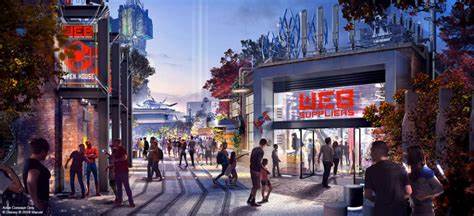
Like many of the lands, parks and attractions on this list, Avengers Campus at both Disney California Adventure and Walt Disney Studios Paris have been subject to delays throughout construction, yet while the version in California opened last year, we are still awaiting the one in Paris. This incarnation of the land will be larger by over three hectares, featuring three attractions, as well as three shops and cafes. Headlining these will be Web Slingers: A Spider Man Adventure, giving riders the chance to join the Worldwide Engineering Brigade- otherwise known as WEB- to fight alongside their favourite superheroes. If your knowledge of the films and comics is extensive enough, you may be able to spot some Easter Eggs throughout the attractions and land.
With Avengers Campus having already opened in California, we have a decent idea of what we can expect. Pym Test Kitchen looks to deliciously destroy everything you thought you knew about food proportions, while on Web Slingers, theming, screens and special effects blend together for an immersive experience. The two lands won’t be completely identical however. In Paris, we’ll see Rock’n’Rollercoaster rethemed to take guests on a thrilling journey with Iron Man, described by Disney as “hyper-kinetic” and “high-speed”.
If you want more than one day to explore Avengers Campus, a new Marvel-themed hotel has already opened at the Disneyland Paris resort. Hotel New York opened with the resort back in 1992, and more recently has been reimagined to have a superhero twist. If you’re ready to save the universe with your favourite Avengers, you’ll want to visit Walt Disney Studios Paris for the opening of this massive new land in Summer 2022!
Parks
Lost Island Theme Park, Iowa
Not to be confused with the video game of the same name, Lost Island is just one of the upcoming parks that made announcements at the recent IAAPA 2021 in Orlando. In fact, they’ve been making announcements throughout the past few years, and since 2019 we’ve learned more and more about what should become one of Iowa’s largest theme parks.
The owners of Lost Island are no strangers to themed entertainment. Located not too far from the construction site of the theme park, the popular Lost Island Water Park is owned by the same family, and is home to a go-karting track, lazy river, a wave pool and enough water slides to ensure there really is something for everyone. Lost Island Theme Park seems to be following the same trend. Although definitive names haven’t been revealed for most of the attractions, themes and manufacturers have been. Spread across five themed lands based around different ‘clans’, Lost Island have so far released details for twenty six attractions, including an Intamin Accelerator Coaster, a Ferris Wheel, and a range of small rides for kids who aren’t quite ready for the bigger ones yet.
As for many of the parks on this list, no complete opening date as been announced just yet. But with construction updates showing Lost Island’s rides and attractions continuing to take shape, lets hope this exciting theme park will open as planned in 2022!
Peppa Pig Theme Park, Florida
UK Prime Minister Boris Johnson once said that Peppa Pig World is his “kind of place”, and if its yours, too, you’ll want to keep reading this one. From its debut in 2004, the kids cartoon Peppa Pig became an instant success, to the point that seven years later, a small theme park entirely dedicated to the slightly irritating young pig opened up next to Paultons Park in the UK. 2018 saw the opening of a smaller version at Gardaland in Italy- with a balloon ride, a junior pirate boat ride and a walkthrough Peppa Pig House- but now Florida is getting a piece of the Peppa hype too.
Named Peppa Pig Theme Park, the park is set to offer a range of fun-sized attractions for fans of the show. These include a rollercoaster- a Zamperla family launch coaster to be exact- taking riders on a slightly questionable shortcut with Daddy Pig, as well as a boat ride and circular tracked ride similar to the ones at the original Peppa Pig World. For young children who aren’t quite ready for rides yet, there’s a cinema, a splashpad and sandpit, and plenty of places to play. And in what may come as a great relief to parents who simply cannot take any more Peppa, Legoland Florida is just round the corner.
The Peppa Pig Theme Park is set to open in February 2022, and considering just how popular this little pig is, it should be a great addition to Florida’s already incredible theme park lineup. Lets just hope there aren’t too many of us enthusiasts visiting just for the Daddy Pig’s Roller Coaster cred!
This list has taken us to the US, Europe and Asia, and for the last item on this list, lets return to Asia to have a look at a unique park opening next year in Busan, South Korea. Since 1989, Lotte World in capital city Seoul has been one of South Korea’s largest theme parks, and one of the largest indoor attractions in the world. Today, Lotte World is home to three rollercoasters and two main themed lands, but this is just where the story begins. Summer 2021 brought the announcement that a new theme park would be opening further South, four times bigger than its predecessor and with theming that looks like it could compete with Disney.
Described as Asia’s first European-style theme park, Lotte’s Magic Forest will be home to an elaborate clocktower, a talking tree and a regal castle towering over the park. From the concept art released, it looks pretty similar to Efteling over in the Netherlands, and will hopefully be just as much of a success. Construction updates seem to show the park’s six themed lands and wide offering of rides beginning to take shape, and some attractions have even begun testing.
Lotte’s Magic Forest uses the same layout as many of the traditional Disneyland-style parks, and looks to offer the same kind of enchanting and whimsical experience. All we can do now, with this park and all of the attractions and parks on this list, is to wait for the designers and builders to work their magic!
Which of these announcements, attractions, rides or parks are you most excited for? Let me know in the comments below, and have a very Merry Christmas!
If you enjoyed this article, make sure to check out some of my other blog posts from theme parks around the world, and follow us on Instagram and Facebook for exclusive CoasterDreamers content!
Every theme park has that one thing they’re amazing at. At the Disney and Universal parks it’s immersive dark rides, at the Legoland parks it’s creating attractions that really look like they have been made from giant building blocks… and at Kings Island, the specialty is wooden coasters. Since the success of the Beast in…
Since its conversion from a zoo to a theme park in the late 1980s, Chessington has always been marketed towards a family audience. Despite this, the park still has its fair share of attractions with a bit more of a thrill factor: mainly Dragon’s Fury, Monkey Swinger, Croc Drop, and most famously, Vampire. This nostalgic…
All coaster fans know that feeling: when you’re up at the top of a lift hill and about to drop, and the ride layout stretches out before you and you’re questioning all of your life choices… and then you finally drop and it’s everything you ever imagined. And if you love this feeling as much…
Every theme park has that one thing they’re amazing at. At the Disney and Universal parks it’s immersive dark rides, at the Legoland parks it’s creating attractions that really look like they have been made from giant building blocks… and at Kings Island, the specialty is wooden coasters. Since the success of the Beast in 1979, this Ohio amusement park has been opening woodies on a relatively regular basis, some thrilling and some tame, some more successful than others but each building on the strengths on the last.
Choose your seat and pull down your lap bar as we drop into the history of the newest Kings Island woodie Mystic Timbers, and remember, whatever happens, do NOT go in the shed!
A New Adventure in Rivertown
When Kings Island opened in April 1972, it offered five themed lands. International Street greeted guests with a stunning fountain and a replica of the Eiffel Tower, while in Oktoberfest you could experience the traditional German festival all year round, and explore what once was in Coney Island. On the other side of the park, guests could step into the Happy Land of Hanna Barbera, and, like at many theme parks, take a break in an Old West town. Originally planned to be named Frontier Land, this last land opened as Rivertown, featuring the kind of architecture you’d expect to see in a Wild West movie, and the Miami Valley Railroad at its centre.
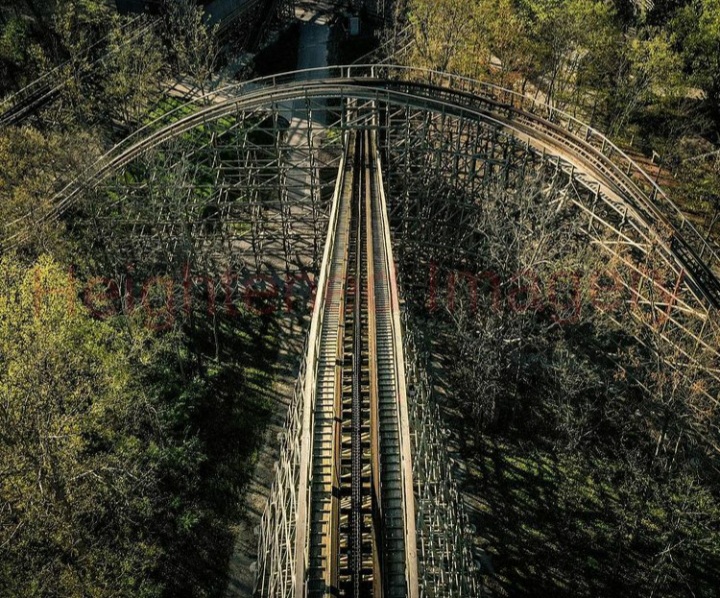
As the park grew in popularity and size, so did Rivertown, and it wasn’t long before the land received its first coaster. But this wasn’t just any coaster. The Beast opened at the beginning of the 1979 season, built in-house and quickly gaining a reputation for being the greatest wooden rollercoaster ever created. With a height of 110ft and a drop that is impressive even by today’s standards, the Beast paved the way for Kings Island to grow a legacy for some pretty awesome wooden coasters, so much that the park even tried to make it bigger and better with the opening of Son of Beast more than thirty years later.
Fast forward to the mid-2010s, and this legacy is still going strong. Son of Beast ended up not being as successful as hoped and closed just nine years after it opened, but it didn’t really matter, because something new was in the works. White Water Canyon, the park’s Intamin river rapids ride, had its queueline and entrance relocated to the other side of Rivertown, and the original became overcome with construction walls. Signs began popping up around the area warning guests to “watch out for falling trees”, which without context may have simply sounded like a rather concerning precaution, but it was soon revealed that this was the actual theme for the ride. Well, kind of.
If you’re a fan of wooden coasters, you’ll know that a lot of them have at least one shed at some point during the layout. Kings Island’s parent company Cedar Fair sure did, and for this shed, they decided to take it to the next level. As supports and tracks began to rise up above the construction walls, Kings Island announced Rivertown would be receiving a new coaster built by Pennsylvania-based Great Coasters International, set to open the following year. The new ride would drop, twist and rush guests through a layout surrounded by a vengeful forest where danger lies around every corner, ending with a mysterious shed that could contain everything and anything. Opening day grew closer and closer, and before long everyone was wondering one thing- what’s in the shed?
The Perfectly Safe ‘Not Safe’ Ride
‘Hey, hey, I see you up there! What the hell do you think you’re doing?’ Well, if you were a coaster enthusiast in Mason, Ohio on the 15th of April 2017, you were most likely in the queueline for Kings Island’s newest rollercoaster, announced as Mystic Timbers the year before. Mystic Timbers opened as planned and brought the park’s total wooden coaster length up to 18,804 feet, smashing what may well be one of the most oddly specific world records ever.
Outside the entrance, a logo for the fictional Miami River Lumber Company could be seen beside the ride’s logo overrun by branches- branches from the trees that caused the company to abandon it and flee for their lives. And if this alongside an ominous announcement warning ‘do not enter’ wasn’t enough to terrify you as you prepared to ride, perhaps the voice advising guests to “get that truck and go home to your video games” would do it. Except by the time you’re climbing the lift hill, there’s no going back.
As your train reaches the top and the terrified voice fades out, the haunted trees take over, and the ride experience begins. Screaming riders twist and turn through winding tracks built around the forest, over airtime hills, drops, tunnels and everything else that make wooden coasters so awesome. It won’t be long until you arrive at the final breakrun, and you may be slowing down, but you’re still heading towards the one place you’ve warned time and time again not to go. That’s right, you’re going in the shed.
The Dreaded Shed
Warning: if you haven’t had the chance to ride Mystic Timbers and don’t want spoilers for the shed, make sure to click off now!
Mystic Timbers is considered to be one of the best GCIs out there, but while people may have been thinking about that while waiting on the breakrun, what was at the forefront of people’s minds on opening day, and maybe even now, was of course what awaited just ahead. Speculation had been building since construction began and many people had their own theories on what Kings Island might be hiding in the outwardly humble-looking shed, but whether the truth was better or worse than you thought, it was certainly unexpected.
A glitchy announcement once again warns guests that they are in a restricted area, and that they should not go in the shed, but after a few loops it distorts so much that it actually tells us we should in fact go in the shed. So of course that’s the part of the announcement we listen to, and into the dimly-lit, most ominous portion of the ride we go.
Riders are greeted by 80s music, saws and even a vending machine that’s still on, all things you probably wouldn’t expect to see in an abandoned shed, but considering the theme of the ride, it doesn’t feel that weird. As your train goes further and further into this mysterious shed, some kind of creature appears on the surrounding screens. Whether you end up encountering the colony of bats, the giant snake or a sentient tree swarmed with insects, you’re sure to come back into the station either really impressed or really confused, or maybe both. (And yes, I did just have to google what a group of bats is called!)
The Past and Future Coasters of Kings Island
When Kings Island opened back in 1972, no one could have anticipated the legacies it would create. Throughout its history, the park has opened some pretty notable rides, from Screamin’ Demon, to Vortex, to more recently, Orion, and whether you believe Orion is a giga or not, its safe to say this Ohio theme park has contributed a lot to the industry. Having opened two new rollercoasters in the last five years, Kings Island doesn’t seem to have anything in the works at the moment, but hopefully we’ll see something huge announced for this park or another Cedar Fair park some time soon!
Have you ridden Mystic Timbers? What are your thoughts on the shed? Let me know in the comments below!
If you enjoyed this article, be sure to check out some of my other posts from theme parks and attractions around the world, and find us on Instagram and Facebook for exclusive CoasterDreamers content!
There’s only one theme park where you can be burned alive, hypnotised, and explore the meadow of In The Night Garden all in one day, and that’s Alton Towers. One of these things is not like the others, and that’s part of the reason we love this park so much- horror, thrills, calmness and magic…
If there’s one thing you can expect to find in many Disney theme parks, it’s parades. Since the first ever Disney daytime parade, the Character Parade, made its debut in 1971, these massive-scale street parties have been almost as iconic to Disney as castles and rides, and add an extra layer of musical magic to…
Movies are amazing, there’s no doubt about that. In less than three or four hours you can travel the world, go backwards or forwards in time, or explore a completely different world altogether, meeting some incredible characters along the way. But what if you could really step inside some of your favourite films? Well, once…
Halloween has crept around once again, and if there’s one thing synonymous with theme parks at this time of year, its scare mazes. These are the sort of labyrinths that are absolutely spine-chilling whether you have a good sense of direction or not, and with themes of cannibalism, curses and even evil itself, some theme parks are pretty skilled at creating attractions that will leave no guest unscathed. Carve a pumpkin, put on some spooky music and prepare to scream as we explore the history of some of the most unique scare mazes, both past and present!
Warning: this post contains mentions of blood, gore and vomiting- as well as potential spoilers for some scare events. If you find any of this disturbing or don’t want to know, make sure to click off now!
Hell’s Kitchen, Halloween Horror Nights at Universal Studios Florida
You may know Hell’s Kitchen as a TV show with a lot of shouting and some awful kitchen hygiene, but while there were some pretty bad culinary practices present in this scare maze, the TV show’s presenter, Gordon Ramsay, was not. This terrifying haunted house made its debut at Halloween Horror Nights 1994, and seemed designed to make people feel completely and utterly sick. Before even entering the attraction, guests would be greeted with a gothic façade featuring a man snacking on cockroaches (I think I prefer Halloween sweets!), but if you thought this was the end of the disgusting imagery, you would be sorely mistaken.
As you entered the maze, it soon became clear that not even the most experienced scare maze fanatics were prepared for the horrors that lay ahead. Guests would be taken through a perilous butcher’s shop, complete with dismembered body parts, references to cannibalism, bloody chainsaws and the rather unpleasant smell of rotting meat. Screams filled the stifling hot air as scare actors playing unsuspecting victims are butchered by a demonic cook, and if that wasn’t horrifying enough, an angry head chef was waiting menacingly at the end with a chainsaw.
Since its debut in 1991, Halloween Horror Nights has continued to grow, evolve and adapt, and Hell’s Kitchen lasted for just one year, before being replaced during the 1995 season. Hell’s Kitchen is one of the less remembered scare mazes at Halloween Horror Nights and only operated for one season, but it’s safe to say this maze’s pure terror lives on in plenty of fond memories and nightmares!
The Sanctuary, Scarefest at Alton Towers
Many of Alton Towers’ “Big 7” rollercoasters have some horrifying themes worthy of their own horror movie or scare mazes, but did you know the park’s second newest major coaster, The Smiler, really did have its own scare maze at one point?
It all began back in March of 2005, when the park’s Jest Star 2, Black Hole, gave its final rides, and closed permanently. The coaster itself eventually found a new home as Rocket at Furuvik in Sweden, but the same couldn’t be said for the tent that housed it. For several years it stood abandoned, occasionally being used for scare mazes but nothing more… and then in the early 2010s, everything changed.
Alton Towers gained permission to build a new attraction in the Black Hole’s place, and as the tent was demolished and the new project, codenamed Secret Weapon 7, broke ground, the park’s online presence began to become a little mysterious. Guests had the chance to sign up for updates on this new project and could enter a competition to be the first to experience it, but what caught most people’s attention was on Alton Towers’ YouTube channel. A string of videos were released following the final moments of psychology students Trish and Dan, who went missing after finding a set of tapes encouraging people to Smile Always. After A LOT of speculation it was announced that SW7 would be The Smiler, a record-breaking Gerstlauer Infinity Coaster that spins through fourteen thrilling inversions… but lets take a step back, and see what came before.
You can check out the first episode of Smile Always here!
Scarefest at Alton Towers has always been a pretty big deal, and when Halloween 2012 came around this was no different. A new scare maze made its debut, taking guests on a tour of an abandoned medical facility with a sinister twist. As guests entered the Towers ruins where the maze was housed and began to explore, it became clear that this was no ordinary scare maze- the facility was formerly used by the fictional and terrifying Ministry of Joy, who ran experiments with the mission to force society to smile. Sounds, lights and videos were used in order to ensure anyone and everyone came out grinning (though many more people were too scared to smile!)- and if this sounds familiar, its because that’s exactly what the Smiler does too! Except the Smiler does it with a LOT more inversions.
It’s pretty amazing how elaborate the storylines for Alton Towers’ Secret Weapon coasters really are, and The Sanctuary is a great example of this. Now, next time you’re in X-Sector and listening to that extremely catchy Smiler soundtrack, you’ll know just how much lore is behind this twisting and terrifying infinity coaster!
Wrong Turn Into Darkness, Fright Nights at Walibi Holland
Walibi Holland may not be the first park to call their scare event Fright Nights, but they almost certainly were the first to have a scare maze exploring the origin of evil itself. Ranked 4/5 on the park’s ‘Scaremeter’, Wrong Turn Into Darkness sends guests on a perilous journey with an old man who claims to know the origin of the force we all know as evil, and as its located a bit of a distance from Walibi Holland’s other attractions, no one will hear you scream.
Walibi Holland’s Fright Nights is actually a bit of a hidden gem when it comes to scare events, and the theming comes thick and fast all the way from the beginning. As 6pm comes around, an ominous announcement echoes through the park informing guests that Fright Nights is about to begin, and that they should “seek immediate shelter,” or “run for your lives”. If you’ve managed to get lost and are desperately looking for the exit, that is quite possibly the least reassuring thing you can hear! After this, you can dine at a haunted hospital or at the Campsite of Carnage, which is probably about as relaxing as it sounds, hide out in a not-so-safe safe house, and venture into the witch-infested Wicked Woods.
Whether you’d rather sit down for a spooky meal, go exploring or discover the origins of evil, there’s something for everyone at Fright Nights!
Journey to Hell, Freak Nights at Blackpool Pleasure Beach
When deserted and in darkness, pretty much anything can become terrifying, and Blackpool Pleasure Beach is no exception. Or at least, not until 2019, when their first ever scare event, Journey to Hell Freak Nights, debuted and settled like a spooky fog on the park. Journey to Hell uses many of the conventions of more traditional Halloween events: scare zones, actors- but this time, it comes with a twist, or rather, a few inversions.
Journey to Hell starts off like any other scare event. Guests are warned of a curse that has overtaken the park, and its not too long until they are sent twisting and turning through a labyrinth of all things freaky, including rides new and old that have been given the spooky treatment for the night. Without spoiling too much, a huge part of the experience is riding one of Blackpool Pleasure Beach’s major coasters in pitch darkness, with only the screams of other riders to guide you!
Like many things, Journey to Hell had to be cancelled for the 2020 season, due to the pandemic and how the event demands relatively large groups and close contact. By 2021 however, the Pleasure Beach’s first major scare event returned, even bigger and more bloodcurdling than before!
The Freezer, Fright Nights at Thorpe Park
October may be the spookiest month of the year, but it is also when the cold of winter time starts to creep in. But throughout its two years of operation, The Freezer took the great British hate of the cold to the next level! When the 2002 Halloween season came around, Thorpe Park decided it was time for something huge, and this came in the form of the UK’s first major scare event, named Fright Nites. Inspired by Universal’s Halloween Horror Nights, Thorpe Park’s take on the popular event introduced two blood-curdling scare mazes: Freakshow 3D, and The Freezer.
Freakshow 3D was relatively similar to modern scare mazes, featuring florescent UV paint and a grotesquely generous helping of pure nightmare fuel. If this maze played on just how much people hate creepy faces, The Freezer did something else entirely, bringing to life the very real fear of the freezing cold. Everything that could possibly make a scare maze scary showed up in some shape or form in this attraction- with scare actors, a fear inducing attention to detail, and the possibility of getting completely and utterly lost! That’s right, in its first year, The Freezer was riddled with dead ends… and you really could get lost if your sense of direction was clouded by your fear.
If somehow you weren’t terrified before waiting in line for this tangling cold void, you sure would be by the time you got to go in. Why is this? Well, it was a lot more simple than frightening theming or actors, it was the placement of the exit practically next to the queueline, so those in the queue could watch as terrified guests fled from the maze! And considering that the European theme park market hadn’t seen anything like it before, there were quite a lot.
The Freezer and Freakshow 3D returned to Fright Nites for the 2003 season, but with a twist. Or rather, less of a twist. Many of the dead ends had been removed or reworked, meaning it was significantly harder to get lost. The changes were made to improve crowd flow so that large amounts of guests were not gathering in these areas, and although it didn’t actually change the mazes that much, a pretty large part of the fear factor had been lost.
The original Thorpe Park scare mazes ended their run in 2004, when they were replaced by The Asylum and Hellgate the following year, but The Freezer still lives on in Thorpe Park legacy. When a new scare attraction, Platform 15, made its debut in 2016, some parts of the experience were inspired by previous scare mazes, one of which being the terrifying Freezer. Fright Nites was restyled as Fright Nights several year after it started, and its safe to say this frozen labyrinth left an icy mark on the park that started the UK scare event.
Have you experienced any of these scare mazes or events? What’s your favourite theme park to get your Halloween fix? Let me know below!
If you enjoyed this article, check out my other posts from theme parks and attractions around the world, and find us on Facebook and Instagram for exclusive CoasterDreamers content!
Dark rides have been a staple of theme and amusement parks from the beginning, so it’s no wonder that among the classic haunted houses and water-based pirate adventures, rides have popped up that put a completely new spin on the concept. From family rides and parks with not so family-friendly themes, to mesmerising sensory experiences…
When you think of classic theme park icons, what comes to mind is probably along the lines of old-timey streets leading to enchanting fairytale castles, pirate ships hinting at elaborate adventures, and runaway trains coursing through some kind of mountainous or rocky terrain. Sure, these towering mountains weren’t exactly created by Mother Nature, but the…
When you think of the most famous theme park chains in North America, you likely think of the likes of Cedar Point or Six Flags, but in the theme park world, sometimes the best things come in small packages, and Herschend Family Entertainment, based in Atlanta, Georgia, is a prime example of this. Owning just…
Since its conversion from a zoo to a theme park in the late 1980s, Chessington has always been marketed towards a family audience. Despite this, the park still has its fair share of attractions with a bit more of a thrill factor: mainly Dragon’s Fury, Monkey Swinger, Croc Drop, and most famously, Vampire.
This nostalgic suspended coaster takes riders on an exciting journey through the trees of Chessington’s Wild Woods area, complete with a creepy soundtrack, a well-themed queueline, and an organ-playing animatronic. But as with many older attractions, Vampire has a pretty interesting history. Pick your seat, pull down your restraint and scream to your hearts content (though maybe not out loud!) as we explore the swooping history of Vampire!
Vampire isn’t the only Wild Woods attraction with a story to tell. Click here to learn all about the history of its neighbouring ride Gruffalo River Ride Adventure, and its much loved former attraction, Bubbleworks!
Throughout the late 80s and early 90s, attraction designers like John Wardley were working hard to bring the American concept of a theme park to the UK, and a lot of the parks we know and love today, Thorpe Park, Chessington, Alton Towers and more, were all being redeveloped or built to fit into this…
The Romanian region of Transylvania is the setting of some seriously spooky urban legends, mainly stories of vampires that stalk castles and forests at night in search of their next victim. This may all seem a little too frightening for a family theme park, but the UK themed entertainment industry often pushes the boundaries of what can be done, and it turned out that theming an entire land to the setting of horror stories wasn’t so impossible after all. Designers were in the process of transforming Chessington Zoo into a fully fledged theme park, and after the success of the first phase, the second was well on the way to becoming a reality.
Fizzy Drinks and Thrills
Named Transylvania after its inspiration, this new-for-1990 themed land opened with two major attractions. Professor Burp’s Bubbleworks took guests on a magical tour of a slightly nonsensical fizzy pop factory, complete with a heartwarming and extremely catchy soundtrack. But if you stood a small way outside the ride and looked up, you could spot something gliding, swinging and twisting through the trees, and drawing a lot of screams from guests while it’s at it.
Vampire opened in April of 1990 as an suspended swinging coaster built by now defunct manufacturer Arrow Dynamics. And with riders sat inside closed-bottom trains themed as bats, it offered a spooky and thrilling flight that’s not too scary, but still exhilarating nonetheless. But on this ride, the experience starts as soon as you enter the queueline. If you’re there on a particularly busy day, your likely long wait is made more entertaining with intimidating stone gargoyles, eerie gravestones, and, of course, the ride itself swooping by.
Despite all this, the most iconic part of the queue is still yet to come. When you enter the ride’s station, it’s pretty hard to miss the giant vampire animatronic sat playing a traditional organ- with (somewhat rudely!) his back turned to everyone. This is one of the few parts of the queueline that has remained pretty much the same since the beginning, although there have been things added and removed from the scene over the years.
Both Bubbleworks and Vampire became extremely popular more or less as soon as they opened, with guests loving the blend of horror and fantasy, and family and thrill rides. Throughout the 1990s, these two classic attractions remained mostly unchanged, but with the new millennium came some big changes.
A New Kind of Flight
When rides close indefinitely, it usually means one of two things. Either there is going to be some kind of refurbishment, or the ride is closing down permanently. Vampire was standing but not operating throughout the 2001 season, and, as construction began appearing around the coaster, fans feared that this closure was for the second reason. But as 2002 came around it became apparent- to the relief of anyone who loved the ride- that instead of closing, Vampire was just receiving a pretty massive update.
The trains used on Vampire previously were the same as those used on every other Arrow Suspended Coaster, but when it reopened, these were gone, and replaced with Vekoma trains usually found on their own suspended coaster model. These still keep the swinging feeling, but the key difference is that, with these trains, your legs are hanging and swinging too! Chessington advertised the refurbished rollercoaster as “new Vampire” and one of 3 new adventures at the park.
As the years went on, these Vekoma suspended trains became just as much a part of the ride as the lifthill or queueline, and the older trains began to fade into obscurity. The park continued to evolve and adapt over the coming years, just as it had since its opening, and it wasn’t too long before this evolution made its way to Transylvania.
A Deep, Dark Wood
2016 was a huge year for Chessington. Go Ape began opened its third site, Adventure Point made its debut with an elaborate carousel at its centre, and most impactfully, it was announced that a fan-favourite attraction would be closing. Bubbleworks gave its last factory tour on the 6th of September 2016, and went out with a bang, offering selected fans behind-the-scenes tours of the ride. While the original fizzy pop factory theme was already long gone, some elements of it still remained, such as audio that had simply been moved to different sections. But with this closure went most aspects of both versions… and something new was on the way.
The following year, Chessington World of Adventures announced Bubbleworks’ much-anticipated replacement. Themed after the popular children’s book The Gruffalo, Gruffalo River Ride Adventure opened on the 18th of March 2017, and would take riders into the story of a mouse who took a stroll to the deep, dark wood, and came face to face with the fearsome Gruffalo.
For me and many other enthusiasts in the UK, the closure of Bubbleworks and opening of Gruffalo is bittersweet. On the one hand, Gruffalo was a massive part of so many childhoods for current children, teenagers and young adults, and it is quite a fun experience, but on the other, its pretty sad to see such a classic ride cease to exist. Gruffalo also brought with it the retheme of Transylvania to Wild Woods, and a loose retheme of its neighbouring attraction to vampire bats rather than actual vampires. Very little of Vampire’s theming and branding changed as a result of this, and today the whole experience isn’t too different than it was before the retheme, aside from some of it being slightly updated.
Will the Future be a Trick or a Treat for Vampire?
Since opening in 1990, Vampire has been a massive part of Chessington’s thrill ride lineup, but, as with many older coasters, it can be difficult to know for sure what the future holds. What’s a bit easier to know however, is just how many people have fond memories of riding this classic coaster, whether it be the former version with the Bat-type trains, or the newer, more well-known version.
Vampire was my first major coaster and I’ve loved riding it ever since I could meet the height requirement, so as you can imagine I’d be pretty sad to see this Arrow suspended coaster go. But despite its age, after receiving some queueline updates in 2020 it doesn’t look like Chessington’s largest coaster is going anywhere any time soon, and even if it was, it’s important that we keep open minded for new developments and projects in the future!
What’s your favourite spookily-themed ride or attraction? Let me know below, and have a very Happy Halloween!
If you enjoyed this article, make sure to check out some of my other posts from theme parks and attractions around the world, and find us on Facebook and Instagram for exclusive CoasterDreamers content!
The UK is home to some incredible family theme parks and attractions, offering tame thrills and immersive adventures for all ages. But the theme park scene here isn’t just for young families- there are some parks that offer themed lands that are a lot darker than you’d expect from a park with a Cbeebies Land…
In the 1990s and 2000s, few rides summed up the iconic Universal Studios experience like the classic opening day attraction Jaws. One of the first attractions a guest would see as they entered the park, Jaws combined exhilarating thrills with immersive theming and of course the very real possibility of getting soaked (it was a…
Let’s face it- there is a LOT of negative stuff going on in the world at the moment, and something we could all use right now is the promise of a bright, joyful future full of innovation and hope. When EPCOT Center opened to the public on the 1st October 1982, it let us experience…
All coaster fans know that feeling: when you’re up at the top of a lift hill and about to drop, and the ride layout stretches out before you and you’re questioning all of your life choices… and then you finally drop and it’s everything you ever imagined. And if you love this feeling as much as I do, you’ve likely got a special place in your heart for Dive Coasters.
Since 1998, these towering rollercoasters have taken first drop nerves to the next level, quite literally dangling riders over the edge for several seconds before delivering a sudden freefall drop, more often than not into a dark hole with water or special effects. But where did it all begin? Take your seat, pull down your restraint as join me as we dive (get it?) into the history of Bolliger and Mabillard’s popular dive coasters… oh, and remember not to look down!
The “Vertical Drop” that Started It All
Alton Towers has always been a park that pushes the boundaries of what coasters can do, all the way back to when Corkscrew opened in 1980, as the UK’s first full circuit rollercoaster to feature two inversions. So when the time came for a new rollercoaster to open in the late 1990s, plenty of ideas began popping up, many of which seemed absolutely crazy at the time.
There was one however, that was a little more crazy than the others. This design featured what would be the world’s steepest drop on a ride, hanging riders over the edge for three seconds until releasing the train into terrifying freefall. It wasn’t too long before the concept became a reality, with a hole in the former Fantasy World area that kept getting deeper… and deeper… and deeper. Attraction designer John Wardley teamed up with rollercoaster manufactures Bolliger and Mabillard to create the thing that would actually go into the hole, and a year of construction and one 180ft drop later, the anticipation kept growing.
By the beginning of 1998, Alton Towers had finally revealed what on earth was going on in the themed land that would soon be renamed X-Sector. Rather than just being codenamed Secret Weapon 4, the project now had a name. Oblivion would open a few months after the announcement, in March 1998, marketed as the first vertical drop rollercoaster… though this wasn’t quite the case, as the actual measurement was 3° off at 87°. Despite the drop not really being vertical, Oblivion was the start of something amazing. B&M now had a new rollercoaster model under their belt, one that no other manufacturer had even got close to before. No one knew it back then, but the new coaster, named the Dive Coaster, would become extremely and exponentially popular in the coming decades.
Branching Out
Oblivion may have been the first of its kind, but compared to the Dive Coasters open today, it is actually considered a little tame. The more modern versions often feature inversions and multiple drops (as if that first one isn’t terrifying enough!), and seven years after the opening of Oblivion, the first of these newer Dive Machines made its debut. By 2005, there was already a second installation in existence- Diving Machine G5 at Janfusun Fancyworld in Taiwan- however it was practically identical to the original. It was time for something new, and over in Florida, Busch Gardens Tampa was ready to deliver.
After a decade filled with new coasters, then about five years with nothing major, Busch Gardens were looking for something that would blow guests away… and drop pretty far down in the process. One of the first concepts for this new attraction dated all the way back to 1996, back before the dive coaster was even invented. The park’s vice president of engineering, Mark Rose, had wanted to create experience that would simulate falling down Niagara Falls in a barrel, and the idea grew and bloomed from there. Over the following years the design would start to become reality; a dive machine that would be taller, faster and steeper than ever before.
Track was moved from B&M’s factory in Switzerland to the park in Florida, land was cleared around the area, and several years later, the new ride, announced as SheiKra, was ready to open. The attraction was named after a species of African hawk known for the way it dives straight down after its prey, but instead of diving after prey, on this coaster guests were hanging over the edge and dropping 200ft down into an exhilarating layout.
SheiKra wasn’t Florida’s first record-breaking coaster and it certainly wouldn’t be the last, but what do you do when you break a world record? Well, if you’re Busch Gardens, you go and do it all over again! Griffon opened at BGT’s sister park Busch Gardens Williamsburg in May 2007, two years after it’s inspiration, and although Griffon and SheiKra have a lot of similarities, Griffon was a little taller, and a little more terrifying. SheiKra and Griffon aren’t exactly the most well known or most iconic rollercoasters in the world, but these two fear-inducing thrill coasters set the stage for a new type of dive coaster that’s still massively popular today!
The Rise of A Lot More Theming
The idea of a coaster climbing up really high and dropping down really fast is a pretty simple concept, and often it’s the rides with the simplest designs that get the coolest themes. The first of these, and arguably one of the most elaborate, was Krake at Germany’s Heide Park.
Translating from German as “octopus”, Krake is themed to exactly that, combining an 135ft drop into an octopus-infested shipwreck, an immelman inversion and a colossal splash effect that ensures everyone in the train gets wet, to create a magical journey through the park’s Bucht der Piraten, or Pirates Bay, area. The next of these newly-themed dive coasters appeared a bit further South in March of 2015, with the opening of Oblivion: The Black Hole at Gardaland in Italy. Both this Oblivion and the one at Alton Towers have a futuritsic theme, but because of the overall horrifying dystopian theme of Alton Towers’ X Sector where the original is located, Gardaland’s version is naturally a lot more cheery!
But throughout the construction of Oblivion: The Black Hole, B&M were busy working on something very similar, but also massively different. On the first of July that same year, the company debuted another dive coaster, this time at Efteling in the Netherlands. Efteling is widely regarded as one of the best and most quirkily themed parks of all time, and this new ride, named Baron 1898, was no different. Baron 1898 tells the story of Gustave Hooghmoed, a man who discovers a business opportunity in a magical mine full of gold. Despite warnings from the Witte Wieven, elves from Dutch Mythology, Gustave sends workers down in to the cursed mines… many of which are forever changed by the experience. Riders begin their own adventure into the mysterious goldmines by boarding their trains in an inctricately themed station, and before long they are at 98ft in the air and about to drop into the darkness below.
Whether it be pirates, black holes, cursed mines or something else entirely, if the many B&M Dive Coasters across the world have proved anything, its that they have massive potential for theming. Today there are fourteen of these fear-inducing thrill coasters around the world, some of which pretty famous in the theme park world, others not so much. I’m looking at you, Flying Asparas in Western Region at Happy Valley in China!
Most likely, no! The dive coaster was one of two original B&M coaster models that debuted during the 1990s- the other being the inverted coaster- and both are still going almost as strong as they were back then. Each dive coaster that has been built since the ride model’s debut in 1998 is still operating today, and with two currently set to open in 2022, it looks like this simple but exhilarating rollercoaster is here to stay!
What’s your favourite B&M rollercoaster? Let me know in the comments below!
If you enjoyed this article, check out some of my other posts from theme parks and attractions around the world, and find us on Facebook and Instagram for exclusive CoasterDreamers content!
Thorpe Park is one of the largest and most well-known theme parks in the UK, up there with the likes of Blackpool Pleasure Beach, Alton Towers and Chessington World of Adventures. And with over forty years of successes, failures and everything in between, the park is of course home to plenty of nostalgic and iconic…
The UK is home to some incredible family theme parks and attractions, offering tame thrills and immersive adventures for all ages. But the theme park scene here isn’t just for young families- there are some parks that offer themed lands that are a lot darker than you’d expect from a park with a Cbeebies Land…
They’re some of the most well-known rides in the theme park industry, loved by much of the general public but hated by enthusiasts. The first Vekoma SLC, or Suspended Looping Coaster opened at Walibi Holland in 1994, and since then the Dutch ride manufacturer has continued to build SLCs, up until 2017 when the last…
Thorpe Park is one of the largest and most well-known theme parks in the UK, up there with the likes of Blackpool Pleasure Beach, Alton Towers and Chessington World of Adventures. And with over forty years of successes, failures and everything in between, the park is of course home to plenty of nostalgic and iconic attractions. But this post is talking about Thorpe’s MOST iconic coaster- and the holder of that title isn’t The Walking Dead, Stealth, or even Nemesis Inferno. There’s only one rollercoaster on the Island Like No Other worthy of holding such a title: and, believe it or not, it’s Flying Fish.
Although at first glance the ride appears to be nothing more than a kiddie coaster we enthusiasts might ride “just for the cred”, Flying Fish is actually massively significant to Thorpe Park’s history. The fishy family coaster has been open almost as long as the park itself, and while it might not have Stealth’s height and speed, Swarm’s smoothness or Saw’s, well, pure nightmare fuel- but it has still earned a special place in the hearts of many riders, whether it be their first time, or their thousandth. Cross the bridge, pass through the Dome and make your way to Amity Beach, as we explore the history of Thorpe Park’s beloved Flying Fish!
A New Park in the South
Today the UK is home to a wide range of amusement and theme parks across the country, but not too long ago they were few and far between. It wasn’t until the 1970s and 80s that the concept of a modern theme park really began to take hold, mostly with existing attractions being transformed with rides and theming. Thorpe Park was a little different however. The area that the park now stands on was once an empty gravel pit: all that remained of the old Thorpe Park estate that was demolished in the 1930s.
Thorpe Park’s location wasn’t the only thing that set it apart from other emerging theme parks at the time. While Alton Towers and Chessington World of Adventures were aiming for all audiences with a range of different attractions and themed lands with no overarching theme, the earliest version of Thorpe Park was almost entirely dominated by water attractions! The gravel pit was flooded to make this possible, and with five different artificial lakes, the park was a great place to cool down on a hot sunny day. And if the weather wasn’t hugely pleasant… well, there were some indoor exhibitions too.
As the years passed and the UK theme park scene evolved, Thorpe Park began to move away from its original water park-esque structure, and more towards that of a family theme park. Newly opening attractions from dark rides to petting zoos helped to solidify this, but it wasn’t long before there was demand for something with a bit more of a fear factor. Plans began for a new ride, one that would take guests by storm, and put Thorpe Park on the map as a park to be watched.
Take Off To Thrills
Today Thorpe Park is known for its collection of thrilling and immersive rollercoasters, but every park has to start its legacy somewhere, and for Thorpe, it started way back in 1983. Up until this point, the majority of the park’s attractions were either water rides or rides targeted almost solely towards families. However, with demand growing for a thrilling attraction, Thorpe Park were ready to deliver.
In the early 1980s, construction began on a new Mack powered coaster, that would twist and turn through a tent filled with flashing lights, and themed as a futuristic space station. Does the concept of an indoor coaster themed to space sound familiar? Well, that is probably because it’s a very similar idea to that of Space Mountain at the Disney parks! Disneyland was the trailblazer for many of the theme parks we know and love today, and was the place many of the most popular ride types originated, from mine trains themed as runaway trains, to water-based dark rides used to tell a story, to indoor space coasters using lights and strobes. Space Mountain actually provided inspiration for another iconic (though now closed) UK coaster a bit further North: the Black Hole at Alton Towers!
But while the Black Hole was and Space Mountain still is futuristic on the inside and out, this ride’s façade was a little unexpected. Rather than being in a tent or minimalist dome, Thorpe Park’s space coaster was located in a replica of a Georgian mansion! The ride, named Space Station Zero, made its debut in 1984, and being Thorpe’s first ever rollercoaster, brought something unique to the park. Up until this point, Thorpe Park had been seen solely as a family-friendly attraction, and while Space Station Zero was technically a family coaster, the fact that it took place mostly in the dark made it a lot more thrilling.
Riders would board their brightly coloured spaceship-style ride vehicles, and take off into the dark for a two-lap adventure: one lap in complete darkness, the other illuminated by sparkling glitter balls to create the illusion that you are flying by bright stars. Just like most real space flights, Space Station Zero was a success, but every mission must come to an end. For this ride the end came with the beginning of the 1990 season- but all was not lost for fans of this classic powered adventure.
Dropping Under The Sea
When some rides close, they are scrapped altogether. Others might be relocated or rethemed, but its rare for an attraction to be rethemed, relocated, and kept in the same park. This however was the case for Space Station Zero, when it closed at the end of the 1989 season. When it returned the following year, the intensity, length, height and track structure were all exactly the same as before… but the experience itself was very different.
A lot of the ride’s thrill factor had been created by the darkness and the isolated lights, whereas now it had been stripped of all of this and moved outside! What was at the time Thorpe Park’s only rollercoaster could now be found where Stealth is now, and the outer space theme had been traded in for an aquatic, underwater theme. The rocket-style trains were repainted to become a giant, slightly unsettling green fish, and the ride was renamed Flying Fish.
As mentioned before, everything about the ride was the same, and yet it was also completely different. Many people couldn’t believe it was the same coaster: it felt a lot tamer and smaller when outside and marketed as a family attraction. Throughout the 1990s, it was mostly smooth sailing for Thorpe Park, but the new millennium brought new challenges and a whole new journey for the park, and eventually for Flying Fish too.
A New Direction
On the 21st of July 2000, a fire broke out at the Mr Rabbit’s Tropical Travels outdoor boat ride at Thorpe Park, which subsequently spread to the adjacent dark ride Wicked Witches Haunt. Thankfully the park was evacuated quickly and no one was hurt, but with a large area damaged or destroyed, a visible and lasting mark was left. Wicked Witches Haunt was ruined beyond repair, and had to be demolished, leaving a large, empty space.
With one ride gone, and Tropical Travels remaining closed for several months after the fire, Thorpe needed to bring up the ride count again, and installed an Enterprise flat ride in the place of the destroyed dark ride, naming it Zodiac. No one knew it back then, but this was the start of something big for Thorpe Park. Over the next few years, more and more thrill rides began to open around the park, and before long it was no longer aimed at families only; Thorpe was becoming a bucket-list theme park for thrillseekers too.
Check out my post on the 2000 fire to learn more about this history-changing event!
The aims, target audience and actions of all theme parks and park companies are largely influenced by past events, some more than others. Sometimes these events will only affect small aspects of the park, such as a ride closing or being rethemed, but occasionally they can change the future of the park and it’s owners…
With the recent openings of Nemesis Inferno and Colossus, by the mid-2000s Thorpe Park had gained a bit of a reputation for intense and thrilling rollercoasters. So it would only make sense for them to continue this reputation by opening another coaster- one that would be taller and faster than anything most guests at the park had ever ridden before. Manufactured by Intamin and inspired by rides like Top Thrill Dragster and Kingda Ka, Stealth opened on the 15th of March 2006, not-very-stealthily launching riders 205ft up at a record-breaking 80mph.
Today, Stealth has become pretty much as iconic as Flying Fish, and the two rollercoasters have a bit more history together than you might expect. This is because Stealth was built in the exact spot that Flying Fish once operated! When construction began on Stealth in 2004, Flying Fish was removed, and placed into storage. After three years the ride was reopened in the Amity area of the park, to the delight of fans. While before, Flying Fish had been themed to a swamp, now it was repainted in order to fit in with the beachside theme of the land.
In a park that is now almost dominated by thrill rides, Flying Fish is a nostalgic reminder of what once was, and provides a fun break from the airtime and inversions of the larger coasters. And with this ride still being a favourite among guests, lets hope this fish will continue to fly for years to come!
Have you ridden Flying Fish? Or did you get the chance to ride Space Station Zero when it was open? Let me know in the comments below!
If you enjoyed this article, be sure to check out my other posts from theme parks and attractions around the world, and find us on Facebook and Instagram for exclusive CoasterDreamers content!
Lush fields, enchanting gardens and sapphire seas likely aren’t the first thing that comes to mind when you think of theme parks, but among the thrills and spills of all your favourite rides and attractions, you can find some incredible landscapes and architecture in some parks. So today lets take a break from the rollercoasters,…
There are some types of rides that are just a staple of that iconic theme park experience, and have been since pretty much the beginning- a carousel, a ghost train-esque darkride, and of course a rollercoaster. Coaster can come in many different variations, whether they be steel or wood, B&M or GCI, suspended, stand-up or…
Sitting on the edge of the Blackgang’s cliffs for over 175 years, Blackgang Chine is one of the Isle of Wight’s only theme parks, and a far cry from the hustle and bustle of larger, newer parks like Alton Towers and Thorpe Park. Here you can take a stroll through your favourite fairytales, pay a…