September 1984 marked the beginning of Michael Eisner’s reign as Disney CEO, and he had huge plans for the company. At the time Disney were struggling to stay afloat, with consistently delayed projects piling up; the innovative magic we all know and love today wasn’t exactly the top priority.
In spite of Disney’s many struggles throughout the 1980s, 1989 was a colossal year for the company. Two hit movies, Honey I Shrunk The Kids and The Little Mermaid were released in June and November respectively, and Disney MGM Studios, a new theme park that allowed guests to explore the wonders of Hollywood all while staying in Florida, had opened in May, and was going strong. Staying at Walt Disney World, EPCOT Center (now just Epcot) was also doing well, with a new pavilion, known as Wonders of Life, debuting between the Energy and Horizons pavilions.
As the year came to an end, Eisner proposed something that had never really been done before on such a large scale, a gigantic and almost aggressive expansion of Disney’s theme parks and properties, as well as the studio as a whole, which would change the company forever. Let’s take a look at the decade that made the Walt Disney Company what it is today, and explore the history of some of the projects that came with it!
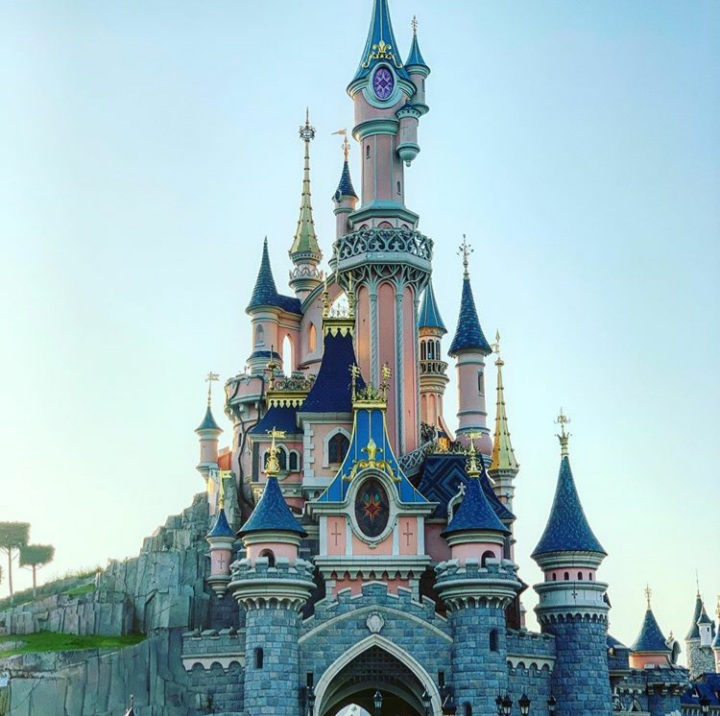
Euro Disneyland (now Disneyland Paris), April 1992
Prior to the 1980s, Disney theme parks were a uniquely American thing- if you wanted to meet Mickey and get that iconic castle photo, you’d have to take a trip to either Anaheim in California, or Walt Disney World in Florida. April 1983, however, brought the long-awaited opening of the first ever Disney park outside of the US- Tokyo Disneyland! The new park was a huge success, putting a unique twist on the traditional Disneyland model while still in-keeping with some of the most loved elements, and it was soon decided that Europe should be the next location for a Disney park.
The next step was deciding where exactly the theme park would go. The area had to have a large population of people that would enjoy the park, as well as good connections by air and sea to other European countries to make for a good amount of visitors.
One consideration was Spain- the country already had a thriving tourism industry and two sites were large and easily accessible enough to house a theme park. The plans for a Spain Disneyland were quickly abandoned however, as construction would mean destroying a local beauty spot. France was another consideration that would soon become the decided location for the park; the area of land was located in the North-West just outside of the country’s capital Paris, and wasn’t too far of a drive from other areas of France, too. An agreement was signed by Michael Eisner in 1985, and construction would begin on the park, officially named Euro Disneyland around three years later in August of 1988.
However, not everyone was in favour of the new development. Local people were understandably upset at losing their land, while journalists worried about the potential implications the park might have on France and its culture. Concerns were also raised about the name of the new theme park- Euro Disneyland- saying that the word ‘Euro’ implied that Disney were trying to make the development all about money and not actually about fun or culture. That’s pretty fair really, it would have made a lot more sense if Disney had followed the same naming conventions that were used for Tokyo Disneyland, and just called it Disneyland Paris from the beginning.
Despite the criticism for many these different aspects of the park, a farmers’ protest in 1992, and its branding as a “Cultural Chernobyl” by critics, the new theme park’s creation went forward mostly as planned, and Euro Disneyland opened to the public on 12th April 1992.
On its opening day, Euro Disneyland was expected to draw in huge crowds, with predictions of up to 90,000 cars entering the car park. But while the original Disneyland was overcome with far too many guests on its 1955 opening, Euro Disney didn’t have nearly enough. Many were boycotting the park in protest against the controversies mentioned earlier, among other things, but there was a far larger problem, one that had nothing to do with land losses or worries about too much consumerism.
Check out this post to learn about another not-so-magical Disney opening day!
Disneyland’s Black Sunday: What was it and how did it happen?
“As long as there is imagination left in the world, Disneyland will never be complete” Walt Disney When you think of Disneyland, what comes to mind? Castles, family, and Mickey Mouse? What about fires, dehydration and stampeding crowds? Okay, those last three maybe aren’t so likely. But all these actually happened on Disneyland’s opening day,…

Fantasyland is arguably one of the most important areas across any of the traditional Disneyland parks: the land is often home to the highest number of rides and attractions, and is easily recognisable by its Medieval-Europe style architecture and of course the castle. In Japan and the US this style is a novelty and has a sort of magical ambience, but in Europe, old-style buildings can be found in almost every town and city, and castles are quite a common thing. Sure, European castles aren’t usually waiting at the end of a 20th century style Main Street, but there are still a lot of castles nonetheless. It just didn’t have the same draw as it did in Tokyo, Anaheim and Orlando, and Euro Disneyland would continue to struggle in finance and popularity throughout the next few years.
Many Euro Disney Cast Members were resigning due to both unacceptable working conditions and the extremely picky requirements to work for the park- employees were required to limit the amount of makeup they wore, and restrictions against beards and tattoos were in place, too. Financial issues forced planning for the second Paris park (now Walt Disney Studios Paris!), inspired by Disney’s MGM Studios in Florida, to be put on hold until further notice, and a range of other changes were put in place to try and save the park. By 1994, several businessmen had bought stakes in Euro Disneyland, and it finally looked like the park might have the chance of a great big beautiful tomorrow.
1995 brought a giant overhaul of the park, opening a new version of Space Mountain in Discoveryland, and changing the name to the significantly better fitting Disneyland Paris. Today Disneyland Paris is a resort, home to two parks including Walt Disney Studios Paris, as well as the shopping district Downtown Disney, which has been expanding well since its opening!
Disney’s Animal Kingdom, April 1998
Disneyland Paris wasn’t the only brand new theme park to open as part of the Disney Decade, another park would open just six years later in Florida! Originally proposed by legendary Imagineer Joe Rhode, Animal Kingdom would allow guests to explore three groups of the animal world: living, extinct and mythical. The new park, which would be Walt Disney World’s fourth and so far final theme park, was initially planned to be known as Wild Kingdom, yet this name was dropped due to another company already owning the rights to Wild Kingdom as a TV show.
Each of the three animal groups were intended to reside in their own themed land, and while not much is known about the “extinct” area, the mythical land, known as Beastly Kingdom got quite far along in the planning stages before being cancelled altogether. The area was set to be divided into two “realms”, one being the Good Realm, home to creatures such as unicorns and all our favourite animals from Fantasia.
The realm would have been dominated by two attractions, including a boat ride showcasing scenes from the 1940 animated classic Fantasia, as well as an enchanted maze known as Quest of the Unicorn. On the other side of Beastly Kingdom was the Evil Realm, with a dark atmosphere watched over by a giant dragon. A ruined castle would look over the land, containing a rollercoaster that took guests through the burned remains of the towers, while escaping the dragon and his fire.
Sadly, Beastly Kingdom never came to fruition, but some aspects of the area can still be found around Animal Kingdom today, including the Evil Realm’s dragon in the logo. Expedition Everest uses a similar concept to Beastly Kingdom, in the sense that it brings mythical creatures to life, except that instead of a dragon, you’re escaping a Disco Yeti!
Plans for Animal Kingdom continued to be formulated, and by 1995 ground had been broken for the newest and largest Walt Disney World theme park. The park opened three years later on Earth Day 1998, yet, like Disneyland Paris, Animal Kingdom faced a lot of controversy in its earliest years, for a different reason. Some conservation groups worried that Disney were not handling their animals correctly, and that the company had not learned from mistakes with animals at other parks. Several animal deaths were reported in the early years of the park, and even today concerns are voiced about the treatments of certain animals, such as elephants, in and around the park.
Despite the concerns, Animal Kingdom have actually done a lot for the natural world, and put significant efforts into protecting the environment! Balloons are not allowed into the park, and biodegradable alternatives are used in substitute to more common plastic products. Whatever your views on Disney’s Animal Kingdom, its fair to say its an amazing fit with the other three WDW parks, and is possibly the most beautiful!
Rides and Attractions
Every Disney park that existed at the time benefitted from the Disney decade in some shape or form some more than others. While some parks didn’t expand too much during the 1990s, such as Magic Kingdom and Disneyland, others received major upgrade and a multitude of new attractions. Here are some of the Disney theme parks that were the top priorities throughout the Disney Decade!
Disney MGM-Studios (now Disney’s Hollywood Studios)
Having opened just a year prior, by 1990 Disney MGM-Studios was still developing and growing at a rapid pace. What is arguably one of WDW’s most popular nighttime shows, Fantasmic, made its debut in 1996, inspired by Disneyland’s version, utilising some incredible effects and A LOT of boats. Bringing to life the power of imagination, Fantasmic follows the adventures of Sorcerer Mickey as he summons all your favourite Disney characters from Ariel to Rafiki, as well as a giant imposing Maleficent dragon! (Let’s face it, that dragon is TERRIFYING)
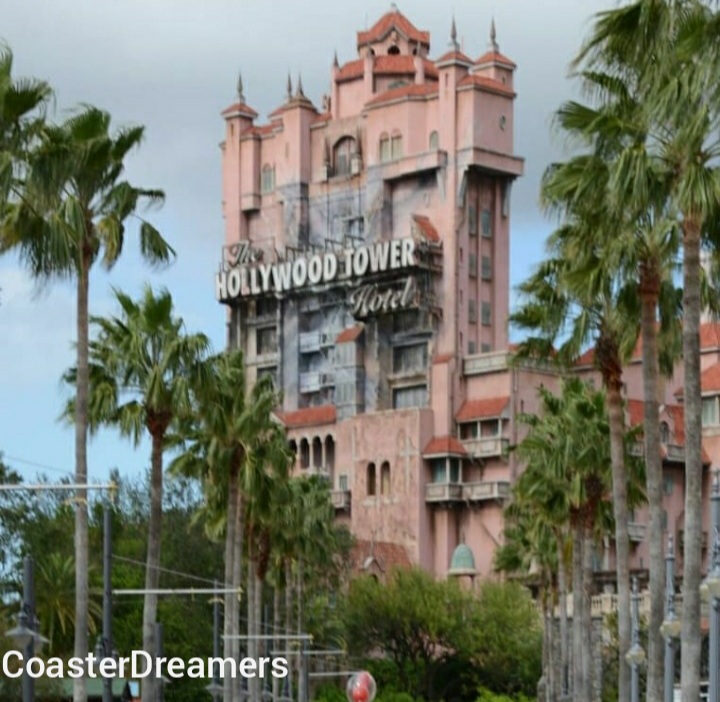
1994 brought the opening of one of the most iconic attractions at the park, the Tower of Terror. This innovative droptower/darkride allows guests to explore the world of the Twilight Zone TV show, and get a spooky thrill along the way as you’re dropped from 19ft up!
The end of the decade meant the debut of another well-loved attraction: Rock n’ Rollercoaster! While Tower of Terror drops you in a haunted lift, Rock n’ Rollercoaster delivers the thrills and spills through means of a track, with the catchy Aerosmith music playing as you soar through three inversions in the dark.
The 1990s were also a time of proposed rides and attractions that never made it into the parks due to budget cuts or other reasons, including a Muppet overlay to The Great Movie Ride (which would have been amazing!) as well as a darkride based on the 1990 film Dick Tracy. Unfortunately these were soon scrapped, but the plans show just how ambitious the Disney Decade really was!
Disneyland and the Disneyland Resort
Throughout the 1990s, Walt Disney’s original theme park was going through some major changes. Walt Disney World in Florida had been classed as a resort for many years, Disneyland was still just one theme park with no other parks or surrounding hotels- but Michael Eisner was out to change that.
Disneyland originally had just one car park, known as the Hundred Acre Car Park, which took naming inspiration from Winnie The Pooh’s iconic Hundred Acre Wood. This was closed in favour of a new parking method that divided the car park into zones based on our favourite Fab 5 characters, but the Hundred Acre Car Park would have a completely different fate. Once the area was demolished, it would become the foundations of a brand new theme park, the second at the new Disneyland Resort!
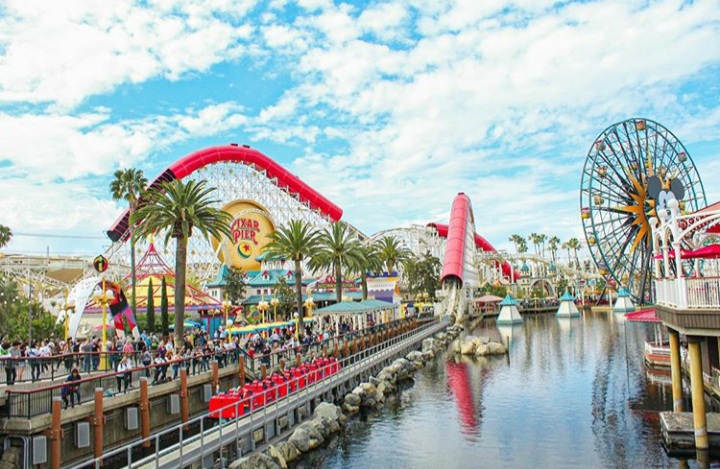
The upcoming park, Disney California Adventure, was planned to showcase all the best of California with a Disney twist, incorporating some elements of Disney’s Hollywood Studios such as the Twilight Zone Tower of Terror, as well as original attractions like the disastrous Superstar Limo and the significantly more successful California Screamin’ (now the Incredicoaster).
Similar to Euro Disneyland which had opened eight years prior, Disney California Adventure was expected to bring in massive crowds in its opening year of 2001, and these predictions turned out to be wrong. Guests felt there weren’t nearly enough high-quality rides and attractions, and as word spread about the disappointing park, visitor numbers continued to drop.
An expansion of the park was announced in 2007, and this was the thing that made Disney California Adventure what it is today. However, I would still argue that the park has never really been what it was expected to be- its nowhere near as popular or as famous as Hollywood Studios or Disneyland, and since its opening it has been a strange mix of IPs and actual California-themed attractions, though hopefully the recent opening of Pixar Pier means DCA has chosen to go down the IP route, as I feel that would really suit the park and fit well next door to the more classic Disneyland!
Throughout DCA’s construction, other things were happening to truly turn Disneyland into a resort. Disneyland Hotel underwent a major renovation as an already existing hotel became the Paradise Pier Hotel, and a brand new one: Disney’s Grand Californian Hotel. With now three major hotels on the site, a shopping district was also constructed, which would soon be announced as Downtown Disney.
By early 2001 Disneyland had finally completed its conversion to a resort, with the Disneyland theme park itself being renamed Disneyland Park. The Disneyland Resort will likely never be as big as Walt Disney World Resort in Florida, but it doesn’t need to be, as its just incredible that a small park that opened in 1955 where families could make memories has grown into the incredible resort it has today!
EPCOT Center (now Epcot)
Since the Experimental Prototype Community of Tomorrow opened in 1982, the 1980s were naturally a time of growth and expansion for Epcot, but while the 1990s were a reasonably good time for the park, they were also a time of a lot of closures and changes. Many of the attractions’ sponsors were only valid for ten to fifteen years, so by the new decade, deadlines were rapidly approaching to find new sponsors for many of these attractions. While in some cases this was successful, such as in The Land pavilion, others it was not so much, and this forced many to close as they fell into disrepair. Horizons, a darkride that took guests on an adventure into the 21st century to see the future of technology and human life, lost its sponsorship by General Electric in 1993, then closed due to a lack of maintenance, as well as a sinkhole that made the building unsafe.
But pavilions that were able to keep a sponsorship or find a new one were also subject to changes. Both Kitchen Kaberet in The Land Pavilion and Journey into Imagination in the Imagination Pavilion received low-budget rethemes that weren’t exactly loved by guests, requested by the pavilions’ sponsoring companies, Nestle and Kodak. Even the park’s name was changed at one point, with the name “Epcot ’94” to represent the year, then Epcot ’95 a year later. This had actually led to Epcot as an acronym no longer being used by Disney, and it is now in the lower-case form we know today!
During this time many new rides and attractions came to fruition too. Jumping on the success of the Honey franchise that at the time included Honey I Shrunk the Kids and Honey I Blew Up The Kid, a new 3D film debuted in Imagination’s MagicEye Theatre, replacing Captain EO in 1994. The show, Honey I Shrunk The Audience, took guests inside the Imagination Institute for the Inventor of the Year Award, where they would be “shrunk” and then returned to normal size again using a range of special effects. Over at the Energy Pavilion, Universe of Energy was getting a retheme as Ellen’s Energy Adventure, centring around the adventures of talk show host Ellen DeGeneres.
While Epcot wasn’t impacted as much by the Disney Decade as some other parks like Hollywood Studios and Disneyland, the 1990s were still an experimental time for the park, and some of the attractions we love at Epcot now may not be exist today if it wasn’t for this changing time!
Disney Renaissance Era, 1989-99
Disney’s theme parks weren’t the only things to get a major upgrade in the 1990s- the company’s film portfolio was greatly expanded too! While just a few years prior, Disney were struggling to find where they stand in the movie industry, they had now found their feet, and during this time many of our favourite animated movies made their debut!
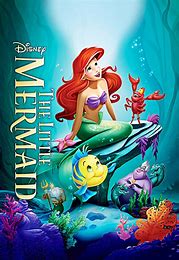
The era began with The Little Mermaid in November 1989, then The Rescuers Down Under just a year later (which didn’t perform nearly as well as the others, it’s only really part of the Renaissance because of the time it was released). Following these vastly different movies came Beauty and the Beast in 1991, then Aladdin, The Hunchback of Notre Dame, Pocahontas, Mulan, Hercules and Tarzan in the next few years.
Before this time only three Disney princesses existed: Snow White, Cinderella and Aurora, but the Renaissance largely increased the number of leading ladies in our favourite animated movies, with intelligent princesses that love to read, like Belle, and princesses that knew they weren’t a prize to be won, like Jasmine. Mulan was the first not to have a love interest (well, until the sequel when she seems to have feelings for Li Shang), while Megara was likely the first Disney character to have an ex-boyfriend.
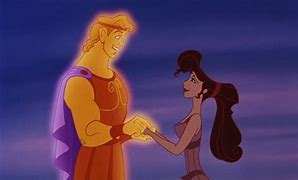
Whether you prefer Disney of the 1990s or more modern Revival era films like Frozen, Moana and Zootropolis (or Zootopia depending on where you’re from!) there’s no denying that the Disney Renaissance Era was a massive time for the company, and on our childhoods!
Were you alive during the Disney Decade? What was your favourite addition or change? Let me know in the comments below!
If you enjoyed this article, you’ll love my other posts from theme parks and attractions around the world!
Europe’s Greatest Darkrides- one continent, many amazing worlds
Europe is home to many incredible darkrides, from the thrills of indoor rollercoasters, to the beauty of many of the scenes in some trackless and water-based darkrides. Not all rides are created equal however, and some parks go all out with creating the most immersively impressive darkride experiences for their guests, combining technology, story and…
Strangeness of Life: The weird and wonderful attractions of Epcot’s Wonders of Life Pavilion
When Walt Disney began drawing up his plans for the Experimental Prototype Community Of Tomorrow, something that was included right from the start was a pavilion dedicated to health and fitness, and the wonders of the human body. Imagineers wanted to stay as close to the original plans as possible when designing Epcot Center, now…
Rides That Never Left The Drawing Board- Part 1 (Disney Parks)
It takes years for a new ride or attraction to be constructed, from the initial planning permissions being submitted and approved, to the announcements and teasers, to construction then finally a grand opening. But some rides never get off the ground, with plans being kept in storage or scrapped altogether. Join me in exploring what…
Don’t forget to check us out on Instagram and Facebook, and consider subscribing for more Coaster Dreamers content!
Instagram:
https://www.instagram.com/coasterdreamersblog/
Facebook:
https://www.facebook.com/search/top?q=coasterdreamers%20blog
Subscribe!
Photo credits:
@disneyalldaylong83 on Instagram https://www.instagram.com/disneyalldaylong83/
@disneyryan__ on Instagram https://www.instagram.com/disneyryan__/
 Coaster Dreamers